
 Algeria
 Egypt
 Libya
 Morocco
 Sudan
 Tunisia
 Benin
 Burkina Faso
 Cabo Verde
 Côte d'Ivoire
 Ghana
 Guinea
 Guinea-Bissau
 Liberia
 Mali
 Mauritania
 Niger
 Nigeria
 Senegal
 Sierra Leone
 The Gambia
 Togo
 Cameroon
 Central African Republic
 Chad
 Equatorial Guinea
 Gabon
 Republic of the Congo
 São Tomé and Príncipe
 Burundi
 Comoros
 Djibouti
 Eritrea
 Ethiopia
 Kenya
 Madagascar
 Malawi
 Mauritius
 Mozambique
 Rwanda
 Seychelles
 Somalia
 South Sudan
 Tanzania
 Uganda
 Angola
 Botswana
 Eswatini
 Lesotho
 Namibia
 South Africa
 Zambia
 Zimbabwe
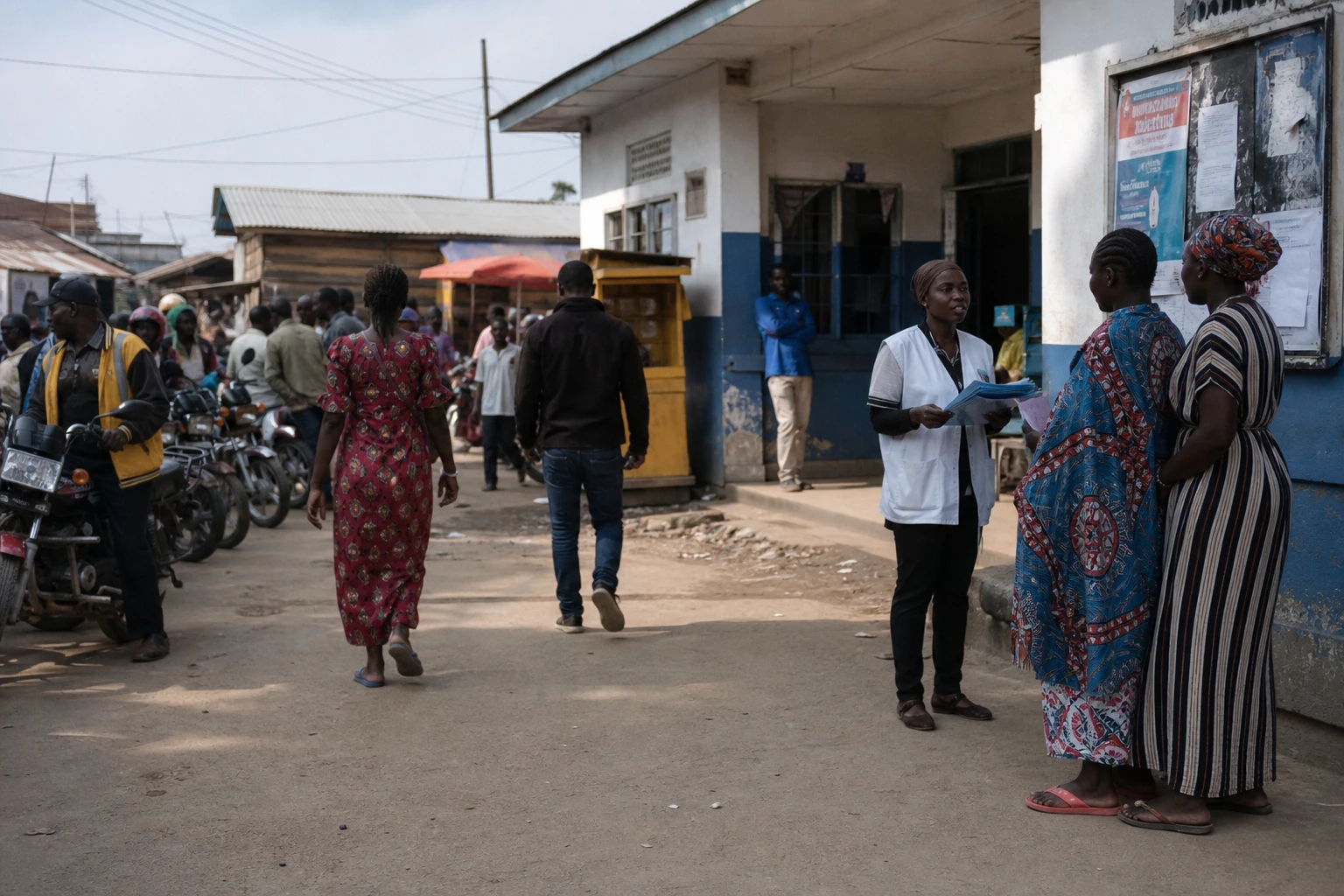
An outbreak putting public health under pressure in eastern DR Congo
In Bunia, in Ituri, the emergency is measured not only by the number of people falling ill. It is also reflected in cut-off roads, hard-to-reach villages and health teams moving at the pace of population displacement. In the east of the Democratic Republic of the Congo, an Ebola epidemic is never just a laboratory matter: it affects healthcare facilities, the safety of health workers and families’ trust.
The current outbreak is caused by the Bundibugyo virus, a rarer strain of Ebola orthobornavirus. It differs from the best-known Congolese outbreaks, which have often been linked to the Zaire strain, for which more advanced prevention and treatment tools are available. Here, the response starts at a greater disadvantage. Teams must isolate, trace, protect and explain, even as the epidemic spreads rapidly.
The latest situation report, made public at the end of July, shows a continued rise. At that point, the authorities and their partners reported 3,532 confirmed cases and 1,556 deaths in the Democratic Republic of the Congo. This makes the current outbreak the largest ever documented for the Bundibugyo strain, surpassing the two previous known outbreaks. It also confronts DR Congo with a health challenge of regional scale, as mobility corridors between Ituri, North Kivu, Uganda and South Sudan remain active.
Ituri, on the front line of a regional health crisis
The Democratic Republic of the Congo is no stranger to Ebola. The country has experienced 17 outbreaks since the virus was identified in 1976, and the largest took place between August 2018 and June 2020 in North Kivu, Ituri and South Kivu. It recorded 3,470 cases and 2,287 deaths. The comparison is useful because it shows that the current outbreak is now approaching this historic benchmark, but in an even more challenging operational context.
Ituri accounts for most of the cases. It bears the bulk of the health burden, as well as the constraints on the ground. The province remains affected by localised armed violence, extensive commercial movement and frequent internal displacement. In this kind of environment, contact tracing becomes fragmented, safe and dignified burials are harder to organise, and reporting delays mount. The epidemic then feeds on what makes the response hardest: the isolation of rural areas, mistrust of care and the constant movement of people.
At continental level, the situation quickly escalated. Africa CDC and the WHO launched regional coordination in mid-May 2026, after Kinshasa officially declared the outbreak. The WHO subsequently classified it as a public health emergency of international concern. This designation is not symbolic. It paves the way for cross-border coordination, alerts at points of entry and the mobilisation of technical resources for surveillance, laboratories and community engagement.
Rising figures, but also a detection problem
The pace of the rise remains the main cause for concern. Successive situation reports have seen cases pass several thresholds in a matter of weeks. Health partners reported that by 26 July the epidemic had surpassed the two previous documented Bundibugyo outbreaks. This acceleration is not due solely to recent transmission. It also reflects a statistical catch-up, as older cases have been added to the tally as surveillance and testing improve.
This is crucial to understanding the situation in the DRC. When samples are taken too late, deaths occur at home and access to affected areas is limited, official figures often underestimate the true spread. The human toll therefore lags behind the circulation of the virus. In other words, part of the outbreak is becoming visible because teams are counting more effectively, but another part is probably still escaping the health system’s radar.
The Ministry of Public Health, with support from the INRB, the WHO, Africa CDC and several medical NGOs, has organised the response around isolation, contact tracing, supportive care and infection prevention in healthcare settings. But the Bundibugyo strain complicates matters. Unlike the Zaire strain, it is not covered by the available approved tools. Ring vaccination, which helped break transmission during previous outbreaks, therefore offers less room for manoeuvre.
The issue is not only scientific. It is also political and social. When residents see teams arrive after the first deaths, or treatment centres are attacked or deserted, the response loses time and credibility. The virus’s speed is then matched by that of rumours, refusals of care and breakdowns in follow-up. That is where the difference lies between a contained outbreak and a prolonged crisis.
What this epidemic says about DR Congo and the region
For DR Congo, this outbreak is a reminder of a structural reality: the country’s east combines pockets of insecurity, intense mobility and high exposure to epidemics with the potential to spread explosively. Public health there depends as much on the medical chain as on the safe movement of teams, supplies and data. As long as these three elements move at different speeds, the response will remain one step behind.
For the Great Lakes region, the stakes are just as clear. Uganda has already recorded an imported case linked to the same strain, before declaring its outbreak over in July 2026. That relief remains fragile. Economic borders do not close when health authorities issue a bulletin. They continue to connect markets, families, mining routes and trade routes. An epidemic in Ituri therefore immediately becomes a concern for Kampala, as well as for other countries linked by the same patterns of movement.
At continental level, this crisis reinforces the position championed by the African Union, Africa CDC and the WHO: health preparedness can no longer be planned country by country. It requires laboratories able to confirm cases quickly, interconnected surveillance systems and public health messages that are understood in local languages and contexts. The Bundibugyo outbreak in DR Congo will be a test. It will show whether the continent can respond faster than it did in 2018, in a more unstable environment, or whether the same delays will continue to give the virus the advantage.
The next priority is clear: whether Congolese and regional teams can stabilise the worst-affected health zones, maintain contact tracing and prevent the outbreak from spreading to other provinces. In this epidemic, the health curve closely follows the curve of access to the field.



