Algeria
 Libya
 Morocco
 Sudan
 Tunisia
 Benin
 Burkina Faso
 Cabo Verde
 Côte d'Ivoire
 Ghana
 Guinea
 Guinea-Bissau
 Liberia
 Mali
 Mauritania
 Niger
 Nigeria
 Senegal
 Sierra Leone
 The Gambia
 Togo
 Cameroon
 Central African Republic
 Chad
 DR Congo
 Equatorial Guinea
 Gabon
 Republic of the Congo
 São Tomé and Príncipe
 Burundi
 Comoros
 Djibouti
 Eritrea
 Ethiopia
 Kenya
 Madagascar
 Malawi
 Mauritius
 Mozambique
 Rwanda
 Seychelles
 Somalia
 South Sudan
 Tanzania
 Uganda
 Angola
 Botswana
 Eswatini
 Lesotho
 Namibia
 South Africa
 Zambia
 Zimbabwe
An economy under scrutiny, but less fragile than in 2024
For Egypt, the challenge is not simply to secure funding. Above all, it is to sustain an economy still exposed to regional shocks, as the war in the Middle East continues to disrupt trade, energy and foreign-currency revenues. The signal from the International Monetary Fund confirms, at least for now, that Cairo has avoided a sharp deterioration.
The country remains committed to two separate IMF frameworks: the Extended Fund Facility, which supports macroeconomic reforms over several years, and the Resilience and Sustainability Facility, designed to help countries vulnerable to climate and external shocks. In Egypt’s case, these arrangements also serve as a political barometer. They measure the government’s ability to maintain fiscal discipline, allow the exchange rate to adjust and preserve a stabilisation path.
What the IMF approved
On 30 June, the Egyptian government welcomed an agreement with the IMF team on the seventh review of the Extended Fund Facility and the second review of the Resilience and Sustainability Facility. This step paved the way for about 1.11 billion special drawing rights, or nearly $1.5bn, under the EFF, as well as 100 million SDRs, or about $136m, under the RSF.
The next step came with approval by the IMF Executive Board, enabling Egypt to receive about $1.77bn immediately, including $1.5bn through the Extended Fund Facility and $272m through the Resilience and Sustainability Facility. The total is slightly higher than the initial estimate because of the conversion of SDRs into dollars at the time of the decision.
Egyptian Prime Minister Mostafa Madbouly presented the approval as a fresh vote of confidence in the reform programme. He also stressed an important political point: in his view, Egypt entered the recent conflict in the Middle East with a stronger macroeconomic position than during previous waves of regional instability.
Why the decision matters in Cairo
The IMF highlighted exchange-rate flexibility, energy price reforms and fiscal discipline. This three-pronged approach is significant. It corresponds to the most sensitive levers in Egypt’s programme: allowing the currency to adjust, reducing the cost of poorly targeted subsidies and containing deficits. In the short term, these choices weigh on purchasing power. Over the medium term, they aim to restore room for manoeuvre for investment, strategic imports and creditor confidence.
The IMF also noted that the effects of the war in the Middle East on Egypt’s economy remained “relatively contained”, thanks to policy adjustments it judged to have been rapid and decisive. In practical terms, this means the state absorbed part of the shock through decisions on prices, energy consumption and budgetary reallocations. This is no shield. It is a still-fragile, but real, capacity to withstand shocks.
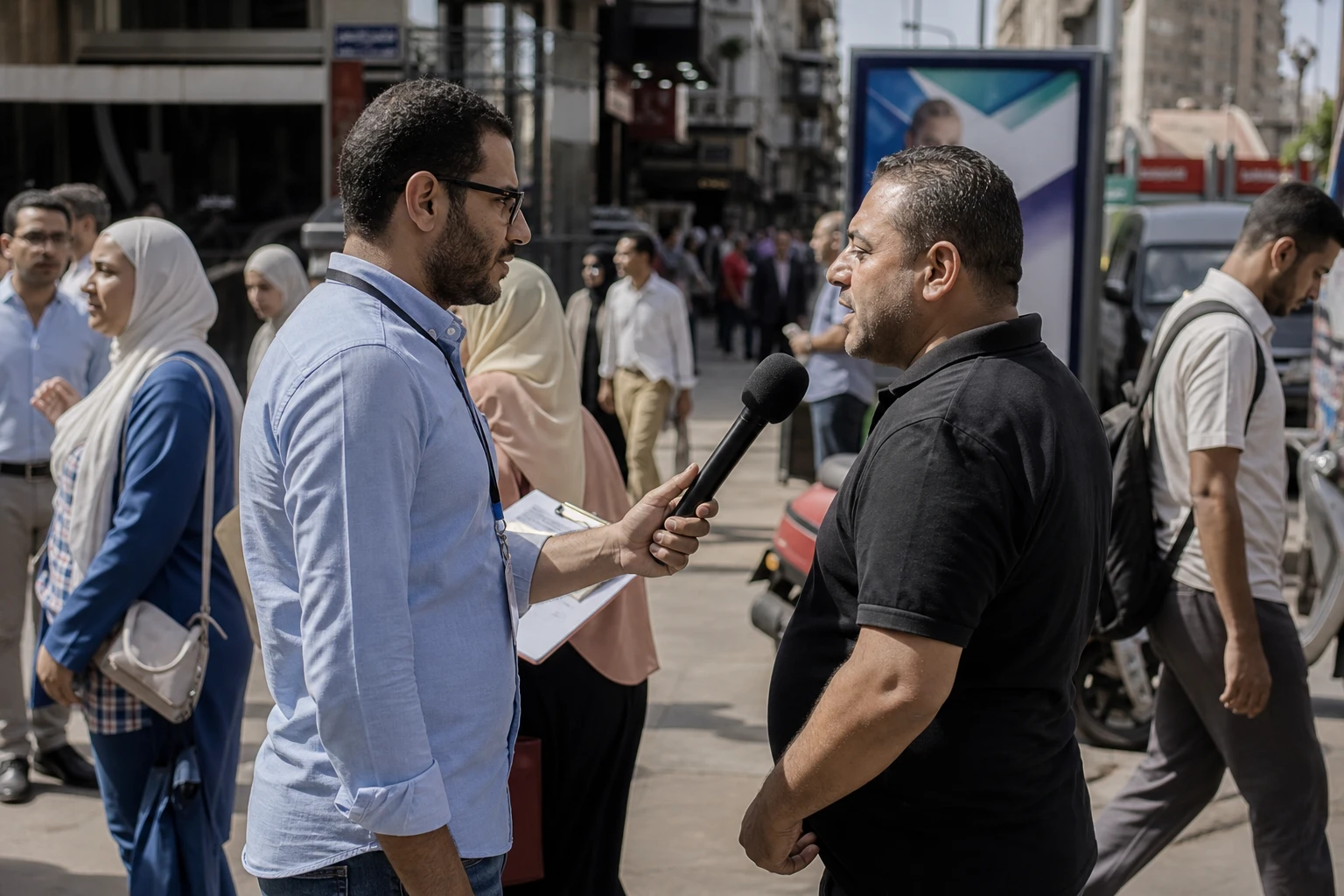
On the ground, the situation remains delicate. People in major cities feel the pressure most acutely through prices, bills and transport costs. Lower-income households, meanwhile, bear the cost of adjustments more directly. The private sector is calling for less uncertainty over the exchange rate, taxation and administrative permits. The IMF has also stressed a central priority: expanding the space for the private sector and reducing the state’s role in the economy.
Recovery in economic performance, but constraints remain
Egyptian authorities are pointing to a measurable improvement in activity. According to figures cited in discussions with the IMF, real GDP grew by 5% in the third quarter of fiscal year 2025/26, averaging 5.2% over the first nine months of the fiscal year. The Fund, for its part, forecasts growth of about 4.6% for the full fiscal year. The projection also appears on the IMF’s country page, which forecasts real growth of 4.6% for Egypt in 2026.
These figures should nevertheless be treated with caution. They point to a rebound, not immunity. The country is emerging from a period of acute pressure on foreign currency, inflation and imports. The IMF noted as recently as February that inflation had fallen sharply to 11.9% in January 2026, after much higher peaks in 2023. Current stabilisation therefore rests on a combination of monetary tightening, exchange-rate flexibility and a gradual recovery in confidence.
The fiscal dimension is just as important. The IMF programme calls for reducing the state’s financing needs, managing debt more effectively and limiting the public sector’s footprint in areas where the private sector can invest more. For a country of more than 110 million people, with a young population and intense pressure on employment, the central question remains the same: how can stabilisation be turned into more inclusive growth?
Significance beyond Egypt
The Egyptian case matters well beyond Cairo. Egypt is a key player in the Arab world, a major trade gateway and a country whose financial stability affects its neighbours in the Levant and North Africa. When the IMF approves its programme, it also sends markets a signal about the management of regional shocks, particularly tensions in the Middle East and disruptions to maritime routes.
This episode also reflects a broader trend across the continent: several African economies are negotiating with the Bretton Woods institutions at the same time to shore up reserves, contain inflation and safeguard essential imports. But the fundamental debate remains an African one: how can countries stabilise without stifling domestic demand, and how can they reform without extending their dependence on external financing indefinitely?
For Egypt, the next stage will be decisive. The country has already received immediate financing following this approval, but the programme’s credibility will depend on implementing reforms, controlling the deficit and protecting the most exposed households. The IMF and the Egyptian authorities agree on at least one point: current stability is valuable only if it leads to sustainable, private-sector-led growth.