Algeria
 Egypt
 Libya
 Morocco
 Sudan
 Benin
 Burkina Faso
 Cabo Verde
 Côte d'Ivoire
 Ghana
 Guinea
 Guinea-Bissau
 Liberia
 Mali
 Mauritania
 Niger
 Nigeria
 Senegal
 Sierra Leone
 The Gambia
 Togo
 Cameroon
 Central African Republic
 Chad
 DR Congo
 Equatorial Guinea
 Gabon
 Republic of the Congo
 São Tomé and Príncipe
 Burundi
 Comoros
 Djibouti
 Eritrea
 Ethiopia
 Kenya
 Madagascar
 Malawi
 Mauritius
 Mozambique
 Rwanda
 Seychelles
 Somalia
 South Sudan
 Tanzania
 Uganda
 Angola
 Botswana
 Eswatini
 Lesotho
 Namibia
 South Africa
 Zambia
 Zimbabwe
When the power falters, the economy pays immediately
In Tunisia, a power cut is more than a simple domestic inconvenience. In the middle of a heatwave, it can disrupt a working day, damage a cold chain, halt cooking or destroy costly equipment within hours. In Tunis, several professionals say they have discovered just how vulnerable the economic system remains when the electricity grid comes under strain.
Tunisia, however, has a long history of electricity interconnection. STEG, the Tunisian electricity and gas company, says the country built its network with links to Algeria, and is also preparing the ELMED project between Tunisia and Italy to strengthen its capacity for exchanges across the Mediterranean. But the summer of 2026 has brought home a more immediate reality: when demand rises quickly, the room for manoeuvre remains limited.
A heatwave, followed by load-shedding
From mid-July 2026, STEG announced rolling or targeted power cuts in several regions to preserve grid stability. The company explained that the heatwave had sent consumption soaring, mainly because of air conditioning, pushing the system to its limits. TAP relayed several official notices of scheduled cuts between 11am and 4pm, then between 5pm and 10pm, depending on the governorates concerned. The Tunisian press also reported that STEG denied a rumour of a nationwide blackout on 25 July, a sign that the issue had taken on national proportions.
This was therefore not an isolated incident. It formed part of a sequence of demand peaks and emergency adjustments. Tunisian media reported daily power cuts in Greater Tunis and other areas, while STEG urged users to make arrangements in advance. This day-to-day management reflects a grid constraint rather than a simple, passing inconvenience.
Workshops, kitchens and fridges brought to a halt
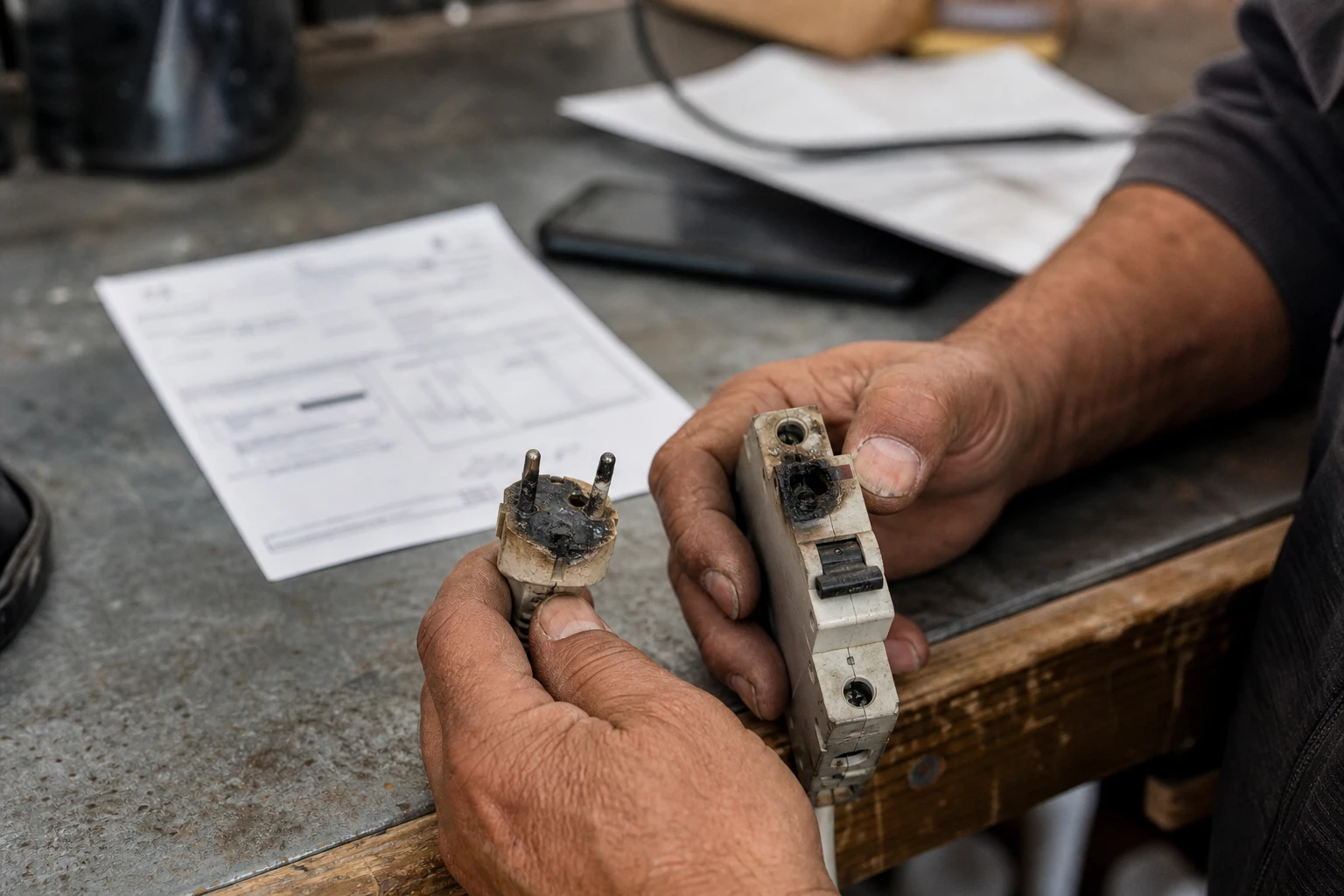
The most visible effects are being felt by small businesses. In Tunis, a beekeeper lost her workshop after a series of repeated cuts and an electrical circuit overheated, ultimately destroying equipment and stocks. She then had to request a loan deferment and seek information from STEG about the compensation procedure. Her case highlights a reality often invisible in macroeconomic data: when the grid fails, the most vulnerable businesses are the first to absorb the shock.
In the restaurant sector, losses are measured in food, service hours and customers. Professional organisations have reported damage to kitchens, air-conditioning units and cold chains. In food processing, the problem is even more immediate: some products must be destroyed when their storage temperature can no longer be guaranteed. The Tunisian press has reported losses in meat, poultry, bakeries and industry, along with production stoppages and damaged equipment.
The figures cited by professional organisations indicate the scale of the shock, although they still need to be consolidated. Estimates point to nearly 13% of national poultry production lost, 70% of restaurants affected, between 400 and 500 tonnes of meat destroyed, and up to 55 hours of stoppages in the textile sector in one week. These figures should be treated with caution, as the authorities have yet to publish an overall estimate of the losses. But they already convey the main point: the impact is spreading well beyond neighbourhoods without electricity.
Why Tunisia has so little room for manoeuvre
Tunisia’s electricity system remains highly exposed to peak demand. According to STEG, the network’s architecture relies on domestic generation, regional interconnections and gas imports to supply some power stations. Several Tunisian and international sources also point out that Tunisia meets a significant share of its electricity needs through purchases from Algeria, amounting to around 11% to 14%, depending on the period and source. In 2025, foreign trade data had already shown a heavy reliance on electricity imports from Algeria.
Algeria, meanwhile, also experienced a heatwave and strain on its grid during the same period. The Algerian state news agency reported a technical incident at an electricity facility in Sidi Okba, which was quickly brought under control, as well as a record peak in consumption during the heat. In this context, Tunisia was unable to increase its imports freely just as its own demand was rising. This is one of the central points of the crisis: regional dependence offers the system some protection, but it cannot replace either reserve generation capacity or grid flexibility.
Tunisian experts have also highlighted another factor: preparedness. The population is not used to repeated load-shedding, making it harder for households and businesses to respond. The authorities, for their part, have to contend with an ageing grid, substantial investment needs and the continued rise in electricity use during the summer. In a country where air conditioning has become a tool for comfort, health and productivity, energy is now as much a social issue as an industrial one.
What this crisis says about North Africa
For Tunisia, the challenge goes beyond the heatwave itself. It concerns energy security, the resilience of small businesses and the credibility of public services. As the country seeks to modernise its infrastructure and strengthen its interconnections, the crisis is a reminder that an energy transition cannot be judged solely by investment announcements. It must also be measured by the ability to protect everyday activities, from artisan workshops to food-processing supply chains.
At regional level, the issue points to a broader question for North Africa: how can neighbouring countries better co-ordinate their grids, peak consumption and backup capacity without turning dependence into chronic vulnerability? The Arab Maghreb Union exists on paper, but real energy integration is taking shape mainly through interconnections, technical exchanges and major projects. In Tunisia, the next steps to watch are therefore twofold: a return to normal on the grid, and the authorities’ ability to turn this warning into lasting investment choices.