
 Algeria
 Egypt
 Libya
 Sudan
 Tunisia
 Benin
 Burkina Faso
 Cabo Verde
 Côte d'Ivoire
 Ghana
 Guinea
 Guinea-Bissau
 Liberia
 Mali
 Mauritania
 Niger
 Nigeria
 Senegal
 Sierra Leone
 The Gambia
 Togo
 Cameroon
 Central African Republic
 Chad
 DR Congo
 Equatorial Guinea
 Gabon
 Republic of the Congo
 São Tomé and Príncipe
 Burundi
 Comoros
 Djibouti
 Eritrea
 Ethiopia
 Kenya
 Madagascar
 Malawi
 Mauritius
 Mozambique
 Rwanda
 Seychelles
 Somalia
 South Sudan
 Tanzania
 Uganda
 Angola
 Botswana
 Eswatini
 Lesotho
 Namibia
 South Africa
 Zambia
 Zimbabwe
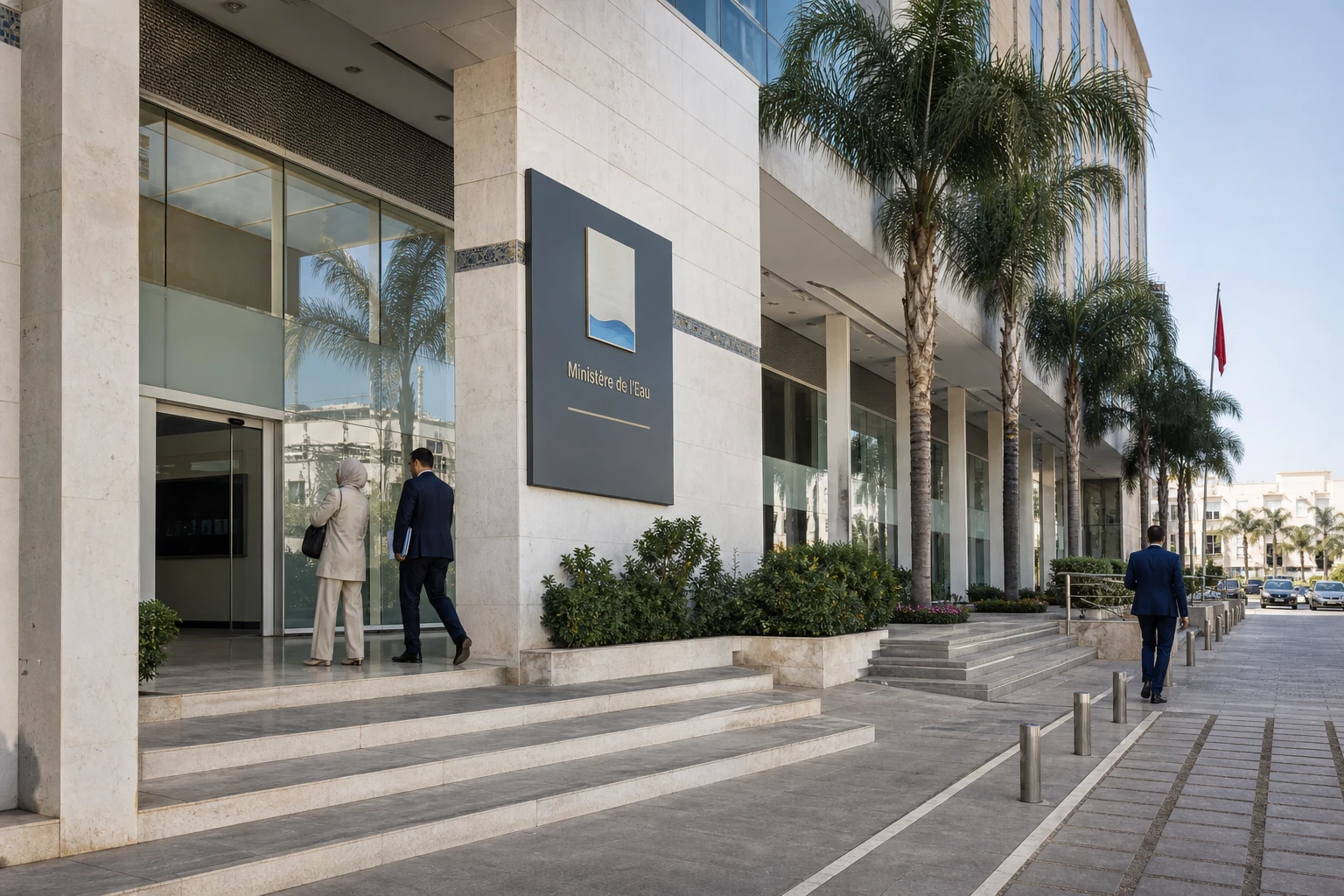
Water has become a matter of sovereignty in Morocco
In Rabat and the country’s major cities, the question is no longer simply where to find water. It is now about the Kingdom of Morocco’s ability to move it, treat it and secure supplies over the long term. In a country where climate pressure is compounded by growing urban and agricultural demand, every water-sector financing deal carries political, economic and territorial significance.
The new loan announced by the European Bank for Reconstruction and Development (EBRD) is part of this approach. It is intended for the National Office of Electricity and Drinking Water (ONEE), the state operator responsible for a key part of drinking water production and distribution in Morocco, and could reach €250 million. This comprises a committed tranche of €120 million and a further €130 million that has not yet been committed. The guarantee is provided by the National Company for the Guarantee and Financing of Enterprises, known commercially as Tamwilcom.
Funding to upgrade infrastructure, make repairs and cut losses
According to the EBRD, the project is intended to strengthen the efficiency, reliability and resilience of drinking water production systems. It will finance the rehabilitation and modernisation of infrastructure, reduce losses across networks, improve pipeline performance, and strengthen metering and monitoring systems. The institution also says the operation aims to support climate adaptation and continuity of service in several regions of the country.
This point is worth emphasising, because Morocco’s response does not rely on a single lever. It combines dams, inter-basin links, desalination and the reuse of treated wastewater. At national level, the monitoring committee for the 2020–2027 National Programme for Drinking Water Supply and Irrigation has already highlighted two major inter-basin links, the filling of eight large dams between 2021 and 2025, and the accelerated development of desalination plants, with the aim of exceeding 1.7 billion cubic metres of desalinated water a year by 2030.
Desalination, a pillar of an increasingly structural strategy
Morocco’s Minister of Equipment and Water recently said that annual desalinated water production capacity had reached 420 million cubic metres, with a target of raising it to 1.7 billion cubic metres. He also cited the Tiznit project, which is set to become one of the country’s major plants, as well as inter-basin links such as those between the Bouregreg and Oum Er-Rbia basins, presented as a way to transfer between 1 billion and 1.2 billion cubic metres a year to areas facing shortages.
This ambition is part of a broader course set at the highest level of the Moroccan state. In his Throne Day speech, King Mohammed VI stressed the need to guarantee drinking water for all citizens, meet at least 80% of irrigation needs and accelerate the construction of desalination plants to supply more than half of the Kingdom’s drinking water needs by 2030. The same text calls for the development of a national desalination industry and the training of specialist engineers and technicians.
What EBRD funding means for the Moroccan economy
For people in Morocco’s coastal cities, this funding could mean more reliable water supplies. In rural areas, it is also intended to limit interruptions and strengthen service where networks are under the greatest strain. For agriculture, the issue is even more direct: water determines harvests, incomes and the supply chain, and ultimately food prices. The Moroccan authorities are increasingly making an explicit link between water policy and food security.
The use of Tamwilcom also points to a change in approach. Morocco is no longer financing its infrastructure solely through conventional sovereign borrowing. It is now using national guarantees to attract external funding for sectors considered strategic. This financial structure reduces the lender’s risk costs and opens the way for further operations in water, energy and transport. In this case, the EBRD also notes that the project supports the modernisation of public water services while improving the sector’s climate footprint.
A Moroccan story, with wider African significance
The Moroccan case extends beyond the national context. Across North Africa, several states face the same constraints: increasingly erratic rainfall, overexploited aquifers, rising urban needs and difficult choices between drinking water, agriculture and industry. Morocco stands out for the systematic nature of its investments and for linking water infrastructure with renewable energy, particularly to power desalination plants.
The continent-wide significance is clear. As droughts become more frequent and cities grow, water security is becoming a matter of public sovereignty in several regions of the continent. Morocco, which has already made desalination a central part of its model, is now seeking to industrialise the sector and secure sustainable volumes for Rabat, Casablanca, the Atlantic coast and vulnerable agricultural areas. The next steps to watch will be the effective implementation of ONEE’s programme, progress on interconnection projects and increased capacity at the plants planned by 2030.



