Algeria
 Egypt
 Libya
 Morocco
 Sudan
 Tunisia
 Benin
 Burkina Faso
 Cabo Verde
 Côte d'Ivoire
 Ghana
 Guinea-Bissau
 Liberia
 Mali
 Mauritania
 Niger
 Nigeria
 Senegal
 Sierra Leone
 The Gambia
 Togo
 Cameroon
 Central African Republic
 Chad
 DR Congo
 Equatorial Guinea
 Gabon
 Republic of the Congo
 São Tomé and Príncipe
 Burundi
 Comoros
 Djibouti
 Eritrea
 Ethiopia
 Kenya
 Madagascar
 Malawi
 Mauritius
 Mozambique
 Rwanda
 Seychelles
 Somalia
 South Sudan
 Tanzania
 Uganda
 Angola
 Botswana
 Eswatini
 Lesotho
 Namibia
 South Africa
 Zambia
 Zimbabwe
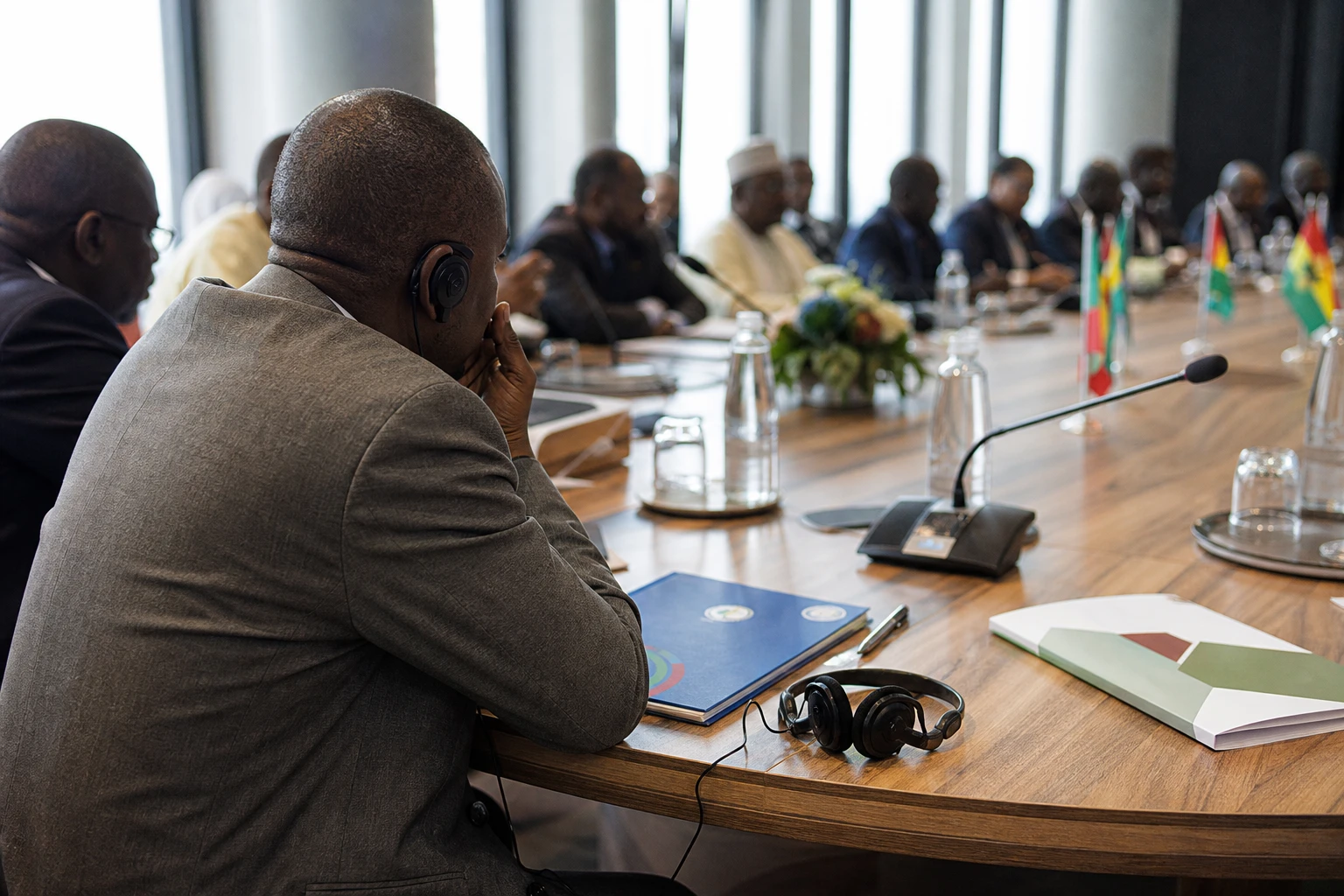
A mining case that goes beyond one village
In Zogota, in south-eastern Guinea, the victims’ families are seeking more than compensation. They also want the chain of responsibility finally brought to light. In this case, justice is not just about money. It concerns the place of communities in the mining economy, the protection of human rights and the credibility of the state in the face of court decisions.
The issue resonates beyond the village because it sits at the intersection of two Guinean realities. On the one hand, Guinea is seeking to capture more value from its resources through reforms to the mining cadastre, transparency around licences and the local processing of bauxite into alumina. On the other, mining areas continue to demand guarantees on employment, the environment and the sharing of benefits. The Ministry of Mines says it aims to regulate investment in accordance with the Mining Code and corporate social responsibility.
What the French court made enforceable
In early July 2026, a court in France made enforceable a ruling by the ECOWAS Court of Justice ordering the Republic of Guinea to compensate victims of the Zogota massacre. The amount set was 4.56 billion Guinean francs, or about US$463,000, according to information released in connection with the decision. The step paves the way for enforcement in France, including by seeking assets belonging to the Guinean state that are not covered by diplomatic immunity.
The proceedings do not overturn the original ruling by the ECOWAS Court of Justice. They give it practical effect in another judicial jurisdiction. This matters because a regional judgment can remain a dead letter if the state found liable does not comply voluntarily. In this case, several parties involved have pointed out that the West African court’s ruling had gone unapplied for years.
The victims and their lawyers are relying on a well-established mechanism under French law, exequatur, which allows a foreign or regional decision to be recognised and made enforceable. The Paris Judicial Court handles this type of case, among others. The principle is simple: once a decision is recognised as valid, it can then be enforced in France, subject to public policy rules and applicable immunities.
Zogota, 2012: six dead and a case never closed
The events date back to 2012. Protests broke out in Zogota over a mining project and relations between the company, the authorities and the local population. Reference sources on human rights describe violence by security forces following the protests, leaving six people dead, alongside arbitrary arrests, alleged torture and homes set on fire. The ECOWAS Court of Justice held the Guinean state responsible for the deaths of six villagers and the ill-treatment of other residents.
In the Forest Region, the case has become a symbol. It is a reminder that mining is not just about export volumes or government revenue. It also involves the right to work, respect for communities, residents’ safety and the management of local compensation. These were precisely the issues behind tensions in Zogota: recruitment perceived as discriminatory, disputes over economic benefits and anger at the way local complaints had been handled.
For the families, the stakes are therefore not limited to financial compensation. They are also demanding that those responsible be identified and prosecuted. This demand is crucial in a country where sensitive cases involving state violence have long moved slowly. Guinea has made progress on some high-profile trials, but Zogota’s residents stress that a regional conviction does not amount to full justice until individual responsibility has been established.
A message to Guinea’s mining sector
The significance of the case goes beyond this historic legal dispute. It comes as Guinea, the world’s leading bauxite exporter and a major producer of gold and iron ore, seeks to tighten mining governance. Conakry has sent multiple signals in favour of local processing, tighter control of permits and better monitoring of mining companies’ social obligations. The authorities also speak of local content, meaning a greater role for Guinean companies, employees and subcontractors.
In this context, Zogota is a reminder of a simple reality: mining wealth can generate growth without generating trust. When communities feel excluded from recruitment, poorly informed about benefits or inadequately protected from security forces, social conflict can quickly take hold. The decision in France therefore sends a signal to the sector: contractual, environmental and social obligations are not just window dressing. They can be enforced, including outside the country where the harm occurred.
The case is also political. Guinea is going through a period in which its ongoing transition and the promise of a return to constitutional order are under scrutiny from ECOWAS, the African Union and bilateral partners. In this context, the enforcement of a regional court decision affects the state’s image, as well as that of the entire West African system for protecting rights. If an ECOWAS decision can be recognised and enforced abroad after years of waiting, that strengthens the practical reach of regional justice.
What the precedent means for West Africa
For West Africa, the Zogota case raises a very concrete question: how can decisions by regional courts be given real force when states are slow to implement them? The answer affects confidence in ECOWAS, the legal certainty of investment and the protection of people in extractive areas. The region increasingly depends on major mining, railway and energy projects; it must therefore do more to regulate their social impact.
In the short term, the key issues to watch are the effective enforcement of the decision in France and Conakry’s response. In the medium term, the case could influence how mining communities in Guinea and beyond use regional and international courts to seek redress. In a country where resources are strategic, the battle is no longer just about extraction. It is about how that wealth is shared, protected and adjudicated.