Algeria
 Egypt
 Libya
 Morocco
 Sudan
 Tunisia
 Benin
 Burkina Faso
 Cabo Verde
 Côte d'Ivoire
 Ghana
 Guinea
 Guinea-Bissau
 Liberia
 Mali
 Mauritania
 Niger
 Nigeria
 Senegal
 Sierra Leone
 The Gambia
 Togo
 Cameroon
 Central African Republic
 Chad
 DR Congo
 Equatorial Guinea
 Gabon
 São Tomé and Príncipe
 Burundi
 Comoros
 Djibouti
 Eritrea
 Ethiopia
 Kenya
 Madagascar
 Malawi
 Mauritius
 Mozambique
 Rwanda
 Seychelles
 Somalia
 South Sudan
 Tanzania
 Uganda
 Angola
 Botswana
 Eswatini
 Lesotho
 Namibia
 South Africa
 Zambia
 Zimbabwe
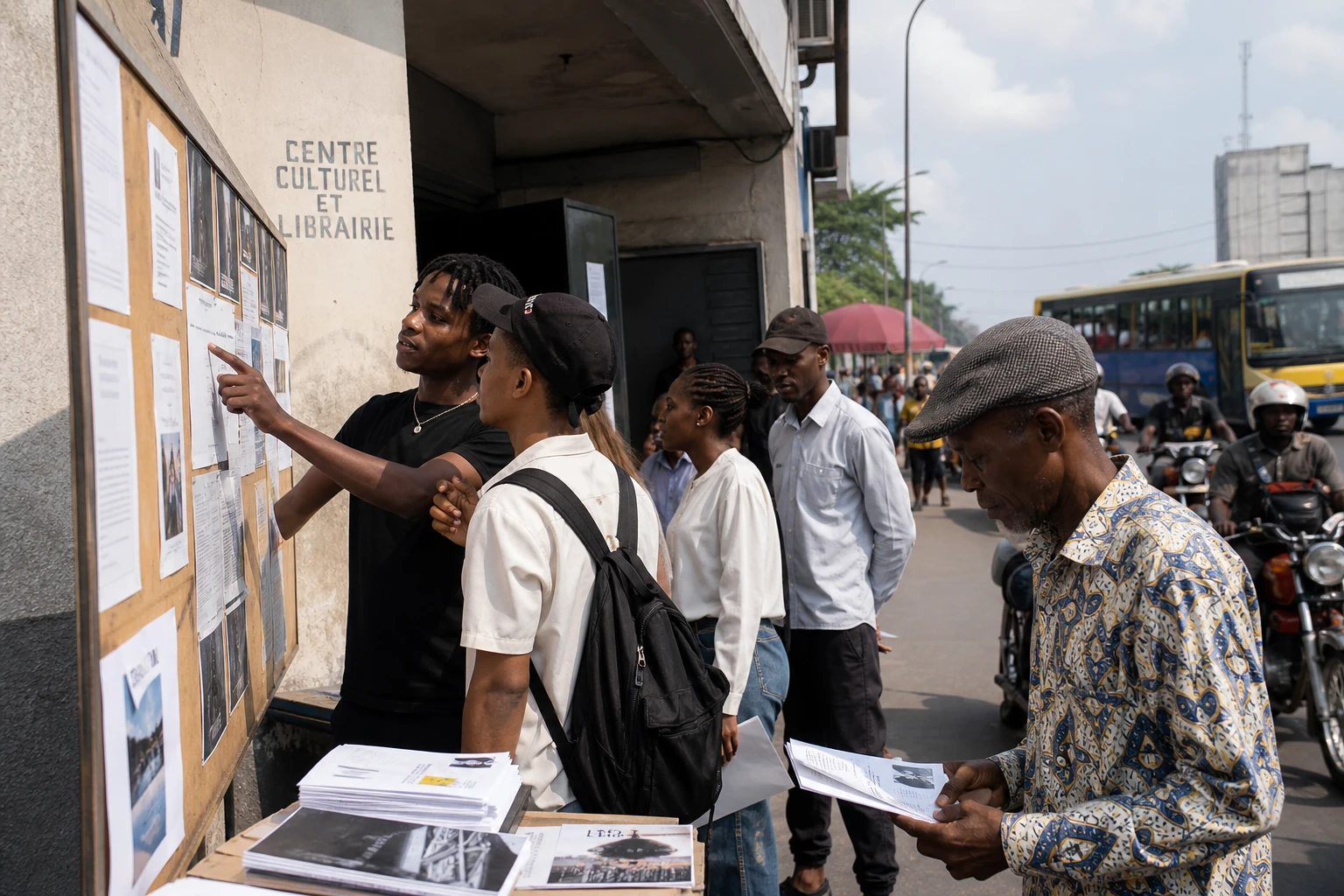
When a monumental canvas becomes a counter-narrative
A mural can serve to flatter an empire. A century later, it can also reveal what it concealed. In Tervuren, the AfricaMuseum has chosen the latter path, devoting an exhibition to the Panorama of the Congo, which the museum describes as « fake news before its time » and which is on view until 27 September 2026.
This gesture matters beyond Belgium. It touches on a central question for Central Africa: who creates images of the continent, in what terms, and in whose interests? In the CEMAC region, where colonial memory remains a political and educational issue, this kind of exhibition brings the battle of narratives to the fore. It also reminds us that domination was exerted not only through weapons or administration, but through images, spectacle and the staging of « progress ».
A work created to glorify Belgian colonial rule
The Panorama of the Congo was designed for the 1913 Ghent World’s Fair. AfricaMuseum and the city of Ghent agree on its extraordinary dimensions: about 115 metres long and 14 metres high, a giant circular canvas intended to impress the public. It was painted by Alfred Bastien and Paul Mathieu after a study trip to the Congo.
The historical context is a fraught one. In 1913, Belgium was still seeking to restore its image after international criticism of the Congo Free State under Leopold II, followed by the colony that became Belgian in 1908. The Ghent exhibition was intended to depict a territory presented as orderly, profitable and pacified, supported by the narrative of the « civilising mission ».
The museum now says that the work glorified Belgian achievements in the Congo and depicted the colony as an idyll. This critical reading is more than a simple gallery commentary: it places the painting within the political economy of colonialism, in which images served to legitimise the seizure of control, the extraction of wealth and racial hierarchy.
Unpicking the illusion and giving people a voice
The current exhibition does more than display a canvas. It takes it apart. The presentation combines a scaled-down reproduction of the panorama, sound installations, archives and Congolese voices from the past and present. Its stated aim is clear: to question who speaks, who is shown and who remains silenced.
This approach changes the way we look. It exposes the gap between aesthetics and reality. Behind the pastoral scenes and idealised figures lie the power relations: forced labour, dispossession, missionary control and the violence of a colonial system that nevertheless presented itself as benevolent. The museum speaks of a manufactured « idyll »; researchers and project contributors, for their part, describe a carefully constructed imperialist fiction.
The decision to invite Congolese voices is crucial. It prevents the colonial interpretation from occupying the space alone. In Kinshasa and Kongo Central, meetings accompanied the project, according to the exhibition documents, to place the work within a history experienced by the descendants of the colonised. This approach resonates particularly strongly in Central Africa, where debates about archives, monuments and the restitution of cultural property are gathering pace.
What this exhibition says about Africa today
For the Congo, in the historical sense of the Congolese territory colonised by Belgium, the stakes go beyond memory. They concern narrative sovereignty. Taking control of archives, images and words makes it possible to move beyond the role assigned by others. It is also a way to connect history, identity and citizenship, without reducing the past to a museum dispute.
For the region, the exhibition matters in two ways. First, it is a reminder that Central Africa has its own interpretations of the colonial past, whether academic, artistic or popular. Second, it shows that European cultural institutions can move from celebration to criticism when they choose to. This shift erases nothing. It creates space for a more balanced discussion, in which African societies are no longer merely the subjects of a narrative, but its co-authors.
One symbolic deadline remains: as long as museums, schools and archives continue to examine these representations, the colonial question will remain alive in African and European public debate. The Panorama of the Congo is a reminder that an image can outlast a regime. But it also shows that an image can be re-read, dismantled and restored to its true status: that of an instrument of power, not a truth.