Algeria
 Egypt
 Libya
 Morocco
 Sudan
 Tunisia
 Benin
 Burkina Faso
 Cabo Verde
 Côte d'Ivoire
 Ghana
 Guinea
 Guinea-Bissau
 Liberia
 Mali
 Mauritania
 Niger
 Nigeria
 Senegal
 Sierra Leone
 The Gambia
 Togo
 Cameroon
 Central African Republic
 Chad
 DR Congo
 Equatorial Guinea
 Gabon
 São Tomé and Príncipe
 Burundi
 Comoros
 Djibouti
 Eritrea
 Ethiopia
 Kenya
 Madagascar
 Malawi
 Mauritius
 Mozambique
 Rwanda
 Seychelles
 Somalia
 South Sudan
 Tanzania
 Uganda
 Angola
 Botswana
 Eswatini
 Lesotho
 Namibia
 South Africa
 Zambia
 Zimbabwe
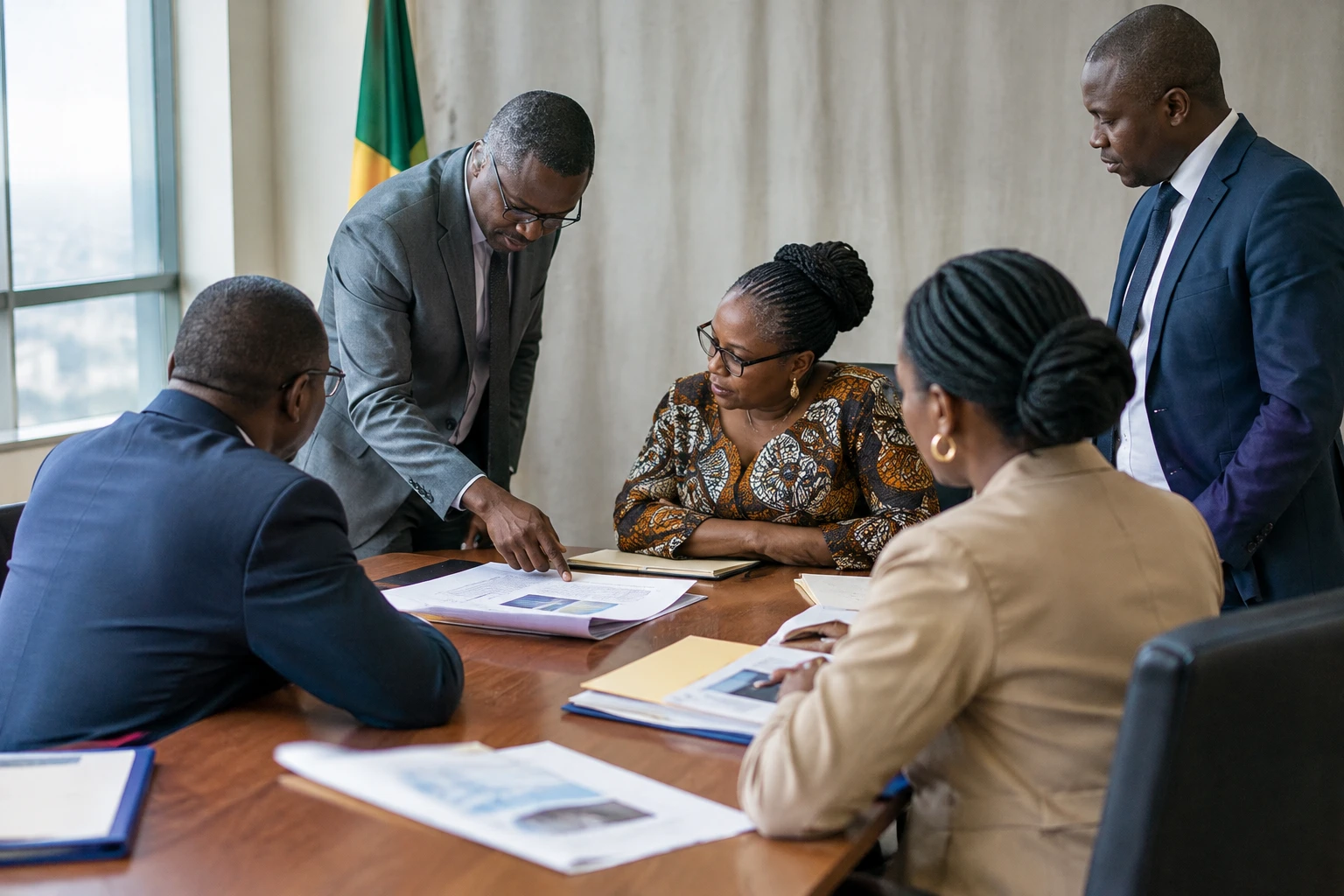
In an economy whose exports rely heavily on oil, a sale abroad does not automatically translate into a visible inflow of foreign currency through the national banking system. In the Republic of the Congo, figures attributed to the regulator of money transfers raise a practical question: what share of commercial revenues actually returns to the country’s financial system?
Significant revenues, but incomplete monitoring
In the first quarter of 2025, Congolese merchandise exports reportedly amounted to nearly CFA francs 1,123 billion, or around US$1.92 billion. According to data attributed to the Money Transfer Regulatory Agency (ARTF), 65% of the corresponding revenues were reportedly repatriated within the prescribed time limits. The report therefore puts nearly CFA francs 393 billion, or US$674.4 million, outside official repatriation channels by that deadline.
These figures come from the ARTF report on cross-border money movements in the first quarter of 2025, described in the available information as having been published by the Ministry of Finance on 3 November. The detailed findings could not be cross-checked against a second independent publication available for consultation. They should therefore be read as figures attributed to the report, rather than as independently confirmed measurements. Above all, “not repatriated on time” does not necessarily mean that the sum has disappeared: here, it refers to revenues that reportedly had not returned to the country through regulatory channels within the period considered.
Oil dominates the sales mix, accounting for 82% of exports during the quarter. The forestry sector represents 12%, with other activities making up the remaining 6%. This concentration makes foreign currency inflows sensitive to the operations of a small number of sectors and to the conditions governing their sales abroad.
A rule shared by CEMAC countries
The Republic of the Congo shares the Central African CFA franc and foreign exchange regulations with the other members of the Economic and Monetary Community of Central Africa (CEMAC). This regional framework requires exporters to channel their revenues through a domiciliary bank. CEMAC’s foreign exchange regulations set a maximum period of 150 days from the effective date of export to collect and repatriate the proceeds of firm sales. CEMAC’s foreign exchange regulations set out these obligations.
The report attributed to the ARTF states that a 10% penalty may apply to sums still not repatriated once the 150-day period has expired. Meeting the deadline is therefore more than a banking formality: it ensures that revenues can be traced between exporters, banks, national authorities and the regional central bank, the Bank of Central African States (BEAC).
For the authorities, late repatriation or repatriation through unauthorised channels makes it harder to monitor external payments. It can also affect the ability to measure foreign currency inflows and compile the balance of payments, the record of a country’s economic transactions with the rest of the world. The report raises this risk but does not establish that the sums identified caused any particular imbalance.
Ports cited as a factor, but not quantified
To explain some of the delays, the ARTF reportedly cited difficulties with ships berthing at Pointe-Noire and Douala, in Cameroon. Pointe-Noire is the Republic of the Congo’s main maritime outlet. Douala, a Cameroonian port, is also a transit point for some trade in the sub-region. Port delays can push back shipping operations and the associated commercial settlement.
But the report, as described, does not quantify the share of revenues affected by these constraints. Nor does it detail other possible causes, such as payment terms set out in contracts, the organisation of transactions or difficulties transmitting supporting documents. It would therefore be excessive to attribute all CFA francs 393 billion to port congestion, or to conclude that these sums are all permanently lost to the country.
This distinction matters to businesses as well as the authorities. Penalties imposed without accurately identifying the causes could penalise exporters facing logistical delays, while inadequate checks could allow poorly traceable flows to persist. The report does not make it possible to measure these effects by company size or sector.
Informal sales and the next monitoring challenge
Informal goods exports reportedly reached CFA francs 16 billion during the quarter. According to the reported data, all of the proceeds were repatriated, but only in cash and outside authorised banks. The amount is well below that of the official revenues reported as late, but the method of transfer raises a separate question: how can the origin, amount and destination of funds be verified when transactions bypass the banking system?
The 2018 regulation is therefore not just intended to bring money back to the Republic of the Congo. It also sets out the channels to be used to make transactions verifiable. Cash repatriation may satisfy the notion of the proceeds physically returning, while still contravening the prescribed banking procedures. This distinction matters when interpreting the reported repatriation rate: using an official channel is part of the obligation, not merely the return of the funds.
Monitoring the ARTF’s next publications and those of the financial authorities will show whether delays are regularised after the 150-day period, whether penalties are imposed and whether port constraints are documented more clearly. Across CEMAC, the issue extends beyond Brazzaville: common foreign exchange rules can produce comparable monitoring only if countries have precise data and consistent controls. For the Republic of the Congo, the immediate question remains how the reported amounts are broken down and how they change beyond the first quarter of 2025.