Algeria
 Egypt
 Libya
 Morocco
 Sudan
 Tunisia
 Benin
 Burkina Faso
 Cabo Verde
 Côte d'Ivoire
 Ghana
 Guinea
 Guinea-Bissau
 Liberia
 Mauritania
 Niger
 Nigeria
 Senegal
 Sierra Leone
 The Gambia
 Togo
 Cameroon
 Central African Republic
 Chad
 DR Congo
 Equatorial Guinea
 Gabon
 Republic of the Congo
 São Tomé and Príncipe
 Burundi
 Comoros
 Djibouti
 Eritrea
 Ethiopia
 Kenya
 Madagascar
 Malawi
 Mauritius
 Mozambique
 Rwanda
 Seychelles
 Somalia
 South Sudan
 Tanzania
 Uganda
 Angola
 Botswana
 Eswatini
 Lesotho
 Namibia
 South Africa
 Zambia
 Zimbabwe
At Sadiola, the stakes go beyond a single mine
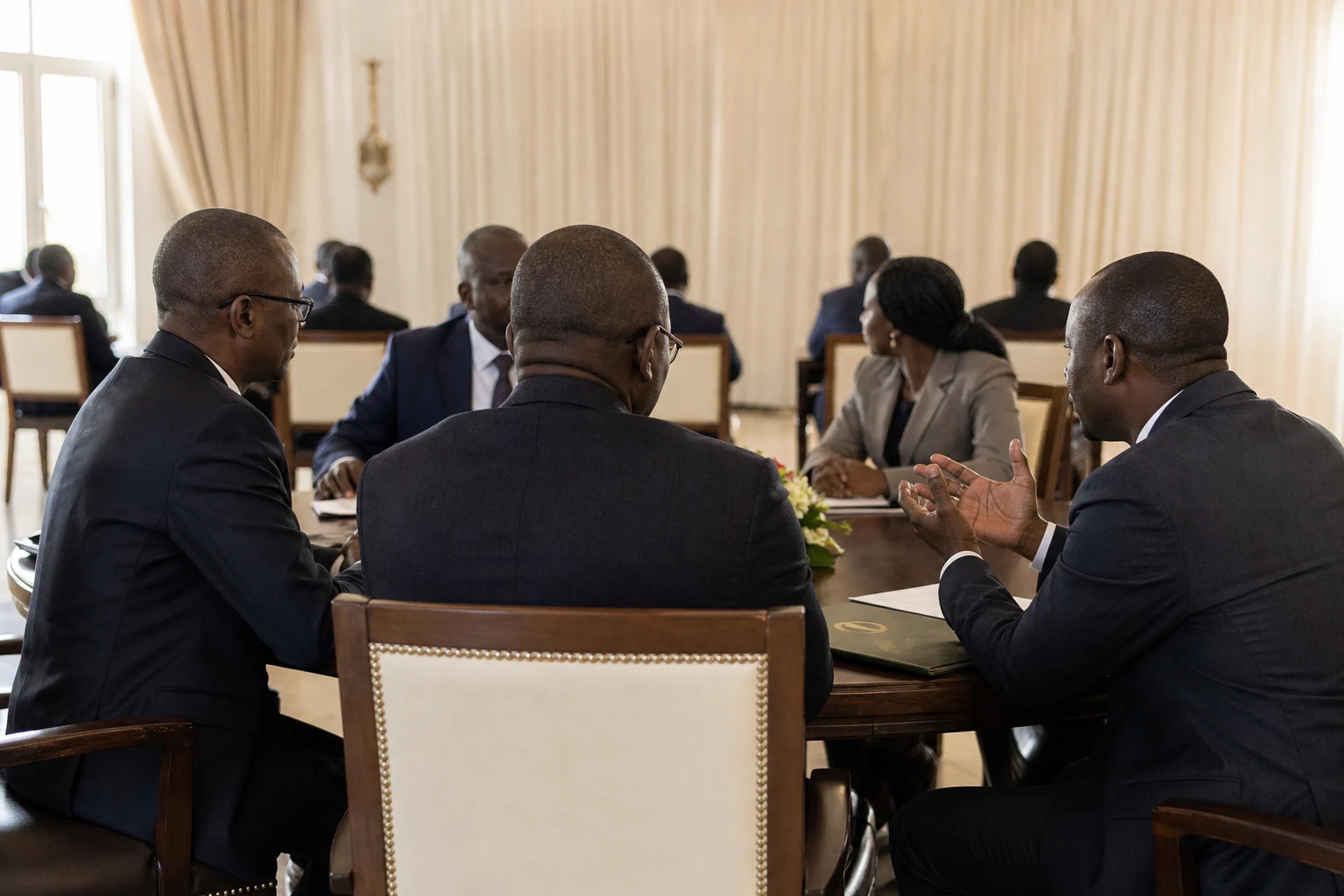
In western Mali, a gold mine is never just an industrial site. It affects public revenues, local employment, roads, contractors and the country’s credibility with investors. Sadiola illustrates this reality with particular clarity: it is a productive asset, a financial lever and a test of confidence for Bamako.
The issue also sits within a broader regional context. Mali, a member of ECOWAS, has toughened its stance towards mining operators since 2023 through a new mining code that increases the state’s stake in projects and raises certain tax liabilities. This policy of mining sovereignty has already weighed on several foreign groups operating in the country, while gold remains one of the pillars of Mali’s exports and foreign exchange earnings.
What the figures say about Sadiola
At its core, Sadiola remains one of the country’s major gold mines. Allied Gold says it controls 80% of the mine, with the Malian state retaining 20% of the capital in SEMOS, the company that operates the deposit. The site is in the Kayes region of western Mali, and the company describes it as a long-term asset already undergoing phased expansion.
The first expansion phase is already under way, with a new grinding circuit and several process optimisations. Allied Gold says it is targeting sustainable annual production of between 200,000 and 230,000 ounces at this stage, compared with 193,880 ounces produced in 2025. For the first quarter of 2026, the group reported 44,104 ounces at Sadiola, followed by 92,184 ounces for the first half of 2026.
Over the longer term, the company is still aiming for a second phase that would take capacity to around 400,000 ounces a year. Its own results document in early 2025 even outlined a path for the company as a whole towards 700,000 to 800,000 ounces by 2029, if projects proceed as planned. In other words, Sadiola is not merely a short-term stopgap: it is one of the growth engines in Allied Gold’s portfolio.
The financing picture has changed course
On 29 July, Allied Gold announced that its agreed takeover by Zijin Gold International had not proceeded on the terms envisaged. Before that deadline, however, the deal had made progress: Allied’s shareholders had approved the transaction on 31 March, and Canadian authorities had already granted certain regulatory approvals. The final deadline was subsequently extended to 29 July 2026.
The deal has not disappeared from the group’s corporate landscape. In January 2026, the transaction was valued at C$5.5 billion, or just under US$4 billion according to the company. Separately, another arrangement had already been announced with Emirati investor Ambrosia Investment Holding, involving an equally owned joint venture covering Allied’s operations in Mali. These signals show that Sadiola’s financing does not depend on a single source, but on a combination of corporate and market options.
For now, the failed takeover mainly changes the timetable. Allied Gold retains control of its African portfolio and must continue Sadiola’s expansion with its existing financial partners. The company says it is continuing to modernise instrumentation, automation and processing circuits, while preparing to add a pre-leach thickener in 2026 to improve recovery and reduce costs.
Why it matters for Bamako and the region
For the Malian state, Sadiola embodies several expectations at once. First, the mine must contribute to revenues at a time when the authorities have tightened discipline over major gold operators. It must also remain productive without opening a new front of tension with communities, contractors and local authorities in Kayes. Finally, it must sustain investor confidence, as the country has already experienced protracted stand-offs in the gold sector.
For local people, the stakes are even more tangible. A successful expansion can support direct and indirect jobs, local markets and logistics services around the site. Conversely, any delay to the expansion or financing bottleneck quickly affects service providers, transport operators and households that depend on mining activity in the area. The benefits and tensions never remain confined to the industrial site.
The implications are continental too. In recent months, several West African states have reaffirmed their sovereignty over strategic resources, with visible effects on mining governance, taxation and the role of foreign capital. In this context, Sadiola has become a case study: a project where international finance, permit renegotiation, the state’s stake and the imperative to produce intersect. What happens there is therefore of interest to Bamako and to the mining capitals of ECOWAS alike.
The next steps will depend above all on two milestones: Allied Gold’s ability to secure its financing, and how quickly Sadiola’s second expansion phase moves from plan to execution. If these steps progress, the mine could strengthen its position among Mali’s major gold complexes, alongside Loulo-Gounkoto and Fekola. If they falter, the country will lose time at a moment when gold remains more than ever a central economic and political issue.