Algeria
 Egypt
 Libya
 Morocco
 Tunisia
 Benin
 Burkina Faso
 Cabo Verde
 Côte d'Ivoire
 Ghana
 Guinea
 Guinea-Bissau
 Liberia
 Mali
 Mauritania
 Niger
 Nigeria
 Senegal
 Sierra Leone
 The Gambia
 Togo
 Cameroon
 Central African Republic
 Chad
 DR Congo
 Equatorial Guinea
 Gabon
 Republic of the Congo
 São Tomé and Príncipe
 Burundi
 Comoros
 Djibouti
 Eritrea
 Ethiopia
 Kenya
 Madagascar
 Malawi
 Mauritius
 Mozambique
 Rwanda
 Seychelles
 Somalia
 South Sudan
 Tanzania
 Uganda
 Angola
 Botswana
 Eswatini
 Lesotho
 Namibia
 South Africa
 Zambia
 Zimbabwe

In North Kordofan, children pay the price of a protracted war
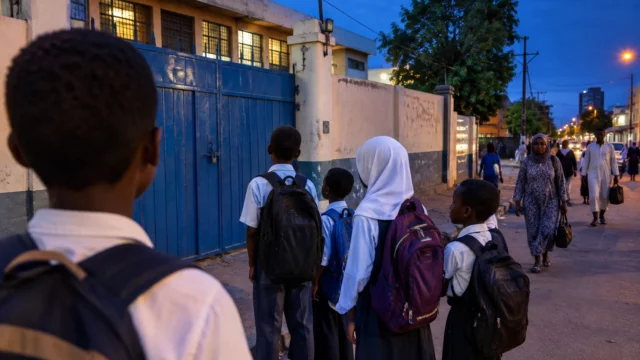
In Al-Obeid, a strategic city in Sudan’s North Kordofan state, the war is measured not only by front lines. It is also visible in closed schools, hit markets and families counting their dead. Since late May, the area has become one of the conflict’s most exposed points, with repeated attacks striking civilians at the heart of their daily lives.
The latest reported incident took place on Friday 24 July in the Burbur area, south of Al-Obeid. Four children, two boys and two girls aged between 8 and 16, were reportedly killed. This brings to at least eight the number of children killed or injured in July in this state in central Sudan.
A local escalation in a national war
Sudan has been engulfed in armed conflict since April 2023, following fighting between the Sudanese Armed Forces and the Rapid Support Forces, two former allies turned rivals. The war first devastated Khartoum, Sudan’s capital, then spread to other regions, including Darfur and Kordofan. Today, these two areas are among those hardest hit by drone strikes and bombardments.
North Kordofan holds a particular place in this war. Al-Obeid, its state capital, controls essential transport routes between the centre, west and north of the country. For this reason, the city and its surroundings have become a military and logistical prize. On 6 July, UNICEF had already said that at least 330 children had been killed or injured in Sudan during the first six months of 2026, and that Kordofan, along with Darfur, had recorded the heaviest child casualties.
The same organisation has also warned of a risk affecting about 500,000 civilians in Al-Obeid and across North Kordofan. This estimate, reported by several international media outlets, shows the scale of the danger facing residents caught between fighting, forced displacement and the gradual collapse of public services.
What the figures say, and what they do not
According to UNICEF, at least 23 children have reportedly been killed and 25 others injured in North Kordofan over two months, since fighting around Al-Obeid intensified in late May. The UN agency says more than 35 child casualties have been recorded in the state since the violence escalated, including at least 18 deaths and more than 17 injuries. It adds that 60% of these cases are reportedly linked to drone attacks.
These figures say something about the nature of the conflict. Children are not affected only in combat zones. They are hit in homes, on roads, in markets and even in places meant to offer them a degree of protection. In Ar-Rahad, a drone strike killed at least two children and injured six others, aged between 6 and 14, within a few days, according to UNICEF and the Associated Press.
The repeated attacks on civilian spaces point to a war that is becoming increasingly diffuse. Schools, health centres, markets and water networks have been damaged, sometimes destroyed, deepening the danger even when no child is near a visible front line. The conflict is therefore not limited to the immediate impact of weapons. It also causes a slow attrition, marked by fear, displacement and interrupted access to healthcare and education.
Concrete effects on families, public services and the local economy
For Sudanese families, especially those living outside major centres, the cost is immediate. Every forced displacement disrupts schooling, access to safe drinking water and medical care. When roads are blocked or dangerous, patients reach hospital later, children leave school and households lose their sources of income. In an economy already weakened by war, these disruptions hit even harder in areas where informal activity predominates.
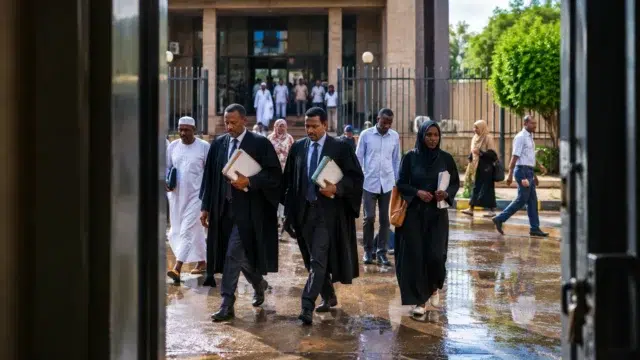
Khartoum, though far from the Kordofan front, remains connected to this crisis. Sudan’s capital still houses some of the country’s institutions, administrative networks and economic functions. When conflict intensifies west of the country’s centre, its effects ripple through trade flows, supplies, internal displacement and the state’s ability to protect civilians. This also explains the sustained concern of humanitarian actors: the war is disrupting essential services at several levels at once.
UNICEF is calling on all parties to respect international humanitarian law, protect civilians and preserve infrastructure essential to children, particularly schools, health facilities and water supply networks. In Sudan, this appeal is aimed both at the immediate protection of children and at the survival of a social fabric already badly damaged by more than three years of war.
A warning that extends beyond North Kordofan
What is unfolding in Al-Obeid and its surroundings goes beyond the local context. Kordofan has become a central theatre of Sudan’s conflict, alongside Darfur. Military decisions made there affect food security, population displacement and humanitarian access across much of the country. Regionally, the situation also weighs on neighbouring countries, which are already hosting displaced Sudanese people and closely monitoring a war that is destabilising the eastern Sahel and the Horn of Africa.
For the African Union and IGAD, the East African intergovernmental organisation to which Sudan belongs, the priority remains the same: to prevent a long, fragmented and deadly conflict from becoming entrenched. The latest figures on children show that the crisis is no longer just military. It has become a crisis of protection, access to public services and survival for an entire generation. The coming weeks will show whether international pressure over Al-Obeid remains symbolic or leads on the ground to a real reduction in attacks on civilians.