Algeria
 Egypt
 Libya
 Morocco
 Sudan
 Tunisia
 Benin
 Burkina Faso
 Cabo Verde
 Côte d'Ivoire
 Ghana
 Guinea
 Guinea-Bissau
 Liberia
 Mauritania
 Niger
 Nigeria
 Senegal
 Sierra Leone
 The Gambia
 Togo
 Cameroon
 Central African Republic
 Chad
 DR Congo
 Equatorial Guinea
 Gabon
 Republic of the Congo
 São Tomé and Príncipe
 Burundi
 Comoros
 Djibouti
 Eritrea
 Ethiopia
 Kenya
 Madagascar
 Malawi
 Mauritius
 Mozambique
 Rwanda
 Seychelles
 Somalia
 South Sudan
 Tanzania
 Uganda
 Angola
 Botswana
 Eswatini
 Lesotho
 Namibia
 South Africa
 Zambia
 Zimbabwe
When online criticism becomes a court case
In Mali, the boundary between political comment and criminal prosecution has narrowed further. In a country where civic space is already under strain, a video posted on social media can now lead to a specialist judge in Bamako. The case concerns a widely followed Fulani content creator, arrested after criticising the transition and its leader, General Assimi Goïta.
The case comes amid a climate in which the transitional authorities closely control public debate. The president of the Transition, Assimi Goïta, continues to lead Mali’s executive without a presidential election, according to the official presentation by the presidency and government. At the same time, several human rights organisations describe a continued contraction of freedom of expression and association in Mali since the successive coups.
What is known about the proceedings in Bamako
Accounts from several sources agree on the chronology. On 24 July, Djiby Barry, also known in civil records as Djibril Sangaré, was arrested in Bamako while attending a concert at the Bamako International Conference Centre, the CICB. After a weekend in police custody, he was brought before the prosecutor on 27 July, then before an investigating judge on 28 July. The magistrate remanded him in custody and charged him with “undermining the state’s credibility” and “publishing false information through an information and communication system”.
According to information corroborated by several sources, the video that prompted the prosecution contains criticism of the transition’s record and the claim that General Goïta has never been elected. The judge is also said to have requested translations of other clips in Fulani, in which Barry discusses the clearance of livestock markets in Bamako and the price of animals during Tabaski, the Muslim festival that often has a significant impact on the popular economy of livestock farmers and traders.
At this stage, no public information confirms the substance of all the allegations. However, the legal classification and remand in custody are consistent with the existence in Mali of a specialist judicial unit for cybercrime, attached to the high court of Commune IV in Bamako. The Ministry of Justice describes the unit as one of the pillars of the ongoing judicial reform.
A judicial tool designed for the digital age, but criticised over its use
Mali has established a legal framework to tackle offences committed using information technology. In principle, it is intended to address online scams, attacks on computer systems and the dissemination of illegal content. But in recent months, NGOs and international media have reported broader use of this legislation against critical voices, including journalists, activists and political figures.
The judicial context also matters. The specialist unit says it handled 1,338 cases in 2025, according to figures reported by the Malian press and picked up by the African Press Agency. This number shows the scale of digital crime, but it also points to something else: the institution is young, under pressure and at the centre of public demands for internet regulation in a highly sensitive political environment.
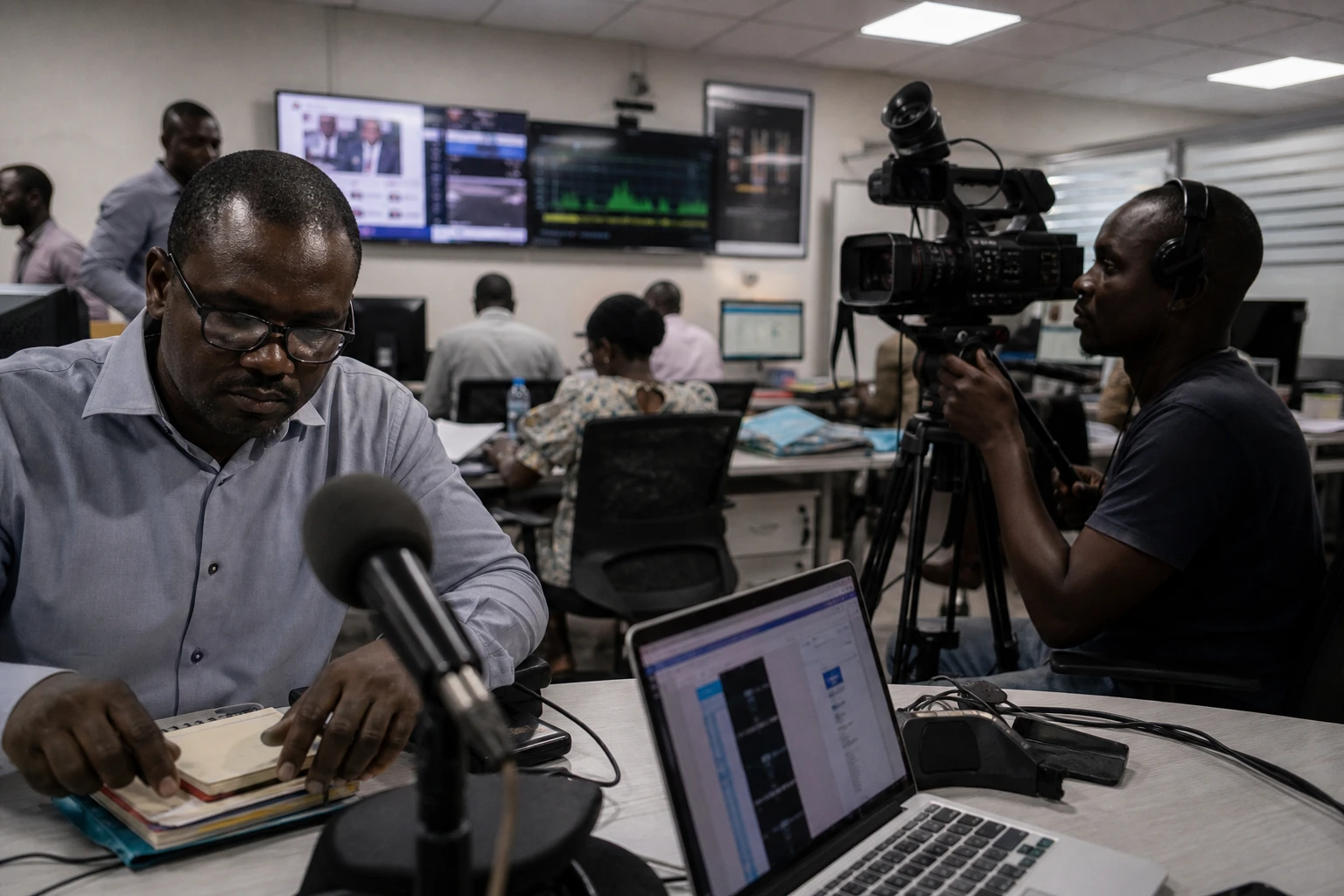
In this context, any proceedings involving a content creator, especially one who speaks in a national language and addresses a specific community, immediately take on a political dimension. They concern more than the author of the video. They also send a signal to video creators, citizen journalists and community networks, which now shape a large part of public debate in Mali.
What this case says about Mali today
This case is part of a broader sequence of events. Since the military takeover and the subsequent consolidation of the transition, political life in Mali has closed in. Political parties have been suspended or dissolved, demonstrations have become harder to hold, and several critical figures have been arrested or prosecuted. Reports by Amnesty International and Human Rights Watch describe a marked narrowing of public space.
The regional implications are clear. Mali has not been a member of ECOWAS since 29 January 2025, alongside Burkina Faso and Niger. The three countries have also strengthened their coordination within the Alliance of Sahel States. In this new environment, the question is no longer just about an individual case. It is about how Sahelian transitional regimes balance security, sovereignty and civil liberties.
For Malians, the effects are very tangible. In Bamako, the battle is being fought in the media, on phones and in the courts. In the regions, it is measured differently: for livestock farmers, small traders and families who depend on the informal economy, issues such as livestock markets, Tabaski and animal prices are no minor details. They affect income, mobility and social dignity.
The case’s continental significance extends beyond Mali. In several African countries, the criminalisation of online speech is becoming a test of institutional maturity. The Malian case will show whether specialist courts are primarily used to prosecute digital fraud, or whether they become a tool for controlling public debate. This is what needs to be watched, in Mali and across the rest of the Sahel.