
 Algeria
 Egypt
 Libya
 Morocco
 Sudan
 Tunisia
 Benin
 Burkina Faso
 Cabo Verde
 Côte d'Ivoire
 Ghana
 Guinea
 Guinea-Bissau
 Liberia
 Mali
 Mauritania
 Niger
 Nigeria
 Sierra Leone
 The Gambia
 Togo
 Cameroon
 Central African Republic
 Chad
 DR Congo
 Equatorial Guinea
 Gabon
 Republic of the Congo
 São Tomé and Príncipe
 Burundi
 Comoros
 Djibouti
 Eritrea
 Ethiopia
 Kenya
 Madagascar
 Malawi
 Mauritius
 Mozambique
 Rwanda
 Seychelles
 Somalia
 South Sudan
 Tanzania
 Uganda
 Angola
 Botswana
 Eswatini
 Lesotho
 Namibia
 South Africa
 Zambia
 Zimbabwe
A transparency debate that goes beyond budgetary technicalities
In Dakar, the debate over political funds is not just a matter of MPs disagreeing with one another. It touches on a broader question: who controls public money when it is presented as sensitive, discreet or exceptional? In a country where demands for accountability have become a strong political marker since the 2024 change of power, the issue has become a test of consistency for the majority itself.
Senegalese people are familiar with this grey area of public finances, often summed up in everyday language as “slush funds”. The term covers allocations used outside the ordinary budgetary process, often in the name of security, intelligence or institutional spending deemed sensitive. In Senegal, the issue regularly returns to public debate because it crystallises a simple expectation: clear rules, supporting documents and oversight.
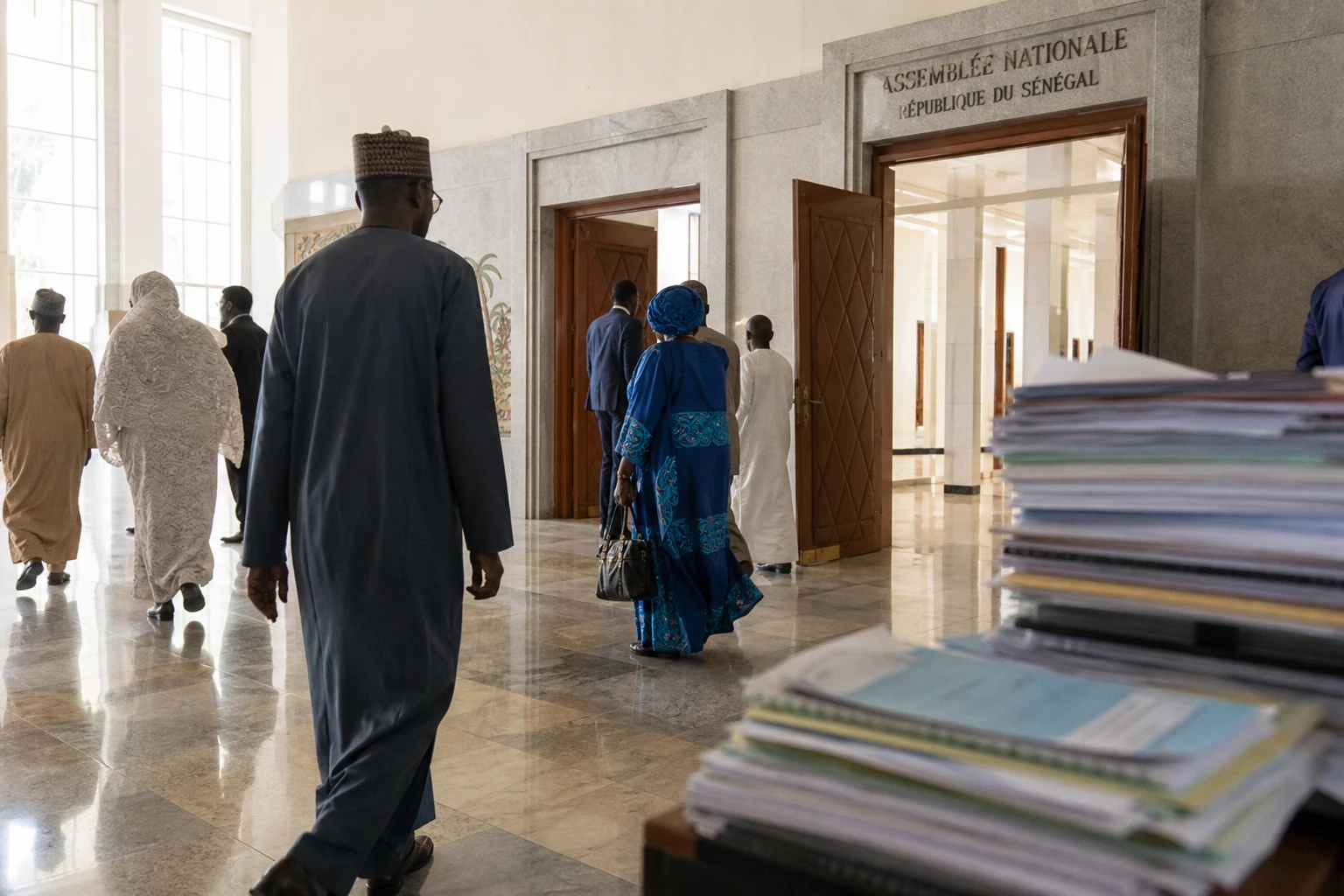
On 24 July 2026, the Bureau of the National Assembly declared admissible a bill put forward by majority MPs aimed at regulating special appropriations and other secret funds. The institution’s statement also said the text would be sent to the president of the Republic for an opinion. According to the Assembly, the head of state has ten days to respond, but is not obliged to do so.
The political timing gives the initiative particular significance. Since taking office as prime minister in 2024, Ousmane Sonko has repeatedly made budget transparency a central theme of his discourse. On 22 May 2026, he publicly reaffirmed that political funds needed to be regulated, recalling that the debate had already existed in PASTEF’s early years, long before it came to power.
But the controversy is not only about the principle. It is also about the method and the example set by those in power. Several civil society voices have called for the publication of reports on the use of funds by the prime minister’s office and the National Assembly over the past two years, before any reform. The demand has been made, among others, by Moundiaye Cissé, president of the NGO 3D, and Babacar Bâ of the Forum of Justice.
The precedent of the change of power and the institutional balance of forces
The Senegalese debate is part of a broader sequence. Since the election of Bassirou Diomaye Faye in March 2024, followed by PASTEF’s victory in the legislative elections, the executive and the majority have made a series of promises of institutional reform. The National Assembly has already examined several sensitive bills this year, demonstrating a willingness to use parliamentary means to shift long-standing boundaries.
At the same time, Senegal’s Constitution states that adopted laws are sent without delay to the president of the Republic for promulgation and that, in principle, he has eight clear days after the expiry of appeal deadlines, with the period halved in an emergency. This institutional framework explains why bills affecting public finances or the organisation of government require a precise back-and-forth between the Assembly, the executive and the Constitutional Council.
The opposition’s criticism centres on this consistency. Thierno Bocoum, head of Agir, has denounced the opacity surrounding funds also used by the prime minister’s office during the period when Ousmane Sonko led the government. His argument is political as well as moral: one cannot demand transparency after holding power without publishing the expected accounts oneself. This line of argument resonates with some members of the public, who want to know whether the announced reform is correcting a system or shifting the centre of gravity of the funds to other institutions.
For citizens, the sensitive issue is less the budget category than the actual use of the money. At a time when the Senegalese state faces considerable pressure on its finances and high expectations for public services, transparency over discretionary spending has become a matter of institutional trust. It concerns the prime minister’s office and the National Assembly, but also the presidency, since every level of government is suspected of having financial leeway that is difficult to scrutinise.
The debate also has a regional dimension. In West Africa, ECOWAS is frequently questioned about the quality of governance and the strength of institutions in member states. Senegal’s case is being closely watched because it combines an electoral transfer of power, a disciplined parliamentary majority and a pledge of accountability. If the initiative succeeds, it could serve as a reference in African discussions on oversight of sensitive spending, without undermining states’ security requirements.
The immediate next steps remain. The bill must still go through the presidential opinion stage, followed by a possible extraordinary session of the National Assembly. The reform’s credibility will be decided there. If the government publishes the requested reports and defines the exact scope of special appropriations, the debate can move beyond accusations of bad faith. Otherwise, the controversy risks confirming a longstanding constant of Senegalese public life: secret funds change hands, but rarely their underlying logic.



