Algeria
 Egypt
 Libya
 Morocco
 Sudan
 Tunisia
 Benin
 Burkina Faso
 Cabo Verde
 Côte d'Ivoire
 Ghana
 Guinea
 Guinea-Bissau
 Liberia
 Mauritania
 Niger
 Nigeria
 Senegal
 Sierra Leone
 The Gambia
 Togo
 Cameroon
 Central African Republic
 Chad
 DR Congo
 Equatorial Guinea
 Gabon
 Republic of the Congo
 São Tomé and Príncipe
 Burundi
 Comoros
 Djibouti
 Eritrea
 Ethiopia
 Kenya
 Madagascar
 Malawi
 Mauritius
 Mozambique
 Rwanda
 Seychelles
 Somalia
 South Sudan
 Tanzania
 Uganda
 Angola
 Botswana
 Eswatini
 Lesotho
 Namibia
 South Africa
 Zambia
 Zimbabwe
When one mine changes the face of a sector
In Bamako, the debate over gold is no longer just about rising prices. It is also about Mali’s ability to turn its deposits into stable revenues, lasting jobs and room for manoeuvre in the budget. In a country where gold accounts for a very large share of exports, every shutdown, restart and contract renegotiation matters far beyond the mining sites.
This year, Mali’s gold sector has once again been shaken by the prolonged paralysis of Loulo-Gounkoto, Barrick Mining’s major complex, suspended since January 2025 amid a standoff with the state over the new mining code adopted in 2023. The legislation aims to increase the share of revenues captured by the Malian state, notably through higher taxation and greater public participation.
Against this backdrop, Fekola has taken on a special role. B2Gold’s mine produced 530,769 ounces of gold in 2025, according to the group’s published annual results. It became the main driver of Mali’s industrial gold production over the past year.
Fekola, a Malian asset at the heart of a listed group
The site does not operate in isolation. Fekola is 80% owned by B2Gold and 20% by the Malian state. Fekola Regional, by contrast, is to be 65% owned by B2Gold and 35% by the state, under arrangements linked to the 2023 mining code and the 2024-2025 agreements.
This point matters. The group’s investors do not directly own the mine. They hold shares in B2Gold, a company listed in Toronto and on the NYSE American. Their exposure to Mali is therefore through the group’s capital, not through a direct entitlement to Fekola’s dividends. This is a fundamental distinction, often lost in public debate.
The group has also confirmed a concrete change on the ground: underground mining at Fekola has begun after approval from the Malian state, while Fekola Regional, located about 20 kilometres from the main mine, is still awaiting the operating permit before it can begin production.
What the figures say about 2026
For 2026, B2Gold expects production of 410,000 to 460,000 ounces across the Fekola complex, with Fekola Regional expected to contribute between 60,000 and 80,000 ounces if the permit is issued in time. The group also plans a broader restart of regional activities in the second half of 2026, followed by a ramp-up over several years.
The same source says Fekola Regional could produce an average of about 180,000 ounces a year during its first five years of full operation, with a lifespan extending well beyond the current decade. For Mali, the issue is therefore not just 2026 production. It is also about securing a new revenue base in the medium term.
The contrast with 2025 is stark. While Fekola grew, Loulo-Gounkoto declined amid regulatory tensions. Reuters reported that Mali’s industrial gold production fell by 22.9% in 2025, specifically because of Barrick’s prolonged shutdown and tighter mining rules.
An issue of sovereignty, but also of trust
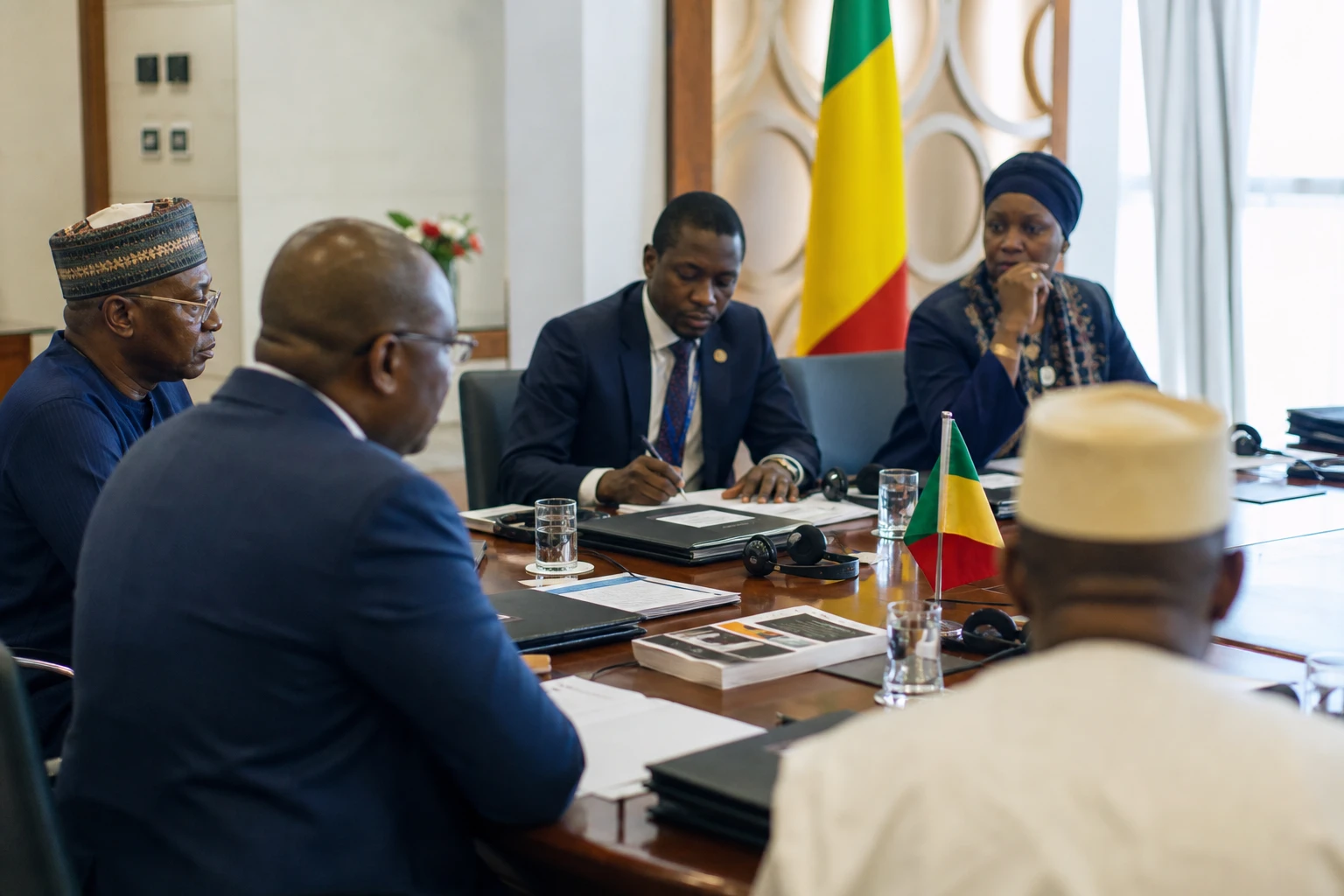
The Fekola case illustrates a broader fault line. On one side, the Malian state wants to increase the value captured locally. On the other, mining groups point out that a gold project depends on lasting legal, fiscal and administrative certainty. Caught between them, local communities are chiefly looking for roads, subcontracting opportunities, wages and tangible benefits.
In Fekola’s case, the state’s participation is not symbolic. It is part of the site’s governance and revenue-sharing arrangements. But this does not, by itself, guarantee that wealth will be captured optimally. That also depends on costs, exemptions, production rates, export schedules and the level of taxes actually collected. B2Gold has said it received about $65 million in VAT refunds from the Malian government in 2025, through offsets against corporate income tax instalments.
For employees, contractors and suppliers, the complex’s stability matters as much as the size of the deposit. Fekola supports a chain of activities extending well beyond the mine site. For the state, however, the equation is more delicate: it must strike a balance between mining’s attractiveness, public revenues and the assertion of firmer control over resources.
What Fekola says about Mali, and the rest of West Africa
The Malian case resonates beyond its borders. Across the ECOWAS region, several states are seeking to regain control of raw-materials extraction, with approaches that sometimes differ but share a common goal: capturing more value locally. Mali is pushing this logic further amid a military transition and a redefinition of its relations with major international groups.
This strategy can deliver quick gains if revenues increase without undermining investment. But it can also hold up projects if regulatory certainty deteriorates. Loulo-Gounkoto shows the risk. Fekola shows the other side: when an operator secures a negotiated framework and can move forward, production resumes and the state retains a central role in governance.
The next milestone to watch is therefore clear: the issuing of Fekola Regional’s operating permit and the complex’s ramp-up in the second half of 2026. This is where part of Mali’s gold-sector recovery will be determined, as well as the credibility of Bamako’s new approach to sharing mining wealth.