Algeria
 Egypt
 Libya
 Morocco
 Sudan
 Tunisia
 Benin
 Burkina Faso
 Cabo Verde
 Côte d'Ivoire
 Ghana
 Guinea-Bissau
 Liberia
 Mali
 Mauritania
 Niger
 Nigeria
 Senegal
 Sierra Leone
 The Gambia
 Togo
 Cameroon
 Central African Republic
 Chad
 DR Congo
 Equatorial Guinea
 Gabon
 Republic of the Congo
 São Tomé and Príncipe
 Burundi
 Comoros
 Djibouti
 Eritrea
 Ethiopia
 Kenya
 Madagascar
 Malawi
 Mauritius
 Mozambique
 Rwanda
 Seychelles
 Somalia
 South Sudan
 Tanzania
 Uganda
 Angola
 Botswana
 Eswatini
 Lesotho
 Namibia
 South Africa
 Zambia
 Zimbabwe
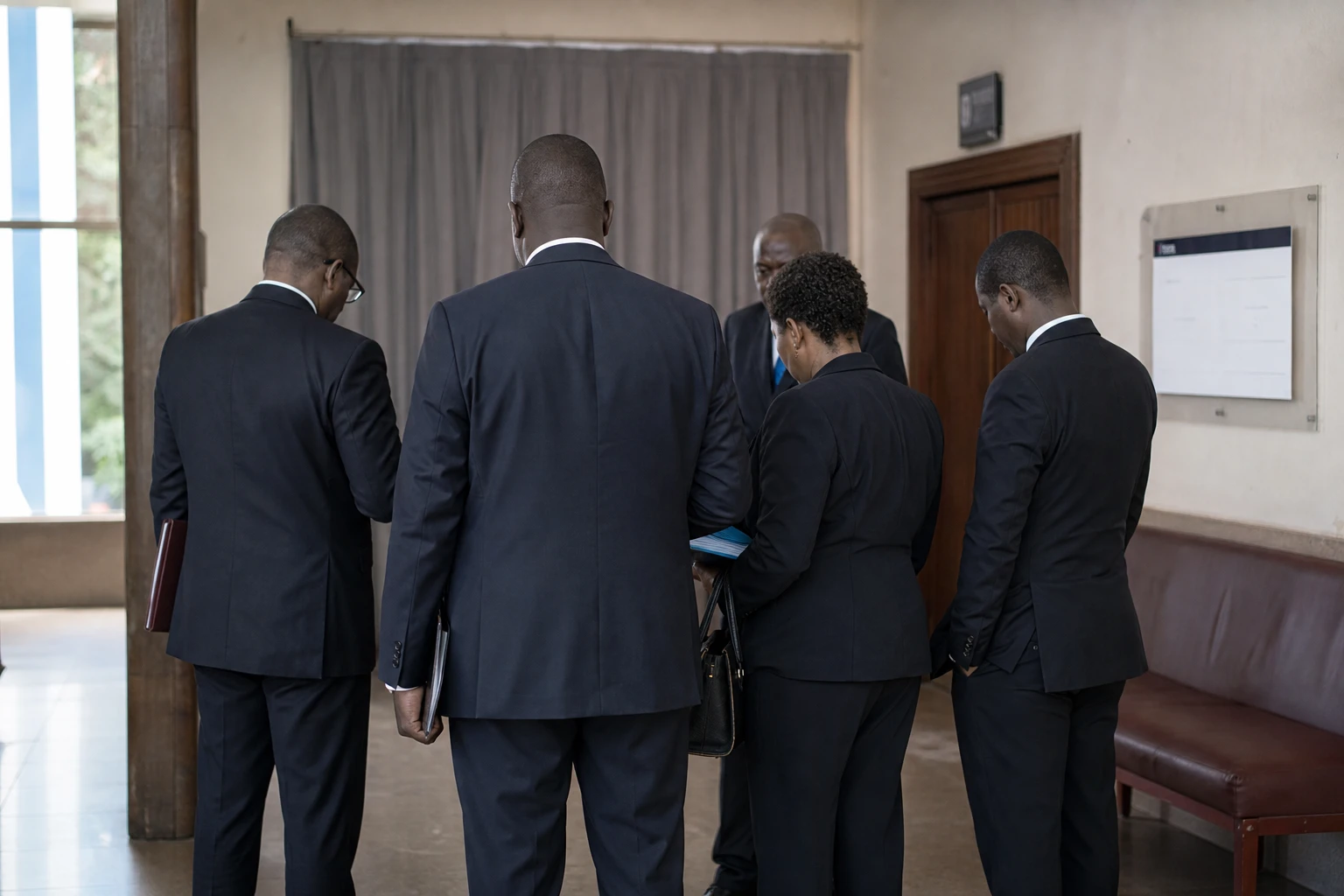
In Conakry, a verdict measuring the distance between the promise of justice and the memory of crimes
Sixteen years after the events, the 28 September 2009 case continues to weigh on Guinea as both a matter of justice and a political test. In Conakry, the ruling against Colonel Bienvenu Lamah is a reminder that a historic trial is not defined by a single conviction: it also hinges on how the state treats those who carried out the acts, the witnesses and the victims.
On 28 September 2009, at the stadium of the same name on the outskirts of the Guinean capital, an opposition demonstration was brutally repressed. The international commission of inquiry mandated by the United Nations established that at least 156 people had been killed and at least 109 women had suffered sexual violence. These figures remain the most robust basis for the case, although human rights organisations believe the actual toll is higher.
A second phase of the trial in a Guinea still marked by the transition
Monday’s verdict comes against a broader backdrop. Guinea remains under the leadership of General Mamadi Doumbouya, head of the transition since the September 2021 coup, while the authorities say they are pursuing institutional reforms and a return to constitutional order. In this context, the 28 September trial has become a symbol: of a country seeking to show that it can judge its own tragedies without waiting for an external court.
The case concerns more than Guinean justice. In 2009, the United Nations report was sent to Guinea, as well as to the Security Council, the African Union Commission and ECOWAS, the Economic Community of West African States. This is a reminder that the mass crimes committed in Conakry had regional significance, at a time when West Africa is still grappling with civilian control of security forces and the accountability of military hierarchies.
In the second phase of the trial, Bienvenu Lamah was prosecuted for complicity in abuse of authority, murder, kidnapping and unlawful detention, among other offences. According to several hearings reported in 2026, he was the only person in custody in the case, while three other co-defendants remained at large. Prosecutors had sought a ten-year prison sentence, with five years without the possibility of parole. The Dixinn Criminal Court, sitting at the Conakry Court of Appeal, ultimately acquitted him and ordered his immediate release.
Between compensation for victims and the demands of credible justice
For the civil parties, the ruling opens a new chapter. Their lawyers have announced that they will appeal. Their position is understandable: in a case where survivors, the families of the disappeared and victims of sexual violence have been waiting for more than 15 years, every judicial decision is viewed through one lens: the overall consistency of the process. An acquittal may be seen as simply reflecting a lack of evidence, or as a sign of backsliding in a procedure that is already fragile.
The 28 September trial has nonetheless already set a major precedent. In July 2024, former junta leader Moussa Dadis Camara was found guilty of crimes against humanity and sentenced to 20 years in prison. Seven other people were subsequently sentenced to terms of up to life imprisonment. But in March 2025, Mamadi Doumbouya granted Dadis Camara a presidential pardon, a decision that drew strong criticism from civil society and human rights advocates. In other words, the judicial process moved forward, then was weakened by an act of political clemency.
This sequence puts the significance of Bienvenu Lamah’s acquittal into perspective. On the one hand, judges must meet a simple requirement: to convict only on the basis of solid evidence. On the other, the public expects the links in the chain of command to be examined with the same rigour as the main decision-makers. This is where the system’s credibility is at stake. In Guinea, where changes of regime have often interrupted sensitive proceedings, a trial that is misunderstood or seen as too selective may fuel distrust rather than heal a wound.
What the case says about the region and Guinea’s judicial future
Beyond Guinea, the 28 September case sends a message to all of West Africa. In a sub-region where military transitions, coups and electoral disputes remain frequent, the question is no longer simply whether a massacre can be tried. It is also whether rulings can withstand political pressure, presidential pardons and shifts in the balance of power. ECOWAS and the African Union are watching these cases closely because they touch on a central issue: impunity fuels repetition.
In Guinea, the stakes are also domestic. Victims, lawyers, families of the disappeared and human rights associations are not asking only for sentences. They want a clear account of the chain of responsibility, dignified treatment for survivors, and a justice system capable of seeing its own decisions through. In a country where political decisions are concentrated in Conakry, but the effects of crises spread to the regions, every ruling in this case goes beyond the fate of a single colonel. It says something about whether the state intends to settle accounts with its past violence.
The next key moment will probably be the appeal announced by the civil parties. It will show whether the second phase of the 28 September trial remains an active judicial undertaking or becomes mired in fragmented justice. For Guinea and the region, the decisive point remains the same: judicial truth has value only if it withstands political reversals.