Algeria
 Egypt
 Morocco
 Sudan
 Tunisia
 Benin
 Burkina Faso
 Cabo Verde
 Côte d'Ivoire
 Ghana
 Guinea
 Guinea-Bissau
 Liberia
 Mali
 Mauritania
 Niger
 Nigeria
 Senegal
 Sierra Leone
 The Gambia
 Togo
 Cameroon
 Central African Republic
 Chad
 DR Congo
 Equatorial Guinea
 Gabon
 Republic of the Congo
 São Tomé and Príncipe
 Burundi
 Comoros
 Djibouti
 Eritrea
 Ethiopia
 Kenya
 Madagascar
 Malawi
 Mauritius
 Mozambique
 Rwanda
 Seychelles
 Somalia
 South Sudan
 Tanzania
 Uganda
 Angola
 Botswana
 Eswatini
 Lesotho
 Namibia
 South Africa
 Zambia
 Zimbabwe
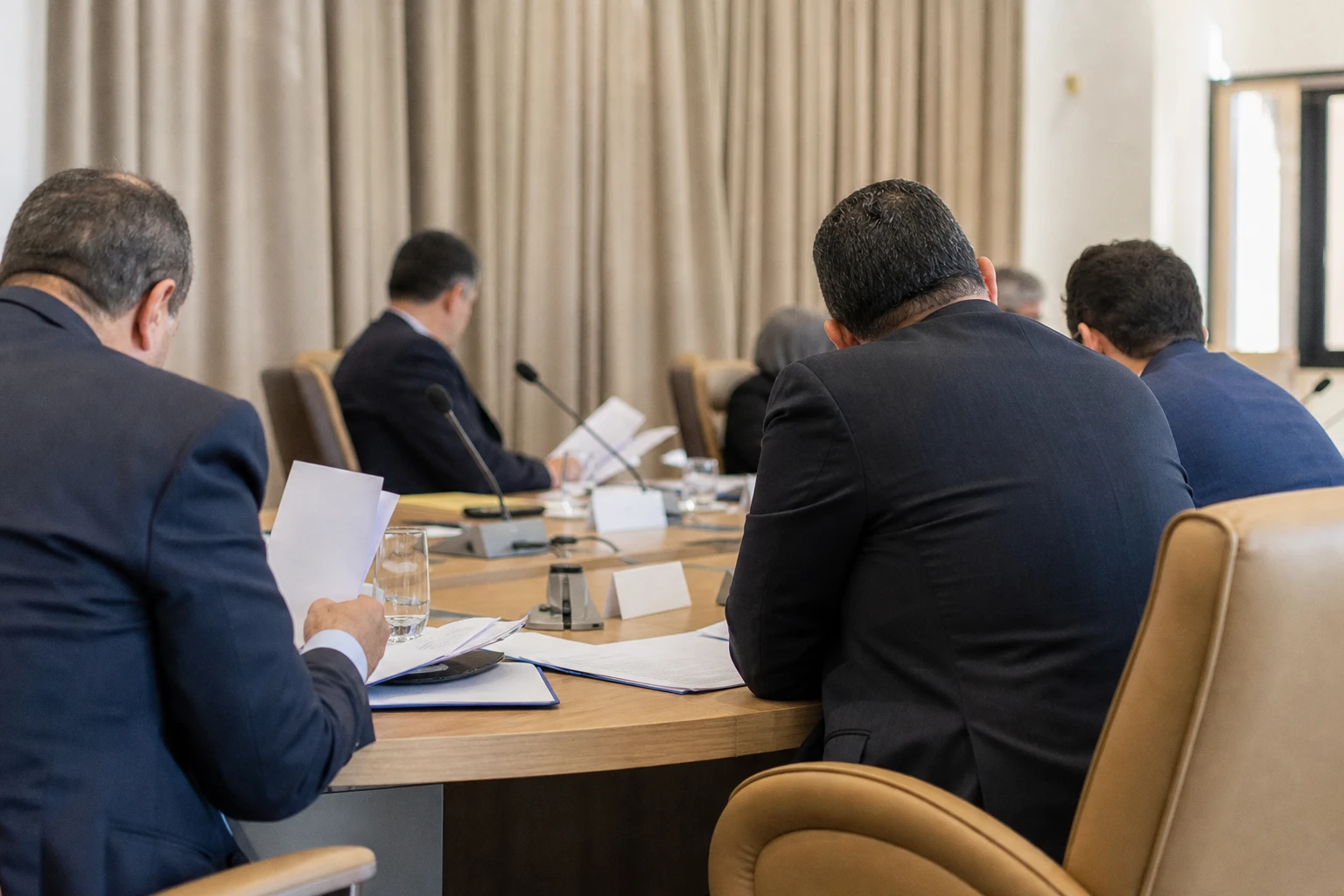
A gas bet in a still-fragile sector
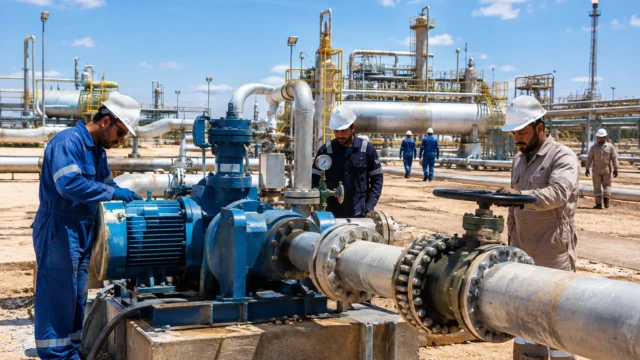
In Tripoli, the question is not just who will return to invest. It is above all how Libya, a country whose economy depends heavily on hydrocarbons, can turn abundant resources into steady production, stable revenues and greater political room for manoeuvre. Gas has a particular place in this equation: it supplies the domestic market, supports regional exports and could offer the country a more flexible alternative to oil alone. The challenge, meanwhile, is a familiar one in Libya: underinvestment, infrastructure in need of upgrading and an institutional environment that remains unstable.
In the Maghreb, Libya is moving forward with its own vulnerabilities, but also with a rare advantage: vast reserves and a Mediterranean coastline that connects it directly to European markets. The country is a member of the Arab Maghreb Union, a regional organisation recognised by the African Union, alongside Algeria, Morocco, Mauritania and Tunisia. At continental level, this issue therefore touches both African energy integration and security of supply in the northern Mediterranean.
Shell, the NOC and a step-by-step approach
Last week, the National Oil Corporation, Libya’s state-owned oil company, discussed a broader strategy for the gas sector with Shell, building on agreements already reached between the two groups. According to the NOC, the talks covered progress on technical studies in areas covered by the memorandums of understanding, as well as the timetable needed to move from preliminary analysis to operational programmes. The same sequence was confirmed in an account published by the Libyan company in July 2025, which said Shell was to assess the hydrocarbon potential of the Al-Atshan field and other assets held by the NOC through technical and economic feasibility studies.
The initiative is not starting from scratch. In July 2025, the NOC had already announced in London that it had signed memorandums with Shell and BP. Shell said it intended to resume operations in Libya in the fourth quarter of 2025, while the state-owned company emphasised skills transfer, training for executives and the preparation of projects capable of moving beyond the stage of intentions. The return of a major group such as Shell says more than simply that confidence among the majors has recovered. It also signals that Tripoli is seeking to rebuild a decision-making chain that is more transparent to investors.
The choice reflects a clear rationale: the NOC first wants a better understanding of the real value of the targeted assets before committing to costly developments. It is a cautious approach, but a necessary one in a country where recent energy history has often been disrupted by political tensions, budget decisions and disputes over oil revenues. Gas is becoming a test of credibility. Production must increase, but it must also become more reliable.
Why gas matters so much to Tripoli
The issue is economic before it is symbolic. The World Bank says hydrocarbons accounted for 65% of Libya’s GDP, 93% of exports and 72% of public revenue in 2024. It also notes that the economy remains exposed to production shocks, governance crises and slow investment. In this context, gas can support several balances at once: domestic supply, lower flaring, more secure exports to the Mediterranean and support for local industry.
The NOC, for its part, presents gas as a pillar of its future strategy. It says Libya has Africa’s largest proven gas reserves and already supplies neighbouring and European markets, notably via the Greenstream pipeline to Italy. On the ground, the challenge is tangible: to make better use of deposits, limit losses and use more effectively a resource that can serve the national economy before supporting exports.
For the population, the difference is first felt in daily life. Higher gas production can help supply electricity, industry and the domestic market. For the state, it can broaden the revenue base without relying solely on crude. For foreign companies, it opens up a long-term market, provided the rules remain stable. That is where the real battle will be fought: not just in signing an agreement, but in turning it into production, services, maintenance and actual revenue.
A reopening that extends beyond Libya
The resumption of talks with Shell comes as Tripoli seeks to reorganise its entire energy sector. In February 2026, the NOC announced the winners of its first oil and gas licensing round since 2007, awarding five of 20 blocks to groups including Chevron, Eni, QatarEnergy and Repsol. Reuters described the process as the first major competitive revival in nearly two decades. The message is clear: Libya is seeking to become a centre of industrial competition again, not just a resource under strain.
This momentum has continental significance. At African level, the African Union has long stressed the role of energy resources in access to energy, industrial development and state security. More broadly, the return of the majors to Libya is a reminder that North Africa remains a crossroads between European energy security, African economic sovereignty and the reshaping of investment flows. Developments in Libya should therefore be followed beyond Tripoli: the next development agreements, the pace at which Shell’s studies are completed, and the NOC’s ability to turn a diplomatic reopening into lasting gains in production.