
 Algeria
 Egypt
 Libya
 Morocco
 Sudan
 Tunisia
 Benin
 Burkina Faso
 Cabo Verde
 Côte d'Ivoire
 Ghana
 Guinea
 Guinea-Bissau
 Liberia
 Mali
 Mauritania
 Niger
 Nigeria
 Senegal
 Sierra Leone
 The Gambia
 Togo
 Cameroon
 Central African Republic
 Chad
 Equatorial Guinea
 Gabon
 Republic of the Congo
 São Tomé and Príncipe
 Burundi
 Comoros
 Djibouti
 Eritrea
 Ethiopia
 Kenya
 Madagascar
 Malawi
 Mauritius
 Mozambique
 Rwanda
 Seychelles
 Somalia
 South Sudan
 Tanzania
 Uganda
 Angola
 Botswana
 Eswatini
 Lesotho
 Namibia
 South Africa
 Zambia
 Zimbabwe
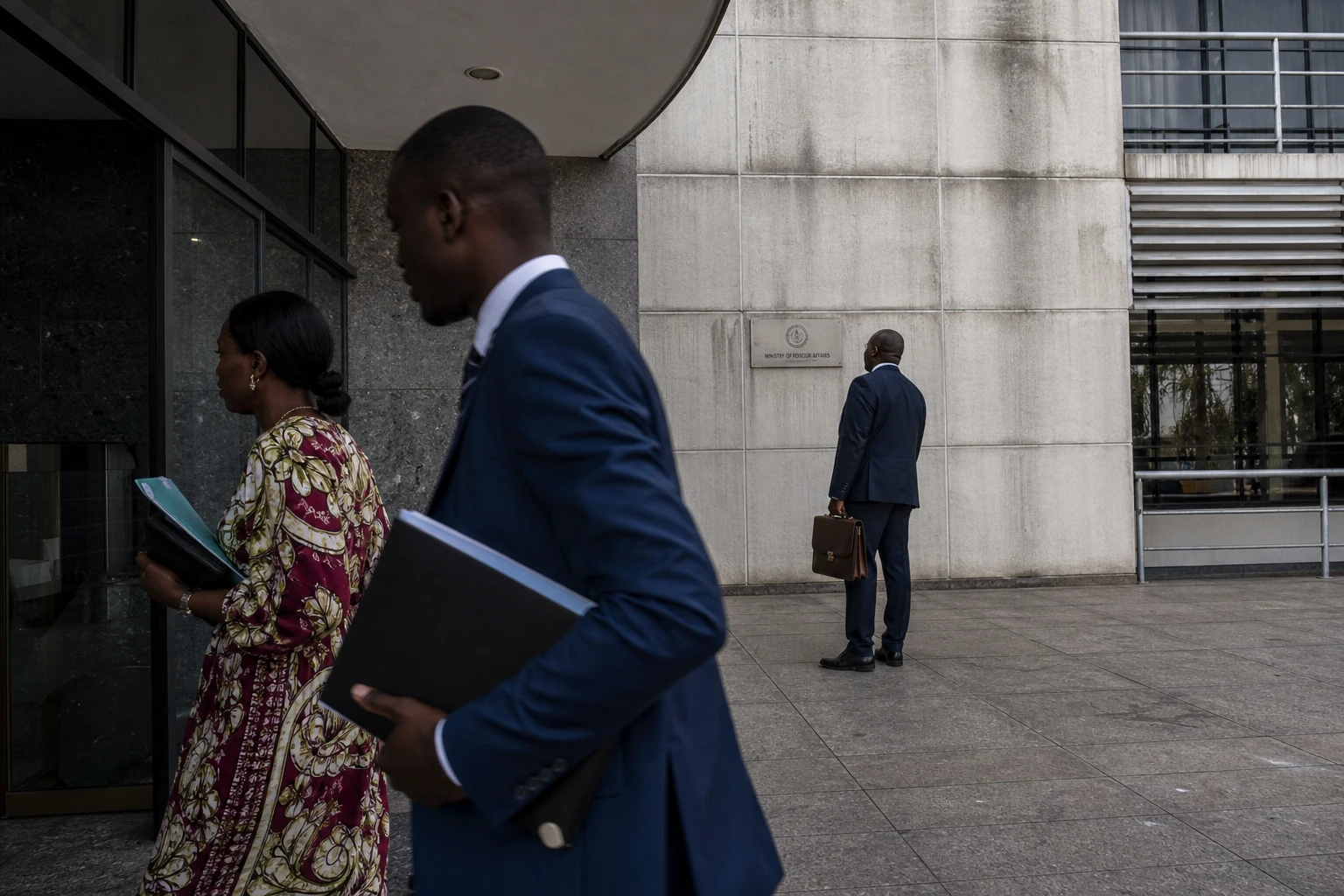
Congolese diplomacy seeks practical levers
In Jerusalem, the Democratic Republic of the Congo sent a clear signal: Kinshasa wants to make its diplomacy a useful instrument, not merely a language of courtesy. As the country seeks to secure the east, attract investment and broaden its partnerships, the meeting between the Congolese foreign minister and her Israeli counterpart forms part of a broader strategy to diversify external support.
The visit comes as the DRC holds the rotating presidency of the UN Security Council in July 2026. In recent weeks, the Congolese Ministry of Foreign Affairs and the DRC’s permanent mission in New York have emphasised conflict prevention, natural resource governance and dialogue as paths to stability. In other words, Kinshasa is speaking at once to the UN, its neighbours and bilateral partners able to provide practical expertise.
Two memorandums to frame an existing relationship
Thérèse Kayikwamba Wagner’s working visit to Israel, which began on Sunday 27 July 2026, resulted in the signing of two memorandums of understanding. According to information made public, they cover diplomatic training and political dialogue between the two ministries. The official visit is due to end on 29 July.
The agenda set out by Kinshasa and Jerusalem remains targeted. The Congolese side has referred to a partnership to be expanded into investment, innovation, agriculture, health, education, diplomatic training and emerging technologies. For its part, Israel has emphasised the two memorandums signed, presenting them as a way to bring the administrations closer and open up new prospects for cooperation.
This step does not start from scratch. In 2023, the Congolese presidency had already signalled a strengthening of ties with Israel following the meeting between Félix Tshisekedi and Benjamin Netanyahu in New York, with the relocation of the Congolese embassy from Tel Aviv to Jerusalem envisaged once the commitment was implemented. Earlier still, an official report by MASHAV, Israel’s international cooperation agency, had noted exchanges with the DRC on capacity-building and development cooperation.
What Kinshasa seeks beyond handshake photos
For the DRC, the value of such closer ties is first and foremost pragmatic. The country needs better-trained diplomats, more effective administrations and partnerships capable of producing visible results in sensitive sectors such as health, agriculture and technology. In a vast country marked by territorial inequalities, these forms of cooperation mean different things in Kinshasa, in the provinces and in areas affected by insecurity. They are worthwhile only if they lead to skills, networks and projects that are followed through.
The timing is not incidental. The DRC is emerging from an intense period of diplomacy, marked by discussions on peace in the Great Lakes region, its active participation in Security Council debates and the relaunch of the inclusive national dialogue announced in Kinshasa. In this context, every bilateral partnership is also a political message: the Congolese government wants to show that it can engage with several capitals at once, without confining its foreign policy to a single axis.
For Israel, the DRC is an important African partner, both because of its size and resources and its position in the balance of power in Central Africa. Cooperation could also serve as a bridge to areas where the Israeli state readily highlights its expertise: public administration training, innovation, health and agriculture. But the relationship remains sensitive, as international debate over Gaza and international law continues to shape perceptions of diplomatic rapprochement with Israel, including on the African continent.
Regional significance for Central Africa and the African Union
In the sub-region, this move is a reminder that the DRC is seeking to multiply its diplomatic points of support well beyond its immediate neighbourhood. For Central Africa, a member of ECCAS, the stakes are more than symbolic. They concern the transfer of know-how, the training of public officials and states’ ability to negotiate useful partnerships in an environment where security and development remain closely linked.
At continental level, the episode confirms a broader trend: African capitals are no longer content to align their choices with those of the major blocs. They are seeking room for manoeuvre, tools and partners able to deliver immediate value. For the DRC, the question to watch now is simple: will these memorandums lead to specific, visible and measurable programmes, or will they remain confined to diplomacy? The answer will say much about Kinshasa’s new approach, at the intersection of sovereignty, multilateralism and development.



