Algeria
 Egypt
 Libya
 Morocco
 Sudan
 Tunisia
 Benin
 Burkina Faso
 Cabo Verde
 Côte d'Ivoire
 Ghana
 Guinea
 Guinea-Bissau
 Liberia
 Mali
 Mauritania
 Nigeria
 Senegal
 Sierra Leone
 The Gambia
 Togo
 Cameroon
 Central African Republic
 Chad
 DR Congo
 Equatorial Guinea
 Gabon
 Republic of the Congo
 São Tomé and Príncipe
 Burundi
 Comoros
 Djibouti
 Eritrea
 Ethiopia
 Kenya
 Madagascar
 Malawi
 Mauritius
 Mozambique
 Rwanda
 Seychelles
 Somalia
 South Sudan
 Tanzania
 Uganda
 Angola
 Botswana
 Eswatini
 Lesotho
 Namibia
 South Africa
 Zambia
 Zimbabwe
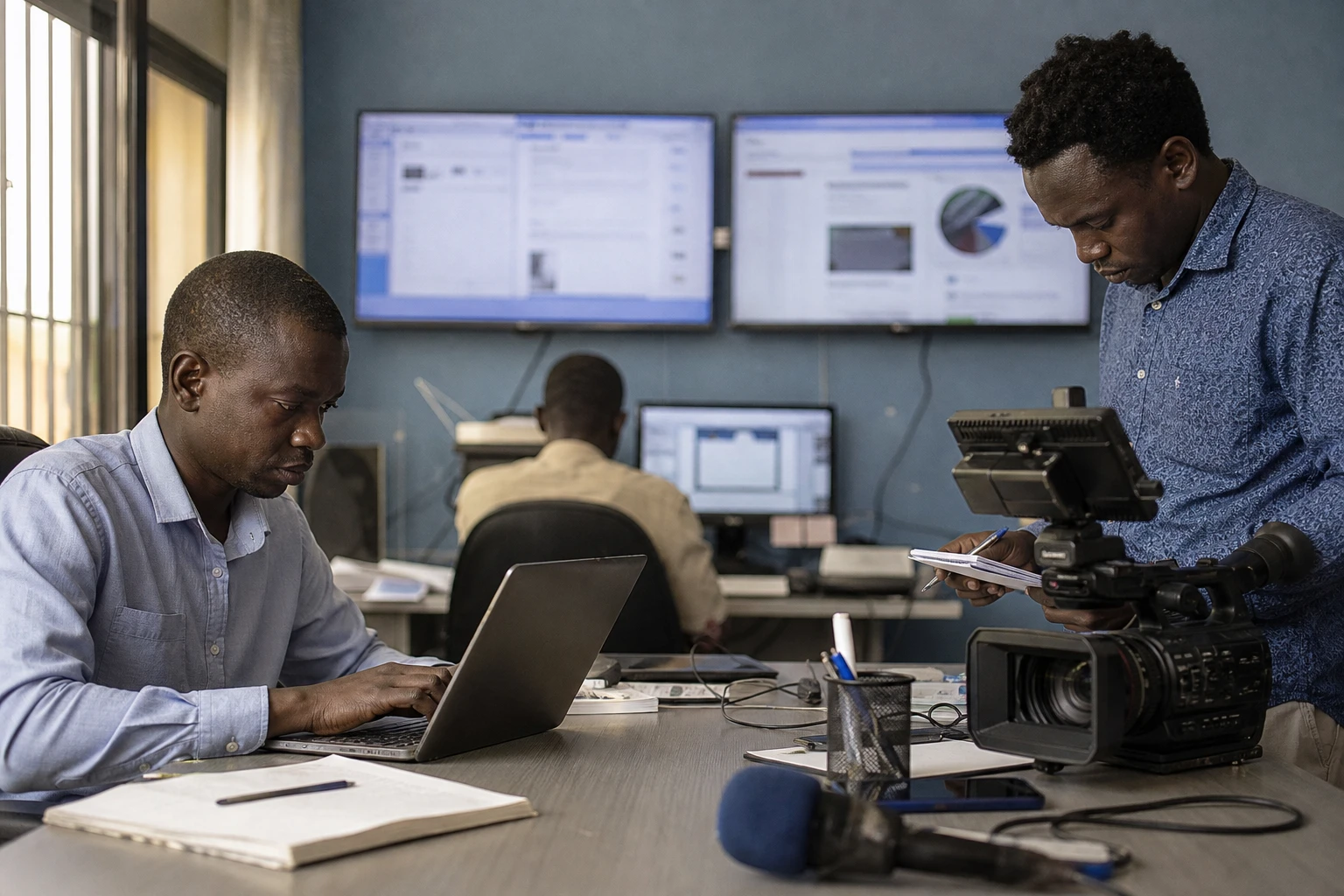
Training a scientific elite without leaving the foundations of education behind
In Niger, the question is not only how many pupils excel at the top. It is also how a fragile school system can, over time, produce people capable of driving progress in energy, agriculture, digital technology and public health. In a country where demand for skills is rising rapidly, the response now rests on a handful of public science colleges, designed as centres of excellence in the capital, Niamey, and in two major regional centres, Tahoua and Zinder.
This decision comes as Niger continues to face intense demographic pressure. The United Nations puts the country’s population at about 27 million in July 2024, with growth expected to accelerate further in the coming years. In education, this dynamic translates into huge demand for classrooms, teachers and qualifying courses in a system already under strain.
An entrance exam, results, then a state-led project
On Saturday 25 July 2026, the Minister of National Education, Elisabeth Shérif, launched the third edition of the entrance examination for science colleges in Niamey. According to the ministry, 1,432 candidates sat the exam for the 2026-2027 academic year. All had achieved an average of at least 9 out of 10 in the Certificate of Completion of the First Cycle of Basic Education (CFEPD). This threshold places the institutions at the intersection of academic excellence and deliberate national selection.
The initiative is recent. The first science college opened in Sorey, in Niamey, on 9 December 2024. Two more followed in Tahoua and Zinder. In April 2026, Prime Minister Ali Mahamane Lamine Zeine presided over the launch of construction work on permanent facilities for the three institutions. The project has therefore moved beyond symbolism to the establishment of a physical foundation.
The authorities point to what they describe as encouraging academic results. The Nigerien News Agency reports that, in the first cohort, 38 pupils achieved an annual average of at least 18 out of 20, 48 scored above 17 out of 20 and 35 achieved at least 16 out of 20. None scored below 14 out of 20, according to the minister. If sustained over time, these figures show that closer supervision can help Nigerien middle-school pupils achieve high levels of performance.
But this isolated success comes against a much less favourable backdrop. Enrolment in science streams fell from about 77,000 to 55,000 pupils between 2020 and 2022, according to data cited by the ANP. The decline is significant at a time when the country wants to expand its pool of technicians, engineers and researchers.
An ambitious response, but still limited in the face of the scale of need
Niger is not alone in its pursuit of scientific excellence. Burkina Faso, too, has expanded its science high schools across the regions since 2017, as part of a drive to build skills supported by the Education Access and Quality Improvement Project (PAAQE). The Burkinabe initiative covers a wider area. Niger, by contrast, is only at the beginning of developing a nationwide network.
The contrast is stark: three science colleges in a vast, young and heavily populated country. The challenge is not simply to produce a handful of prize-winners. It is to determine whether an elite system can benefit the rest of secondary education, improve the standing of science subjects and inspire interest across the regions, not just in the capital. In a country where access to schooling remains uneven, access matters as much as selection.
Available indicators underscore the fragility of the foundations. Niger’s National Institute of Statistics’ 2025 Social Dashboard reports a gross primary enrolment rate of 65.8% in 2024, down from 68.5% in 2023. UNESCO, for its part, reports that lower-secondary completion rates remain low, at 17.1% for boys and 14.8% for girls. The World Bank also estimates that more than half of children aged 7 to 16 are out of school. These figures point to the same conclusion: excellence cannot stand alone if the foundations remain unstable.
In this context, the science colleges play a dual role. First, they help retain high-achieving pupils in core subjects, who might otherwise be drawn into less demanding courses. They also send a political signal: the Nigerien state wants to invest in scientific knowledge as its economy seeks to make better use of its resources, from energy and agriculture to mining and services.
What this says about Niger, the Sahel and Africa’s agenda
The issue extends beyond the walls of a handful of schools. Across the Sahel, countries face the same equation: a young population, constrained public finances, uneven education systems and growing demand for technical skills. Niger, a member of the Alliance of Sahel States, is seeking to reconcile two often conflicting imperatives: rapidly training a national elite and maintaining a commitment to public services for the many.
The continental significance is clear. The African Union’s ambitions for industrial development, technological sovereignty and agricultural transformation depend on education systems capable of producing engineers, researchers, teachers and managers. Niger’s example shows that a Sahelian country can attempt a policy of excellence in a constrained environment. But it also serves as a reminder that no island of success can replace comprehensive reform from primary to secondary education.
The next test will come on two fronts. First, the state’s ability to complete the announced infrastructure and maintain the promised level of supervision. Second, its capacity to link these colleges to a broader education strategy that strengthens science streams across the country. If both dimensions advance together, Niger can turn a symbol into a lasting policy. If they diverge, excellence will remain confined to a handful of exceptional pathways.