Algeria
 Egypt
 Libya
 Morocco
 Sudan
 Tunisia
 Benin
 Burkina Faso
 Cabo Verde
 Côte d'Ivoire
 Ghana
 Guinea
 Guinea-Bissau
 Liberia
 Mali
 Mauritania
 Niger
 Nigeria
 Senegal
 Sierra Leone
 The Gambia
 Togo
 Cameroon
 Central African Republic
 Chad
 DR Congo
 Equatorial Guinea
 Gabon
 Republic of the Congo
 São Tomé and Príncipe
 Burundi
 Comoros
 Djibouti
 Eritrea
 Ethiopia
 Kenya
 Madagascar
 Malawi
 Mauritius
 Mozambique
 Rwanda
 Seychelles
 Somalia
 South Sudan
 Tanzania
 Angola
 Botswana
 Eswatini
 Lesotho
 Namibia
 South Africa
 Zambia
 Zimbabwe
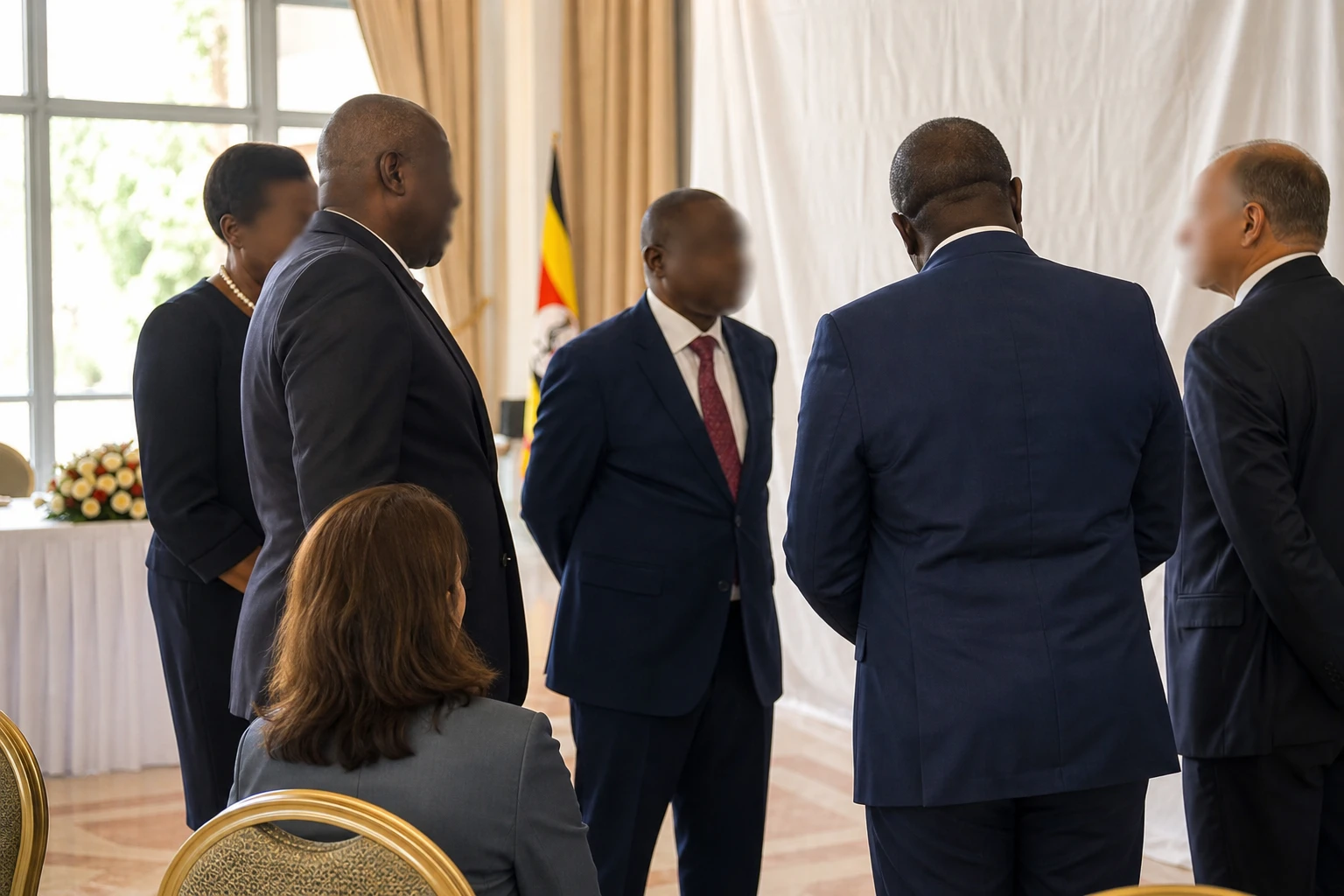
In Kampala, a candidacy that is more than symbolic
Olara Otunnu’s entry into the race to become United Nations secretary-general is a reminder of a reality that is often underestimated: the organisation does not simply choose a candidate, it also balances political interests across continents and generations, as well as diplomatic power dynamics. For Uganda, the move matters on two counts. It puts a long-serving diplomat back in the spotlight and places Kampala at the centre of a UN process gathering pace as António Guterres’s term, which ends on 31 December 2026, draws to a close.
In a region where integration advances in stages, the candidacy also resonates across East Africa. Uganda is a member of the East African Community, a regional organisation of eight partner states headquartered in Arusha, Tanzania. At the start of 2026, the EAC was still working on its familiar priorities: mobility, trade, financing and political co-ordination. In this context, an Ugandan seeking the UN’s most prominent post gives Kampala an additional diplomatic platform at a time when the region is looking to exert greater influence in multilateral forums.
A UN veteran, spanning diplomacy and domestic politics
The Ugandan government describes Olara Otunnu as a “distinguished statesman and senior international civil servant”. Factually, the phrase is no exaggeration. The former diplomat served as Uganda’s permanent representative to the UN in New York from 1980 to 1985. During that period, he presided over the Security Council in 1981 and the Commission on Human Rights between 1982 and 1984. Later, under Kofi Annan, he served as under-secretary-general and special representative for children and armed conflict. The UN still records this career in its biographical note.
Otunnu has also pursued a more political career in Kampala. After serving as foreign minister in 1985-86, he ran for president in 2011 under the banner of the Uganda People’s Congress, challenging Yoweri Museveni, who has been in power since 1986. Official results gave him 125,059 votes, or 1.58% of valid ballots. The episode is a reminder that in Uganda, diplomacy and domestic political competition are never entirely separate.
Otunnu’s name is also associated with a procedural innovation in UN history. The organisation’s records note that, while presiding over the Security Council in 1981, he introduced the principle of a secret indicative ballot for the election of the secretary-general, a method later dubbed the “Otunnu Formula”. This gives his candidacy a distinctive significance: it evokes not just a former UN official, but also an actor who has already helped shape the rules of the game.
What this entry into the race changes
Institutionally, the process remains strict. The Security Council reviews the candidates before recommending a single name to the General Assembly. The process was formally launched by a joint letter from the presidents of the General Assembly and the Security Council, followed by public dialogues with candidates, held in April, June and at a public meeting on 23 July 2026. The decision-making phase is now entering its most political stage, with consultations set to continue until Council members agree on a recommendation.
For Uganda, the candidacy has an immediate impact on its image. The country is no longer appearing in international news solely through its domestic affairs or East African regional dynamics. It is back in a global contest for representation, with a candidate whose background combines UN expertise, academic experience and government service. In Kampala, this could enhance the government’s diplomatic standing. But it also underscores how African capitals are increasingly treating multilateral posts as extensions of their regional influence.
The significance is also continental. At this stage, Olara Otunnu is among the African candidates seeking to succeed Guterres, alongside Macky Sall. This matters in the context of the informal rotation of major international positions, often observed at the UN, even though it is never guaranteed by the rules. For many African states, the issue is not merely securing a candidate, but making a case for a vision of multilateralism less dependent on traditional centres of power.
A signal for East Africa and the UN in 2026
In the region, the candidacy can also be read as a test of coherence. The EAC regularly champions economic integration, efficient transport corridors, sectoral co-ordination and the pursuit of joint financing. The fact that one of its members, Uganda, is seeking to place a diplomat at the top of the UN is a reminder that regional influence also comes through international appointments. It is a way to exert influence without direct confrontation, by steadily accumulating diplomatic capital.
The balance of power in New York remains the key question. The Security Council will have the final say on its recommendation, followed by the General Assembly’s formal appointment. In a year when the UN is debating reform, governance and institutional effectiveness, the choice of the next secretary-general will say as much about geopolitical balances as it will about the person selected. Otunnu’s challenge is clear: to turn a name familiar in UN circles into a credible coalition among Council members, while retaining the backing of African capitals that are also seeking to make their voices heard.