Algeria
 Egypt
 Libya
 Morocco
 Sudan
 Tunisia
 Benin
 Burkina Faso
 Cabo Verde
 Ghana
 Guinea
 Guinea-Bissau
 Liberia
 Mali
 Mauritania
 Niger
 Nigeria
 Senegal
 Sierra Leone
 The Gambia
 Togo
 Cameroon
 Central African Republic
 Chad
 DR Congo
 Equatorial Guinea
 Gabon
 Republic of the Congo
 São Tomé and Príncipe
 Burundi
 Comoros
 Djibouti
 Eritrea
 Ethiopia
 Kenya
 Madagascar
 Malawi
 Mauritius
 Mozambique
 Rwanda
 Seychelles
 Somalia
 South Sudan
 Tanzania
 Uganda
 Angola
 Botswana
 Eswatini
 Lesotho
 Namibia
 South Africa
 Zambia
 Zimbabwe
Gold provides a living, but leaves damage behind
In rural areas of Côte d’Ivoire, gold is no longer simply a promise of quick income. It has also become a test of sovereignty, land protection and border control. As illegal sites multiply, the issue is no longer just about mining. It affects security, water, farmland and the authority of the state.
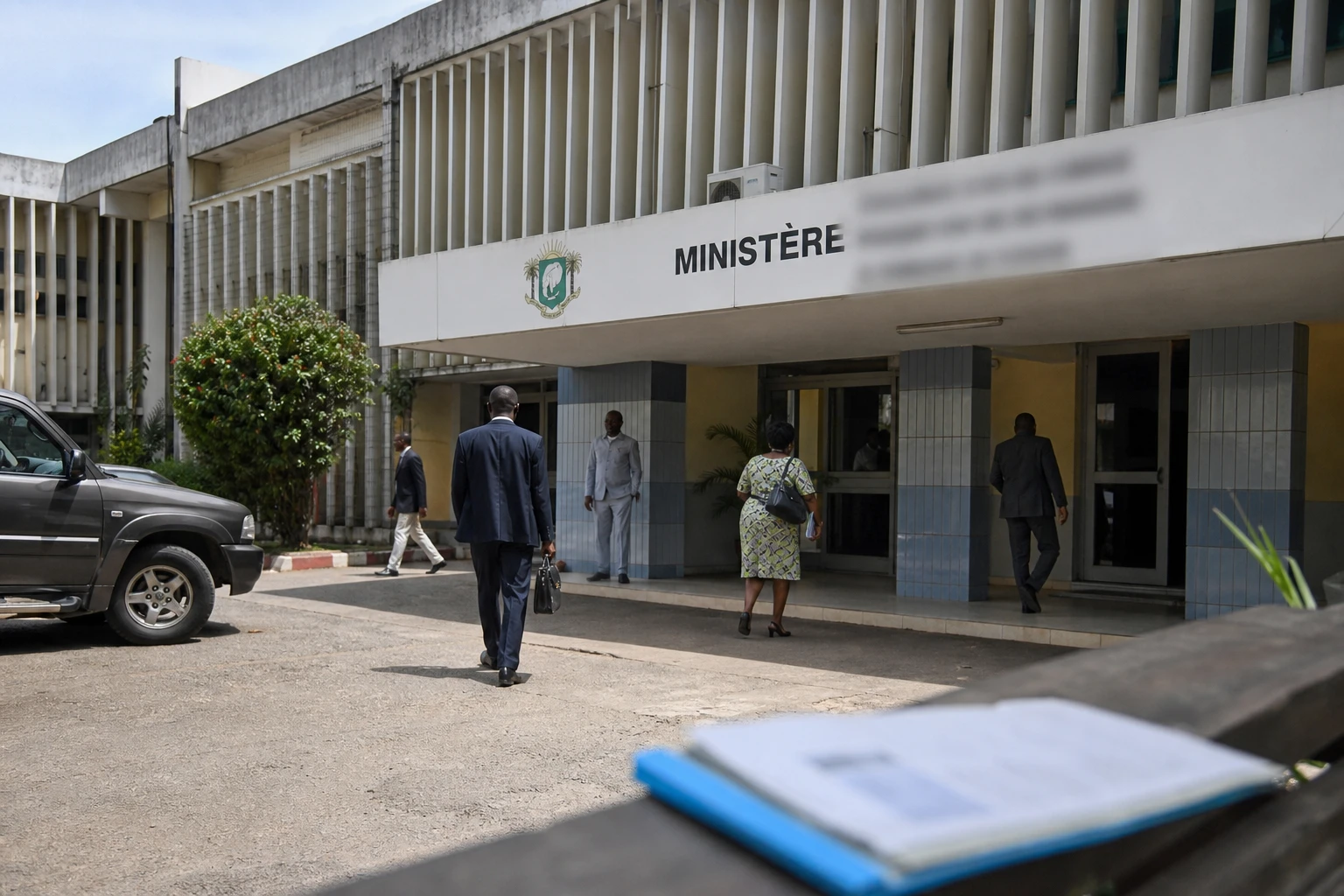
Côte d’Ivoire, whose political capital is Yamoussoukro, has made the fight against illegal gold mining a central part of its security strategy for several years. The National Security Council, chaired by the head of state, relies on specialist units and the ministries of Mines, Defence, Justice and the Environment. At the same time, ECOWAS and regional partners are pushing for tighter oversight of artisanal mining and the rehabilitation of degraded land.
More than 8,500 sites dismantled, but the activity persists
On Thursday 24 July 2026, the National Security Council described the situation as “highly concerning” in the face of the spread of illegal gold mining. The figures are stark: since 2021, the Special Group for the Fight against Illegal Gold Mining says it has dismantled more than 8,500 sites, referred 4,474 people to the courts, seized more than 960 million CFA francs and recovered about 136 kilograms of gold. The authorities also say that 65% of those referred are foreign nationals.
These figures confirm a reality already reflected in previous assessments. At the end of 2023, the Mines Ministry’s services had already reported more than 1,000 sites dealt with in less than a year, hundreds of arrests and significant seizures of equipment. In 2026, the authorities also launched operations to map and rehabilitate degraded land, a sign that the response can no longer be solely punitive.
The government now wants to involve prefects, traditional leaders and local communities more closely. It also stresses co-operation with the countries of origin of foreign miners and stricter enforcement of the penalties set out in the mining code. This approach reflects a change in method: the state no longer wants simply to shut down sites. It is seeking to break up networks, stem the flow of recruits and make legal activity more attractive.
An environmental, economic and security threat
Illegal gold mining first damages soil and waterways. The use of mercury, still common in artisanal gold extraction, causes lasting pollution of land and groundwater. UN Environment says the activity accounts for a major share of global mercury emissions, making it a public health issue as well as a mining matter. In Côte d’Ivoire, the consequences are direct: cultivable areas are degraded, sometimes irreversibly.
The problem is also economic. Some of the gold extracted bypasses official channels, depriving the state of tax revenue and local authorities of benefits. The Mines Ministry says that more than 80% of the revenue from illegal mining is captured by trafficking networks based abroad, while local communities receive only a small share. In other words, the activity enriches networks but brings little development to the places where it takes place.
On security, Côte d’Ivoire treats the issue as one link in a much broader chain. Research by the Institute for Security Studies has shown that violent groups have exploited illicit economies in the north of the country, particularly in gold and livestock, to fund their networks, recruit and establish themselves in border areas. This assessment echoes that of the Ivorian authorities, who see illegal gold mining as a channel for armed actors, traffickers and intermediaries.
For local people, the impact is more mixed. In several communities, gold mining offers immediate income to young people without stable employment. But it also destroys fields, puts drinking water at risk and fuels land disputes. In the short term, it is attractive. Over the medium term, it often leaves villages poorer than well-regulated legal mines would. The authorities are therefore trying to make legal mining and training credible alternatives.
What this latest development says about Côte d’Ivoire and West Africa
The issue extends beyond Côte d’Ivoire. Across West Africa, artisanal and illegal mining is a regional concern because people, machinery, chemicals and gold cross borders. ECOWAS is focusing on mapping degraded land and co-operation between states, while experts are calling for permits to be cheaper and more accessible to local operators.
Côte d’Ivoire is thus caught between two trends. On the one hand, its mineral resources attract major investors and the country wants to climb the African gold-producer rankings. On the other, the growth of illegal mining threatens the credibility of that ambition if governance does not keep pace. The battle is therefore not simply between the state and illegal miners. It is between two models: a fast, opaque and destructive windfall, or a better-regulated and more sustainable mining sector.
The next test is clear: whether the authorities can move from sporadic arrests to a lasting strategy. That requires judicial resources, genuine cross-border co-operation and economic solutions for the affected areas. Without them, closed sites reappear, often a few kilometres away. That is where the credibility of Côte d’Ivoire’s response will ultimately be decided.