Algeria
 Egypt
 Libya
 Morocco
 Sudan
 Tunisia
 Benin
 Burkina Faso
 Cabo Verde
 Côte d'Ivoire
 Ghana
 Guinea
 Guinea-Bissau
 Liberia
 Mali
 Niger
 Nigeria
 Senegal
 Sierra Leone
 The Gambia
 Togo
 Cameroon
 Central African Republic
 Chad
 DR Congo
 Equatorial Guinea
 Gabon
 Republic of the Congo
 São Tomé and Príncipe
 Burundi
 Comoros
 Djibouti
 Eritrea
 Ethiopia
 Kenya
 Madagascar
 Malawi
 Mauritius
 Mozambique
 Rwanda
 Seychelles
 Somalia
 South Sudan
 Tanzania
 Uganda
 Angola
 Botswana
 Eswatini
 Lesotho
 Namibia
 South Africa
 Zambia
 Zimbabwe
A diplomatic contest that reaches beyond Nouakchott
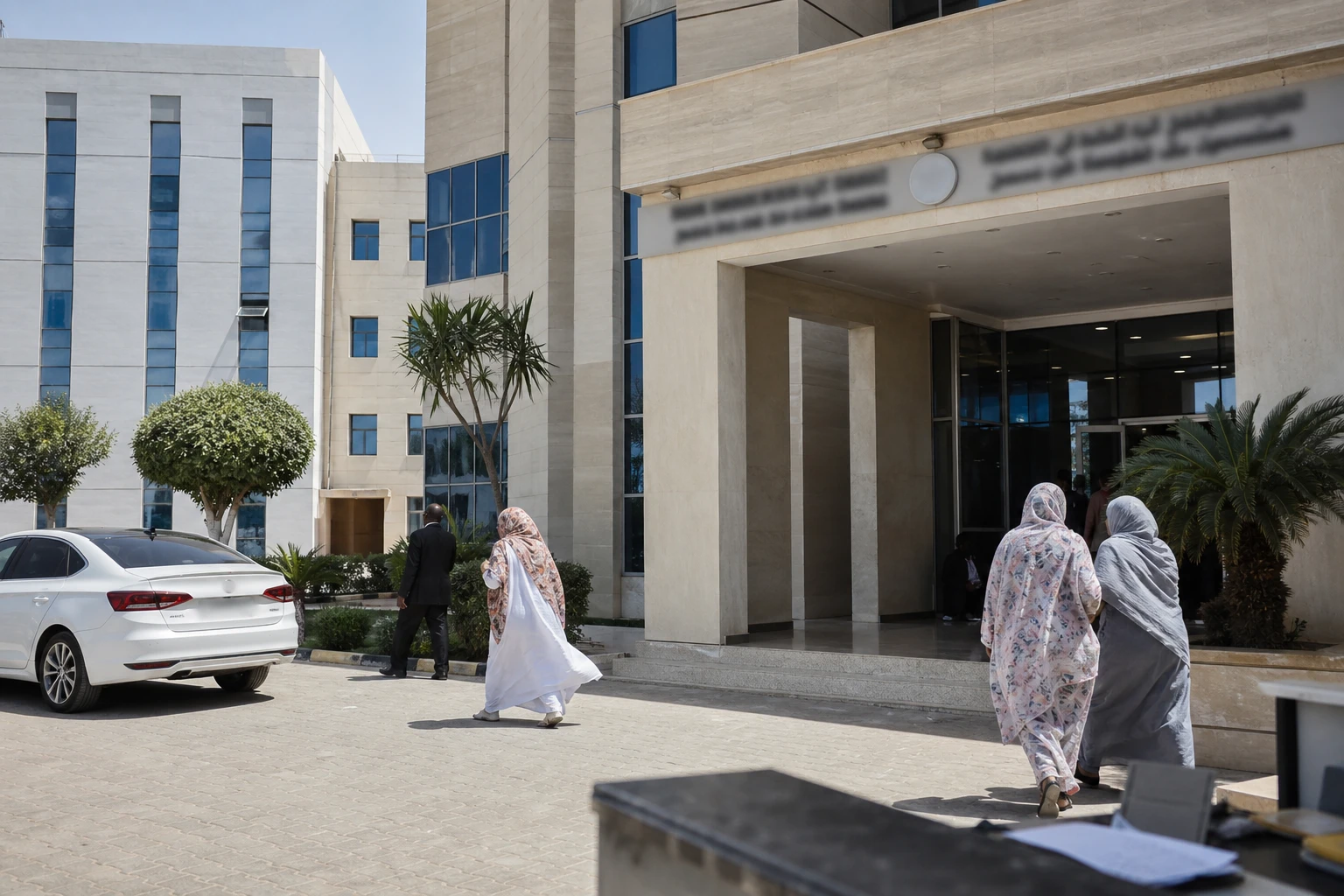
At the Francophonie summit, the question is not simply who gets a post. It is also about who carries weight, who listens and who knows how to persuade in a grouping of 90 states and governments across five continents. For Mauritania, Dr Coumba Bâ’s candidacy for secretary-general of the OIF is therefore much more than a symbolic gesture: it is a test of diplomatic credibility, with a decisive meeting in Phnom Penh just months away.
The issue also has a regional dimension. Mauritania is not a member of ECOWAS, but it is part of a West African neighbourhood where linguistic, political and economic balances remain closely interlinked. It is also part of broader frameworks such as the African Union and the 5+5 Dialogue with the Maghreb and southern Europe. In this context, Nouakchott is seeking to make its voice heard as a bridge between Arab Africa, sub-Saharan Africa and French-speaking Asia.
Phnom Penh, an increasingly political vote
The timetable is now clear. The next Francophonie Summit will be held on 15 and 16 November 2026 in Phnom Penh, Cambodia, where heads of state and government will elect the secretary-general for the 2027-2030 term. The OIF has also said that a formal hearing of the candidates took place on 30 June 2026, a first in the organisation’s history.
Four candidacies were considered: those from the Democratic Republic of the Congo, Mauritania, Romania and Rwanda. This fact alone says much about the moment the organisation is going through. The Francophonie no longer functions solely as a cultural space. It is also becoming an arena for strategic choices, where diplomacy, influence and the ability to deliver concrete results intersect.
Cambodia was not chosen at random. The OIF says this will be the second Francophonie Summit hosted in Asia, after Hanoi in 1997. The host country has also stressed its desire to showcase the French-speaking communities of Asia and the Pacific. This Asian setting gives Mauritania’s campaign a particular stage: it requires candidates to speak beyond the confines of an Africa-first outlook.
What the Mauritanian candidate stands for
Nouakchott officially announced Dr Coumba Bâ’s candidacy on 17 April 2026. Mauritania’s foreign ministry presented her as an experienced diplomat and former minister, appointed in 2024 as the president’s special envoy to the OIF, with the rank of minister-counsellor. The government also called on member states to support her candidacy.
Mauritania’s position is clear. It is advocating a more practical Francophonie, focused on peace, development, intercultural dialogue, talent mobility, innovation and economic opportunities. This language is not incidental. It shows that Nouakchott wants to move the organisation beyond a purely ceremonial vision and anchor it more firmly in measurable projects.
The campaign also draws on a discreet but solid geopolitical argument: Mauritania wants to be seen as a country of mediation. The Mauritanian presidency points to the country’s engagement in several international frameworks, including the Organisation of Islamic Cooperation, the 5+5 Dialogue and the OIF, while also claiming an active role in the African Union’s Agenda 2063. This range of frameworks reflects a single logic: to make an impact through bridges rather than force.
Why Asia matters in this contest
The Mauritanian delegation’s tour of Cambodia, Vietnam and Laos therefore had real political significance. In these countries, the Francophonie remains linked to history, education, university exchanges and cultural co-operation. Cambodia is hosting the 2026 summit, while Vietnam and Laos remain key parts of the Francophone landscape in South-East Asia. Mauritania’s campaign sought to persuade voters that a secretary-general from the African continent could also speak to French-speaking Asia without imposing an external agenda on it.
This approach matters for Africa. African candidacies for multilateral posts are too often viewed through the lens of blocs. Yet the Francophonie brings together highly diverse realities. By reaching out to South-East Asia, Mauritania is seeking to show that it can bring together varied interests without trapping the organisation in a North-South or Africa-versus-the-rest-of-the-world divide. It is a diplomatic message, but also a signal to African states that want to carry weight in international institutions through coalition-building, not isolation.
An issue of image and influence for Mauritania
For Nouakchott, the stakes are twofold. First, there is the image of a state capable of putting forward a serious, well-organised candidate who can be heard far beyond its immediate neighbourhood. Then there is the domestic political benefit: showcasing a seasoned government insider in a forum where international visibility matters. In a country where French coexists with Arabic, national languages and a diverse social reality, the Francophonie remains a diplomatic tool rather than an exclusive marker of identity.
The substance of Mauritania’s message also says something about the country’s influence strategy. Nouakchott’s diplomacy avoids one-upmanship. It favours a register of continuity, dialogue and balance. This approach could appeal in an organisation where states often seek a figure able to hold together African, Asian, European and Caribbean sensibilities. But it will also have to convince on one concrete point: the ability to deliver visible results for the OIF, beyond statements of principle.
The Phnom Penh vote will therefore be much more than a courtesy ballot. It will show whether the Francophonie is willing to see itself as a space for action, exchange and co-operation, or whether it remains trapped in its familiar balances. The outcome matters particularly to Mauritania. If Dr Coumba Bâ’s candidacy gains ground, it will vindicate a form of Mauritanian diplomacy based on discretion, reasoned argument and the patient building of alliances. This is often how medium-sized countries exert the greatest influence in international arenas.