Egypt
 Libya
 Morocco
 Sudan
 Tunisia
 Benin
 Burkina Faso
 Cabo Verde
 Côte d'Ivoire
 Ghana
 Guinea
 Guinea-Bissau
 Liberia
 Mali
 Mauritania
 Niger
 Nigeria
 Senegal
 Sierra Leone
 The Gambia
 Togo
 Cameroon
 Central African Republic
 Chad
 DR Congo
 Equatorial Guinea
 Gabon
 Republic of the Congo
 São Tomé and Príncipe
 Burundi
 Comoros
 Djibouti
 Eritrea
 Ethiopia
 Kenya
 Madagascar
 Malawi
 Mauritius
 Mozambique
 Rwanda
 Seychelles
 Somalia
 South Sudan
 Tanzania
 Uganda
 Angola
 Botswana
 Eswatini
 Lesotho
 Namibia
 South Africa
 Zambia
 Zimbabwe
When a cable becomes a test of credibility
For Rabat, the stakes are not merely technical. They concern Morocco’s place in the Euro-Mediterranean energy landscape, as the kingdom has spent several years seeking to turn its solar and wind potential into an industrial lever. In Rabat, this ambition now faces a simple question: how can Morocco move from potential supplier to partner genuinely safeguarded by Europe’s major capitals?
The issue extends beyond Morocco alone. In North Africa, energy competition is no longer abstract. It is playing out through electricity interconnection projects, hydrogen corridors and industrial agreements capable of attracting investment, jobs and long-term contracts. In this contest, political commitments matter almost as much as the infrastructure itself. Europeans want to diversify their supplies, particularly since the gas crisis that began in 2022. Maghreb countries, meanwhile, want to avoid remaining mere production zones. Morocco has made its position clear through its demands: it will not be reduced to a power socket serving a distant industry.
The British setback of 2025 left its mark. The Xlinks project, which was to connect Morocco to the United Kingdom via a giant submarine cable, was halted after London refused to continue its public support. Xlinks itself says the project aimed to cover the equivalent of 8% of British electricity consumption. Its abandonment was a stark reminder: without guaranteed electricity purchases and robust state backing, transcontinental megaprojects remain vulnerable.
Berlin, Algiers and the new balance of power
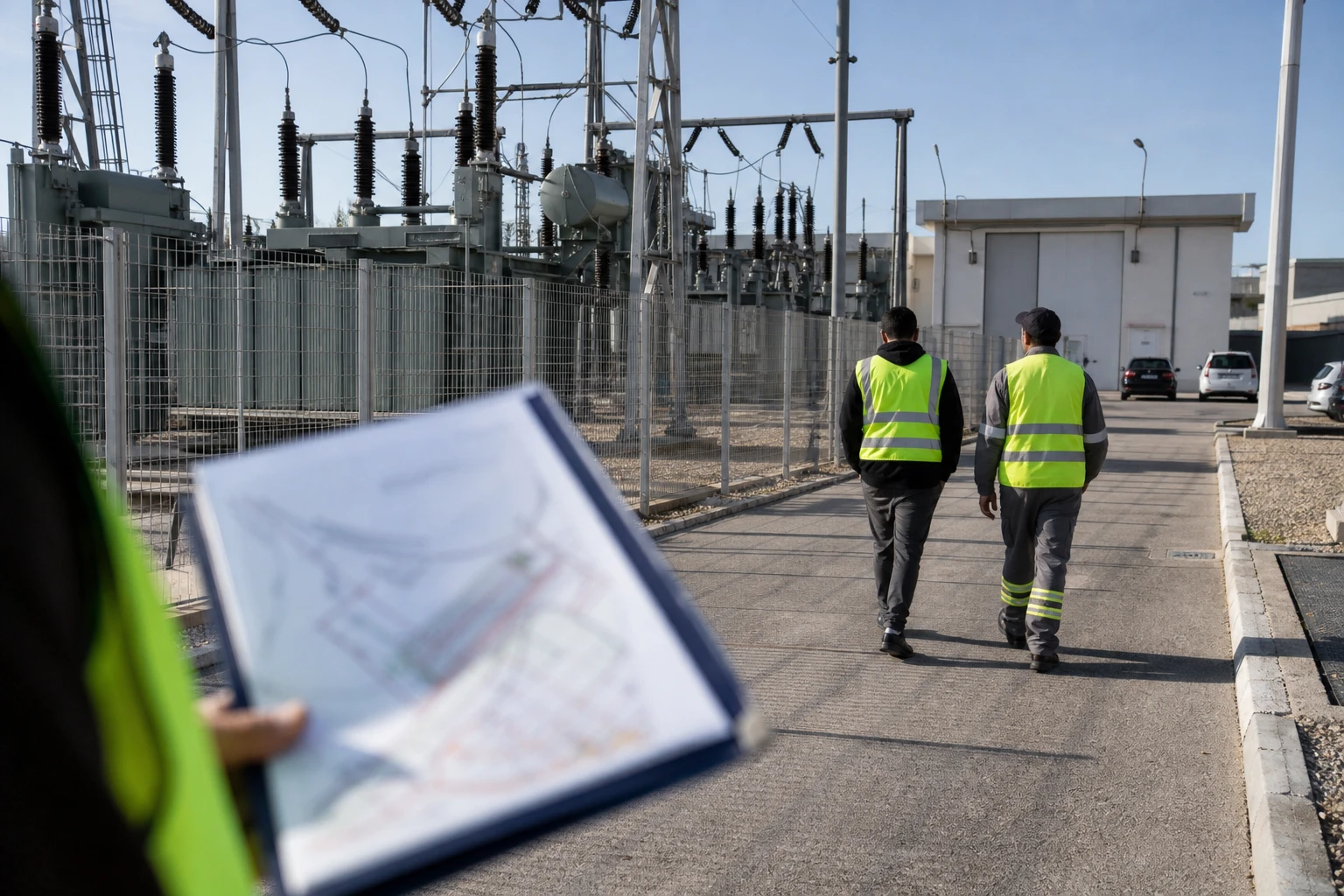
It was against this backdrop that Sila Atlantik emerged, presented as an electricity link between Morocco and Germany. The project, promoted by an entity linked to Xlinks, is based on an ambitious model: generate electricity in southern Morocco, transport it to Europe by submarine cable and supply the German market. The most widely discussed version envisages around 4,800 kilometres of cables, a transmission capacity of around 3.6 gigawatts and annual output of up to 26 terawatt-hours. On paper, it would be one of the world’s largest interconnections. In practice, the financing structure remains fragile until a clear intergovernmental agreement sets out political, legal and financial guarantees.
In early 2026, a signal from Berlin had fuelled the promoters’ optimism. The Federal Ministry for Economic Affairs had expressed an interest in principle in the proposal, amid a favourable climate for low-carbon technologies and imports of green electricity. But this interest was neither a purchase promise nor a budget commitment. Germany’s calculations remain cautious: Berlin is seeking clean energy volumes, but does not want to repeat the mistake of providing overly risky support for a very distant and very costly project.
The sticking point has therefore shifted to governance. On the Moroccan side, the demand for a bidirectional cable is being pressed with increasing insistence. The idea is clear: avoid being saddled with a one-way system. Such a choice would give Morocco greater security for its own grid, which is often under strain during demand peaks, and provide genuine commercial flexibility. But it would also raise the overall cost, add technological complexity and make an already burdensome model more difficult. In other words, Morocco’s caution is rational, but it comes at a time when its negotiating options are limited.
Algeria, meanwhile, is pursuing a different path. Berlin has strengthened its energy dialogue with Algiers in recent months. During Abdelmadjid Tebboune’s visit to Berlin on 16 July 2026, the two countries signed a joint declaration on their strategic partnership, focusing on energy, gas and the low-carbon transition. Algeria and Germany also signed a declaration of intent on reducing methane emissions in the oil and gas sector. This is not yet a physical corridor comparable to a submarine cable. But it is a clearer, more legible and, above all, more advanced political framework.
The contrast is even sharper when it comes to the SoutH2 Corridor, a hydrogen pipeline project spanning more than 3,300 kilometres and linking Algeria and Tunisia to Italy, Austria and then Germany. In January 2025, Germany, Algeria, Italy, Austria and Tunisia signed a joint political declaration on the corridor in Rome. The European Commission subsequently confirmed its support for this framework in its planning documents. Berlin’s message is clear: the Maghreb’s role in its energy transition is not an abstract idea, but a network of routes, agreements and partners that is already taking shape.
What Morocco can still bring to the table
Morocco is not out of the running, however. It already has an electricity interconnection with Spain across the Strait of Gibraltar. To date, it is one of the few operational electricity links between Africa and Europe. Rabat and Lisbon have also revived their proposed new interconnection, which has been on hold since 2022. This option is more modest, but also more realistic. It offers a gradual increase in capacity, at lower cost, and is easier to connect to existing networks in southern Europe.
This shift says much about the new geography of priorities. Spectacular megaprojects make for compelling rhetoric, but European capitals first look at legal soundness, financial sustainability and security of supply. Morocco therefore faces a twofold challenge. It must preserve its industrial appeal without being trapped in the role of a peripheral exporter. It must also convince others that its energy transition can serve its domestic market before serving Europe.
On an African scale, the issue goes beyond rivalry between Rabat and Algiers. It shows that a country on the continent can have an influence on the global energy transition, provided it controls the entire chain: production, transport, governance, financing and value-sharing. It also serves as a reminder that energy corridors are not simply pipes or cables. They are instruments of economic sovereignty. Those who control them set the pace of exports, the level of guarantees and the place given to national interests.
In the coming months, the real test will be political. Berlin will have to clarify how far it is prepared to go in its energy commitments in North Africa. Rabat will have to say whether it accepts a more flexible framework or maintains its insistence on reciprocity. And Algiers will seek to turn its signatures into concrete infrastructure. Morocco retains real strengths in this race. But at this stage, it is chiefly the Algerian projects that already have a clearer framework. The regional balance of power, meanwhile, continues to shift.