Algeria
 Egypt
 Libya
 Sudan
 Tunisia
 Benin
 Burkina Faso
 Cabo Verde
 Côte d'Ivoire
 Ghana
 Guinea
 Guinea-Bissau
 Liberia
 Mali
 Mauritania
 Niger
 Nigeria
 Senegal
 Sierra Leone
 The Gambia
 Togo
 Cameroon
 Central African Republic
 Chad
 DR Congo
 Equatorial Guinea
 Gabon
 Republic of the Congo
 São Tomé and Príncipe
 Burundi
 Comoros
 Djibouti
 Eritrea
 Ethiopia
 Kenya
 Madagascar
 Malawi
 Mauritius
 Mozambique
 Rwanda
 Seychelles
 Somalia
 South Sudan
 Tanzania
 Uganda
 Angola
 Botswana
 Eswatini
 Lesotho
 Namibia
 South Africa
 Zambia
 Zimbabwe
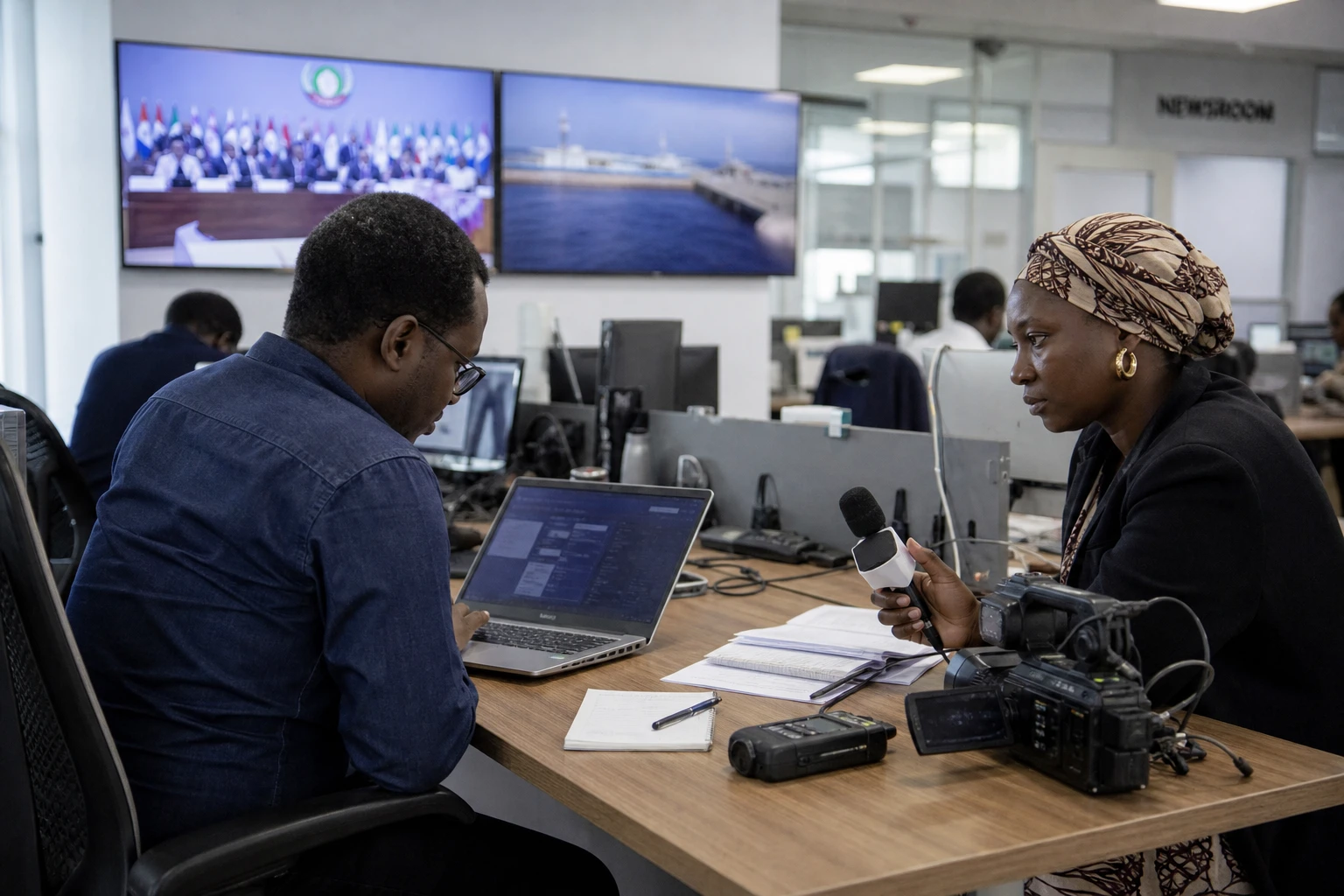
An energy corridor that is about more than gas
In Freetown, the signing of an intergovernmental agreement on the Atlantic African gas pipeline went beyond a simple industrial announcement. It provided a political framework for a project that aims to link Nigeria to Morocco and then to the European network, while supplying the countries along its route. For West Africa, the stakes are not limited to exporting gas. The project is also about securing electricity supplies, attracting capital and turning an Atlantic coastline often viewed as a departure corridor into a space for economic integration.
The regional context gives this step added significance. ECOWAS, an economic community of 15 West African states, has been seeking for years to strengthen energy interconnections. The project announced in Freetown fits into this strategy, but goes further than the West African Gas Pipeline already operating between Nigeria, Benin, Togo and Ghana. It now brings together most of the coastal states in the sub-region, along with Mauritania, and envisages branches to Burkina Faso, Mali and Niger, all three of which are landlocked.
What the Freetown summit actually approved
On 19 July 2026, ECOWAS heads of state and government approved in Freetown the intergovernmental agreement governing the project, now presented as the Atlantic African gas pipeline. The ECOWAS communiqué on its 69th summit confirms that an important political step was taken in Sierra Leone, in the capital Freetown, as the organisation also seeks to demonstrate its capacity to act after several years of security and institutional tensions in the region.
In substance, the agreement establishes a framework for governance, taxation, regulatory stability, investment security and cross-border cooperation. It does not mean that the project is immediately moving into full-scale construction. Rather, it provides the legal foundations needed to move towards a project company, a high authority for regulation and financial structuring. This process had already been prepared by energy ministers from ECOWAS, Morocco and Mauritania, who met in Abuja in November 2024.
The project did not begin in 2026. It was launched in 2016 by King Mohammed VI and former Nigerian President Muhammadu Buhari, and has since been developed through a series of memorandums, feasibility studies and technical meetings. In September 2022, Rabat said that ECOWAS, Nigeria and Morocco had already signed a memorandum of understanding confirming their commitment to the project’s feasibility. In 2024, the ministers concerned went on to approve the legal framework for the intergovernmental agreement and the host government agreement.
A long route, multiple uses and promises to be tested
The most frequently cited figures point to a pipeline of nearly 6,800 to 7,000 kilometres, about 5,100 kilometres of it offshore, with the capacity to transport 30 billion cubic metres of gas a year. Official sources also specify that it is to serve up to 13 coastal countries and eventually link Morocco to the Maghreb-Europe gas pipeline. Recent ECOWAS and NNPC communiqués also confirm the idea of an energy corridor with a dual purpose: regional supply and access to the European market.
But infrastructure of this kind is only as valuable as its actual timetable and its ability to secure financing. Officials involved in the project speak of phased commissioning, with initial deliveries still targeted for 2031. The plan is to begin according to gas availability and economic conditions, before gradually reaching full capacity. This is crucial: for a project on such a scale, financing, sovereign guarantees, the security of offshore routes and political stability along the West African coast will matter as much as geology.
Nigeria remains the stated source of supply. The country has the largest reserves on the West African Atlantic coast, but the authorities acknowledge that gas deliveries will have to ramp up in stages. Morocco, for its part, sees itself as a transit and redistribution point for supplies to Europe. Between the two, transit countries hope to secure royalties and, above all, greater energy security for their electricity networks, industries and future local processing hubs.
What the project means for the states along its route
For governments, the project serves several objectives at once. It could boost revenues, strengthen the image of energy sovereignty and signal to lenders that a larger regional market can be developed. For the public, the expected benefits are more tangible: more gas for generating electricity, supplying power plants, supporting fertiliser production or mining activities, and easing some of the shortages that constrain urban and rural economic activity. The promise is significant, but will first depend on states’ ability to turn an export corridor into a development network.
The project also has clear geopolitical significance. It gives Morocco an Atlantic gateway role and strengthens its ties with Africa, while Nigeria consolidates its position as a regional energy supplier. The coastal ECOWAS countries, meanwhile, are no longer merely transit points: they are becoming negotiating players on taxation, security and the pipeline’s governance. That is where the significance of the Freetown agreement lies. It puts states on a more structured footing for discussions, rather than leaving them with a simple bilateral arrangement between Rabat and Abuja.
However, the project should be viewed with caution. Major regional energy projects in West Africa have often moved forward through successive announcements before actually entering the implementation phase. Studies have been conducted and agreements signed. But construction still depends on securing financing, common standards and compromises between coastal states, landlocked countries and external partners. That is precisely why the Freetown signing matters: it shifts the project from the realm of intentions to that of legal and institutional obligations.
A West African undertaking with continental resonance
Beyond the Atlantic coast, the project says something about how Africa wants to organise its resources. The debate is not simply between an exporter and importers. It raises a question of approach: how can cross-border infrastructure be built to supply still-fragmented national markets while preparing the way for smoother regional trade under the AfCFTA, the African Continental Free Trade Area?
In the short term, the next steps will be decisive: setting up the project company, establishing the governance authority, mobilising investors and clarifying the financing. If these milestones are reached, the gas pipeline could become one of the most visible symbols of West African economic integration through infrastructure. Otherwise, it will remain a flagship project, still caught between regional ambition and industrial constraints.