Algeria
 Egypt
 Libya
 Sudan
 Tunisia
 Benin
 Burkina Faso
 Cabo Verde
 Côte d'Ivoire
 Ghana
 Guinea
 Guinea-Bissau
 Liberia
 Mali
 Mauritania
 Niger
 Nigeria
 Senegal
 Sierra Leone
 The Gambia
 Togo
 Cameroon
 Central African Republic
 Chad
 DR Congo
 Equatorial Guinea
 Gabon
 Republic of the Congo
 São Tomé and Príncipe
 Burundi
 Comoros
 Djibouti
 Eritrea
 Ethiopia
 Kenya
 Madagascar
 Malawi
 Mauritius
 Mozambique
 Rwanda
 Seychelles
 Somalia
 South Sudan
 Tanzania
 Uganda
 Angola
 Botswana
 Eswatini
 Lesotho
 Namibia
 South Africa
 Zambia
 Zimbabwe
A tourism project that goes beyond football
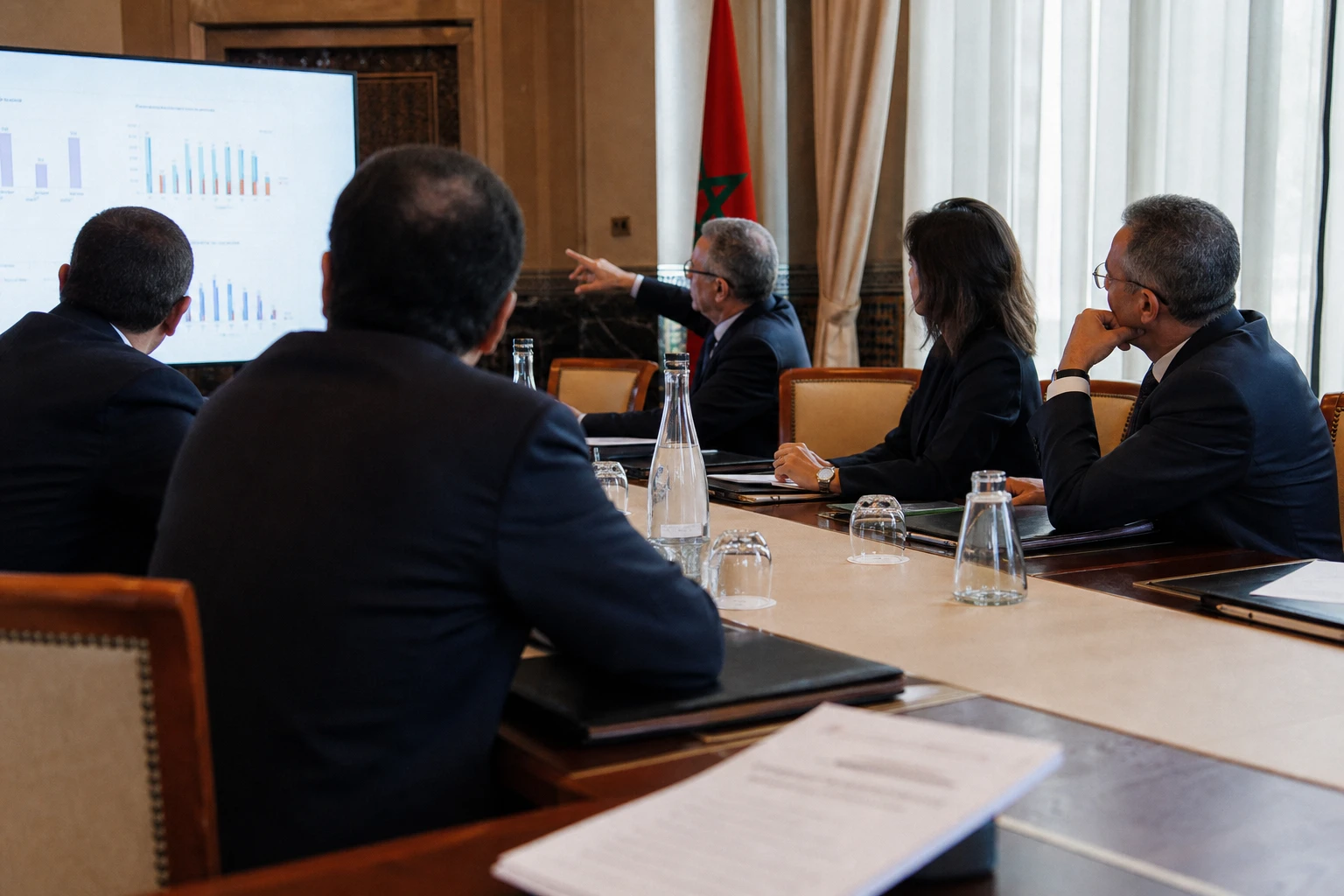
In Rabat, preparations for the 2030 World Cup are about more than stadiums and roads. They are also playing out in hotel rooms, beds and the quality of the welcome. Morocco wants to turn a global sporting event into a lasting driver of its tourism economy, which is already recovering strongly.
The strategy is part of a specific sequence of events. The kingdom will co-host the 2030 men’s football World Cup with Spain and Portugal, a decision confirmed by FIFA in December 2024. The event will make Morocco one of the three host countries for the main tournament, alongside two European neighbours with which it already shares significant air and tourism flows. FIFA’s official decision on hosting the 2030 World Cup
The Moroccan context is clear: tourism has once again become a visible driver of growth. The authorities announced nearly 20 million visitors in 2025, a record, and have now set a target of 26 million tourists by 2030. Tourism figures for 2025 released by Morocco’s tourism ministry Key indicators for Moroccan tourism
60,000 more beds: the context behind a national ambition
The most concrete announcement concerns accommodation. Morocco plans to add 60,000 hotel beds by 2030, about a fifth of current capacity, according to Tourism Minister Fatim-Zahra Ammor, cited in several corroborated news reports. The figures reported in these accounts indicate that about 45,000 beds have already been added over the past four years, bringing the total to just over 300,000 beds today. Information reported and corroborated by several international news agencies
The Moroccan government does not present this project as a simple race to increase capacity. It links it to a roadmap focused on air connectivity, service improvements and investment across the country. The ministry also points to the expansion of quality checks, with the launch of “mystery visits” to 2,500 classified establishments from May 2026 to assess the customer experience in real-world conditions. Hotel classification reform and quality checks
This expansion has not come out of nowhere. In June 2026, the ministry said Morocco had already increased its accommodation capacity by more than 45,000 beds in recent years, while launching a programme to renovate its hotel stock. The aim now is to accommodate more visitors without damaging the country’s image among tourists. Accommodation capacity and tourism investment
What this means for Morocco’s economy
Tourism carries considerable weight in the Moroccan economy. The sector accounts for a significant share of national activity, urban employment and foreign-currency earnings. In practice, the hotel project concerns more than major chains and high-end investment. It also affects restaurants, transport, guides, crafts, digital booking platforms and a large informal economy that depends on visitor flows. Morocco’s tourism roadmap 2026 economic and financial report from the finance ministry
For the Moroccan state, the challenge is also a territorial one. Tourism pressure remains concentrated in certain cities, while other regions benefit less directly from the windfall. The authorities therefore want to ensure that upgrading the offer is not limited to Casablanca, Marrakech, Rabat or Tangier. The challenge is to spread investment, jobs and benefits beyond the most visible coastal routes and major cities.
The stakes are all the higher because the kingdom wants to be known for more than its status as a leading destination on the continent. Across Africa, Morocco is now presented as the continent’s top destination by visitor numbers, but other countries have different strengths, particularly in revenue per tourist or the density of hotel projects. Egypt, often cited as a direct competitor, retains a longer-established and more substantial tourism investment base. The comparison fuels African emulation rather than sterile rivalry. Academic analysis of Moroccan tourism and its capacity
Rabat as a showcase for African tourism
The choice of Rabat is not merely symbolic. The capital is already home to projects combining an international image with urban transformation, as shown by the recent opening of the Mohammed VI Tower in Salé, close to Rabat. At the same time, the kingdom has established in the capital the first thematic office of UN Tourism dedicated to innovation for Africa, a signal that positions Morocco as a regional hub. UN Tourism office for innovation in Africa in Rabat New Mohammed VI Tower in Salé and Rabat’s strategy to boost its appeal
This dimension extends beyond national borders. The 2030 World Cup will be the first to be held across two continents during its main phase, with some matches in Africa and others in Europe, while commemorative matches are planned in South America. For North Africa, Morocco will therefore serve as a bridge between European, African and Middle Eastern markets. The country will test its ability to welcome crowds, ease transport flows and maintain a high standard of service over several years, not just during a month-long competition. CAF’s position on the 2030 World Cup
In the short term, the immediate challenge will be to ensure that delivery matches the announcements. Financing, staff training, establishment renovations and urban mobility all remain major needs. In the medium term, the real test will be more political than hotel-related: whether the next government cycle sustains the effort through to 2030, without allowing it to be diluted by electoral priorities and budgetary trade-offs.
For Morocco, then, the World Cup is more than a showcase. It is a test of organisation, regional distribution and upgrading. If the project succeeds, it could strengthen Rabat’s and the kingdom’s place in Africa’s tourism landscape, while providing the continent with a rare example of a major sporting event used first to accelerate capacity and then as a tool for lasting transformation.