
 Algeria
 Egypt
 Libya
 Morocco
 Sudan
 Tunisia
 Benin
 Burkina Faso
 Cabo Verde
 Ghana
 Guinea
 Guinea-Bissau
 Liberia
 Mali
 Mauritania
 Niger
 Nigeria
 Senegal
 Sierra Leone
 The Gambia
 Togo
 Cameroon
 Central African Republic
 Chad
 DR Congo
 Equatorial Guinea
 Gabon
 Republic of the Congo
 São Tomé and Príncipe
 Burundi
 Comoros
 Djibouti
 Eritrea
 Ethiopia
 Kenya
 Madagascar
 Malawi
 Mauritius
 Mozambique
 Rwanda
 Seychelles
 Somalia
 South Sudan
 Tanzania
 Uganda
 Angola
 Botswana
 Eswatini
 Lesotho
 Namibia
 South Africa
 Zambia
 Zimbabwe
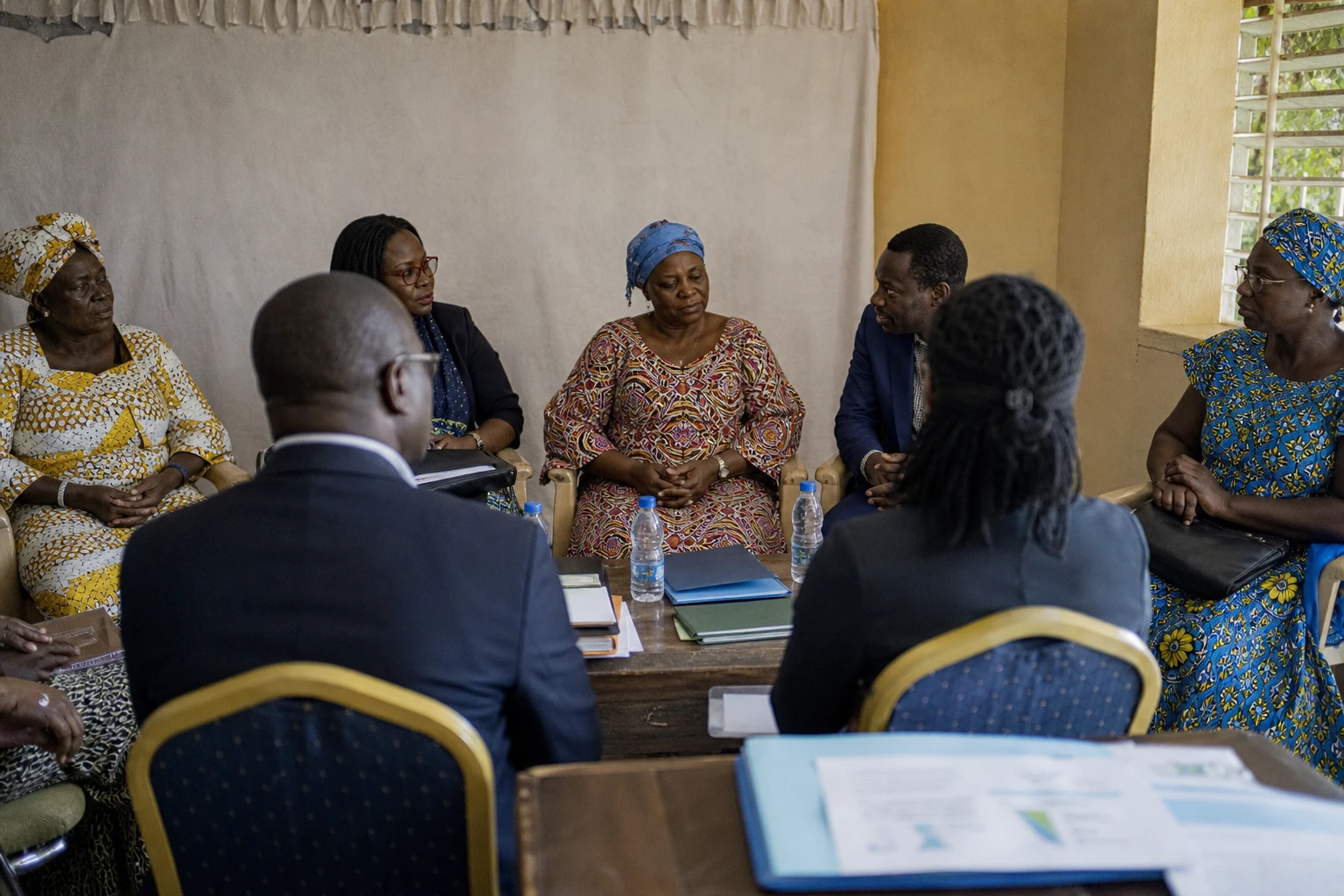
In the land of cocoa, access to land remains rural women’s first battle
A few hours from Abidjan, in the south of Côte d’Ivoire, the question is not simply how to produce more. It is more basic, and more difficult: who has the right to farm, to make decisions and then to live off the fruits of their labour? In Côte d’Ivoire, where cocoa still accounts for a large share of rural incomes, women’s access to land remains a major point of friction, despite recent reforms and public programmes seeking to address the gap.
The issue goes beyond the family farm. It affects the stability of farms, the transfer of assets, economic independence and, ultimately, the country’s ability to maintain its position in the cocoa sector. The political capital is Yamoussoukro, but it is in the agricultural areas of the south and west that a decisive part of Côte d’Ivoire’s social balance is at stake.
Divo, a quiet testing ground for more sustainable and inclusive farming
In the Divo region, at the heart of the Lôh-Djiboua cocoa-growing area, one woman’s journey illustrates this gradual change. Local and national initiatives there support women’s groups in income-generating activities and more sustainable cocoa projects, notably through workshops, cooperatives and savings associations. The department is not isolated: it is part of a sector in which public organisations, cooperatives and technical partners have for several years been promoting practices that are more resilient to climate change.
This momentum is part of a wider movement. The Coffee and Cocoa Council, the Ivorian state and partners such as the FAO have stepped up efforts around agroforestry, which combines crops with trees to protect soils and improve resilience to heat. This approach is gaining ground in cocoa-growing areas because it addresses two urgent needs at once: productivity and the restoration of agricultural landscapes.
The fight for a plot of land, then for a way of farming
The story often begins with a refusal. In many rural communities in Côte d’Ivoire, women work the land without always having legal or secure rights to it. Customary norms remain powerful, even though the inheritance law adopted in 2019 strengthened the rights of widows and daughters. The government and the World Bank have also launched rural land-tenure security programmes to reduce inequalities in access to land.
On the ground, this struggle involves meetings with village chiefs, awareness-raising sessions and the creation of leadership roles for women in local associations. The stakes are concrete: without an identified plot or recognised status, it is difficult to invest in cocoa, obtain a land certificate, access credit or join the formalisation schemes that are expanding across the sector. According to recent data from the ministry responsible for gender issues, social barriers to women’s land ownership remain clear, while women’s under-representation in decision-making bodies in the coffee and cocoa sector remains a public policy concern.
In several cocoa-growing areas, this is no abstract issue. A government mission to Divo in June 2025 specifically worked on income-generating activities with women’s associations as part of a climate-smart cocoa project. The message was clear: without women’s inclusion, the sustainability set out in project documents will not last long on the ground.
Why agroecology appeals, despite fatigue and labour shortages
The second front is farming. In the fields, several women producers favour collective work, manual weeding and reduced use of chemical inputs. This choice is not merely ideological. It is a response to rising input costs, exhausted soils and growing awareness of the effects of pesticides on health and ecosystems. The FAO reports that deforestation-free cocoa projects and agroforestry systems are already producing measurable results in Côte d’Ivoire, with restored areas, converted plots and beneficiaries, including women, incorporated into these schemes.
But adoption is not automatic. Many producers continue to call for quick solutions to control weeds and ease the physical burden of work. Labour shortages in agriculture frequently arise in discussions on the ground. This is one of the paradoxes of Côte d’Ivoire’s agricultural transition: as practices become more demanding in terms of organisation, they require more training, support and light mechanisation. That is precisely what several recent projects, from ANADER to the FAO, as well as cooperatives financing shared equipment, are seeking to provide.
Women play a central role in this. In agricultural value chains, they often handle processing and marketing and carry out a substantial share of field work, but capture less of the final value. FAO studies and programmes stress that their access to land, finance and equipment determines their ability to influence the cocoa sector. When they secure a plot, training and a collective route to market, they are no longer working solely to support their household’s survival. They become economic actors in their own right.
An Ivorian issue, but also a West African and continental one
The significance of the issue extends beyond Divo. Côte d’Ivoire remains a pillar of the global cocoa industry, and European pressure over deforestation has accelerated reforms on traceability, the geolocation of plots and the restoration of forest cover. The country must therefore reconcile three imperatives: maintain exports, protect its forests and secure the rights of those who produce. In this triangle, rural women are both the most exposed and the most strategically important.
The regional dimension is just as important. ECOWAS, which shapes West Africa, has for several years promoted policies for agricultural modernisation and climate resilience. In this region, Ivorian experience in agroecology, agroforestry and land-tenure security is being closely watched because it is also relevant to Ghana, Liberia, Burkina Faso and Togo, where the same tensions exist between yields, land, gender and climate. The question is therefore not simply how to produce cocoa. It is who controls the agricultural transition and who benefits from it.
At the continental level, the message is clear: Africa’s agricultural modernisation will not succeed if it leaves women at the edge of the field. In Côte d’Ivoire, the stakes are already apparent in cocoa-growing villages. They will soon be reflected in the results of land programmes, in statistics on plot certification and in the role given to women’s cooperatives in a sector seeking both to remain profitable and become sustainable.



