Egypt
 Libya
 Morocco
 Sudan
 Tunisia
 Benin
 Burkina Faso
 Cabo Verde
 Côte d'Ivoire
 Ghana
 Guinea
 Guinea-Bissau
 Liberia
 Mali
 Mauritania
 Niger
 Nigeria
 Senegal
 Sierra Leone
 The Gambia
 Togo
 Cameroon
 Central African Republic
 Chad
 DR Congo
 Equatorial Guinea
 Gabon
 Republic of the Congo
 São Tomé and Príncipe
 Burundi
 Comoros
 Djibouti
 Eritrea
 Ethiopia
 Kenya
 Madagascar
 Malawi
 Mauritius
 Mozambique
 Rwanda
 Seychelles
 Somalia
 South Sudan
 Tanzania
 Uganda
 Angola
 Botswana
 Eswatini
 Lesotho
 Namibia
 South Africa
 Zambia
 Zimbabwe
Mohammadia fire raises alarm over child protection
When a place meant to protect the most vulnerable becomes the scene of a tragedy, the shock extends beyond Algiers’s eastern suburbs. In Algeria, the fire at the Mohammadia Establishment for Children in Care has revived a simple but weighty question: how can the safety of children in public institutions be guaranteed, especially when heat and electrical hazards combine?
The tragedy comes as the country has issued a series of alerts in recent days over heatwaves and fires. Civil Protection reported a high level of operational activity across several wilayas, with hundreds of fires put out in just a few days. In this context, the Mohammadia fire is not an isolated incident. It is part of a period in which prevention, maintenance and the responsiveness of public services are under close scrutiny.
Established facts and the line of inquiry
The fire broke out on Thursday 16 July 2026 at around 3.32am, according to Civil Protection. The toll announced by the authorities stands at 11 dead and 19 injured. Emergency services deployed fire engines, ambulances and specialist teams to bring the blaze under control and evacuate survivors.
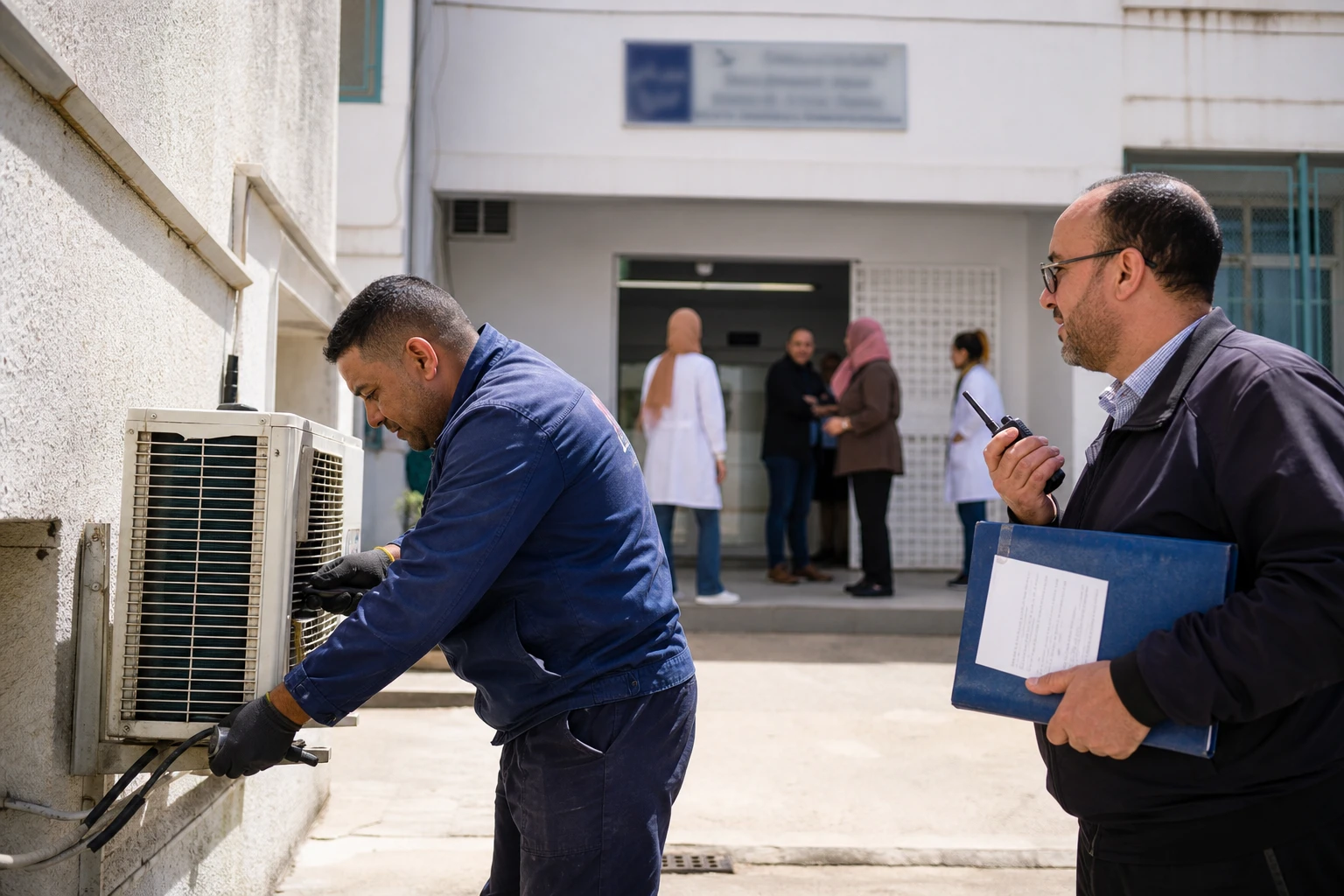
Initial official findings point to an electrical spark from an air conditioner installed in one of the establishment’s rooms. The General Directorate of National Security has opened an investigation to establish the exact circumstances of the fire. One of the victims was a 52-year-old educator, according to a statement reported by state radio.
In the hours that followed, the state mounted a visible response. Prime Minister Sifi Ghrieb visited the Zéralda burns hospital to enquire about the condition of the injured. President Abdelmadjid Tebboune later visited the same facility to assure the public that all medical resources had been mobilised. The Health Ministry said the injured had received immediate care, while the Solidarity Ministry began providing them with psychological support.
What the tragedy says about public services and maintenance
Beyond the grief, the case brings a practical issue into focus: the condition of equipment in buildings that accommodate children, older people or other vulnerable groups. An air conditioner, an electrical circuit, a dormitory room. Sometimes a lack of maintenance, an overload or an improperly installed appliance is all it takes to turn a place of protection into a danger zone. The line of inquiry therefore puts maintenance at the heart of the debate.
The issue is particularly sensitive as Algeria is going through a period of extreme heat. As temperatures rise, air conditioners run for longer, electrical networks come under greater strain and risks increase if installations cannot cope. Civil Protection bulletins have stressed the need for vigilance during the heatwave, with highs of 46 degrees forecast in several northern wilayas.
For families, the tragedy also raises a clear question: are technical inspections, fire safety standards and evacuation plans being rigorously applied at care facilities? For social care professionals, it is a reminder that human support is not enough without safe infrastructure, regular maintenance and procedures known to all.
Repercussions beyond Algiers
In North Africa, as elsewhere on the continent, the safety of social care facilities has become an indicator of public governance. Governments are judged not only on their statements, but on their ability to prevent avoidable tragedies. In a region facing more intense heat and growing pressure on urban services, an accident of this kind resonates far beyond Algeria.
The recent precedent is clear: the Algerian authorities have had to deploy significant resources to tackle forest fires and urban blazes at the same time. This accumulation of incidents is a reminder that a country can face climate, electrical and logistical risks simultaneously. In this context, the challenge is not only to respond after the event, but to make prevention part of budgets, inspections and staff training.
What happens next will depend on two fronts. The investigation must confirm the physical cause of the fire and clarify any possible responsibilities. The authorities, meanwhile, will be expected to take concrete steps to inspect installations at institutions for children in care. That is where the true significance of this tragedy will be measured: not only in tributes to the victims, but in the ability to ensure that a home meant to protect children does not become a place of mourning again.