Algeria
 Egypt
 Libya
 Morocco
 Sudan
 Tunisia
 Benin
 Burkina Faso
 Cabo Verde
 Côte d'Ivoire
 Ghana
 Guinea
 Guinea-Bissau
 Liberia
 Mali
 Mauritania
 Niger
 Nigeria
 Sierra Leone
 The Gambia
 Togo
 Cameroon
 Central African Republic
 Chad
 DR Congo
 Equatorial Guinea
 Gabon
 Republic of the Congo
 São Tomé and Príncipe
 Burundi
 Comoros
 Djibouti
 Eritrea
 Ethiopia
 Kenya
 Madagascar
 Malawi
 Mauritius
 Mozambique
 Rwanda
 Seychelles
 Somalia
 South Sudan
 Tanzania
 Uganda
 Angola
 Botswana
 Eswatini
 Lesotho
 Namibia
 South Africa
 Zambia
 Zimbabwe
In Dakar, a decision that goes beyond the Macky Sall question
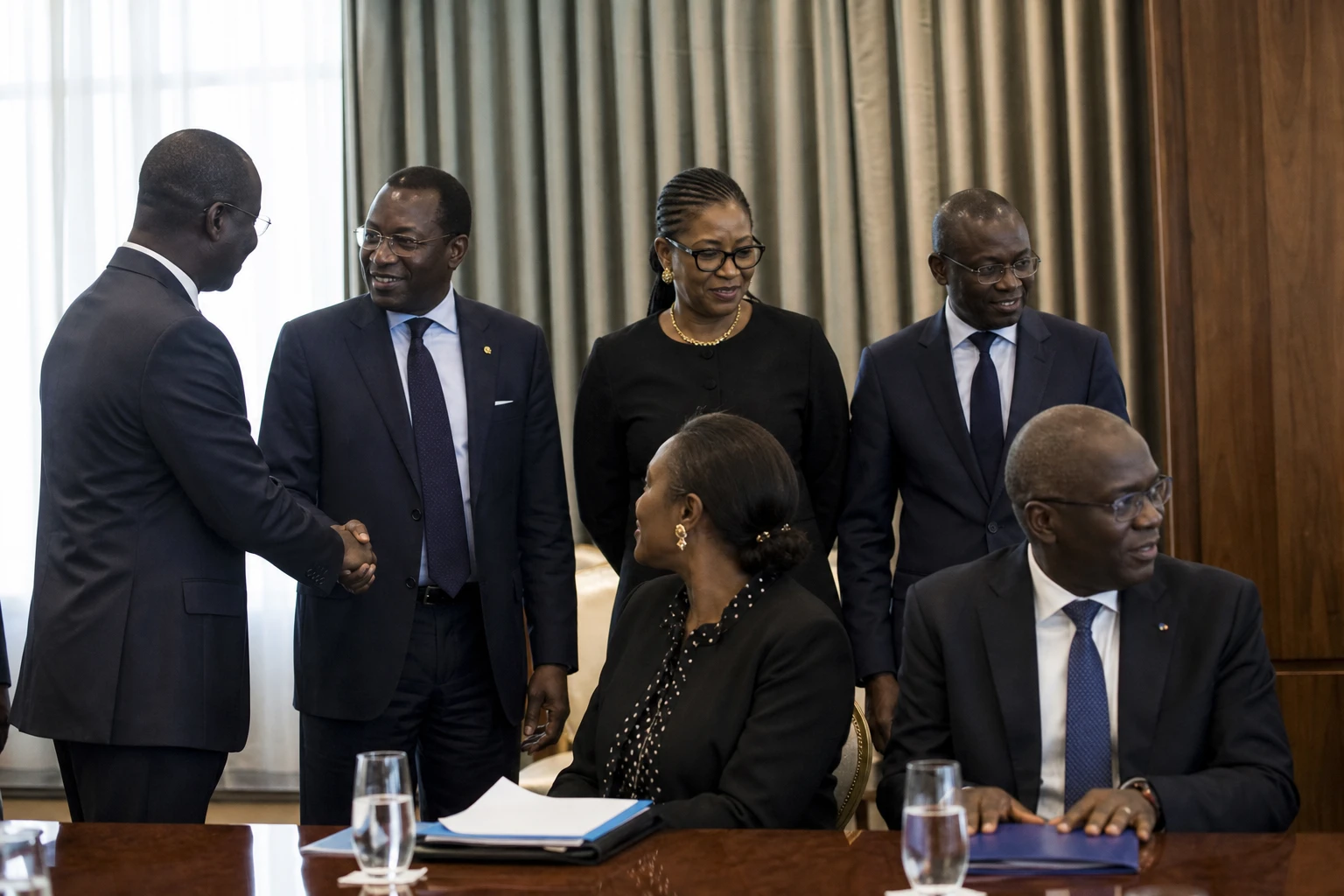
Senegalese diplomacy sometimes has a way of making gestures that carry more weight than a long speech. By giving its full support to Macky Sall’s candidacy for the post of UN secretary-general, the government of Bassirou Diomaye Faye has turned a courtesy meeting into a political signal, both domestic and international. In Dakar, the announcement is not just about multilateralism. It also says something about how Senegal wants to manage continuity of the state, old rivalries and its image beyond West Africa.
The context matters. Senegal belongs to ECOWAS, the Economic Community of West African States, and remains one of the most prominent countries in West Africa on diplomatic issues. In recent months, the country has also reiterated its commitment to African multilateralism and to a more inclusive approach to international relations. In this matter, the regional dimension matters as much as the relationship between two Senegalese presidents.
Support has now been formalised
According to the statement released on Monday 20 July by Senegal’s ministry responsible for African integration and foreign affairs, Bassirou Diomaye Faye instructed the government, as well as Senegal’s entire diplomatic network, to mobilise in support of Macky Sall’s candidacy among UN member states. The statement ends the ambiguity that had persisted since the audience on Friday 17 July at the presidential palace in Dakar. The presidency had then described the meeting as cordial, without announcing an official position.
The clarification comes as the process to select the next secretary-general is already under way at the United Nations. The UN says a candidate must be nominated by a member state or group of member states, then present a vision, a CV and information on the funding of their campaign. The post is filled by the General Assembly on the recommendation of the Security Council. António Guterres’s term ends on 31 December 2026, making the current campaign a decisive phase.
Macky Sall was officially nominated on 2 March 2026 by Burundi, according to documents published by the United Nations. His candidacy was subsequently entered into the UN’s public process, with an interactive dialogue and a televised hearing. His appearance before UN mechanisms confirmed that he was among the candidates in the race to succeed António Guterres.
Support was expected, but is far from unanimous
This Senegalese backing was hoped for by the former head of state’s camp. But it does not settle everything. In the spring, Macky Sall’s candidacy did not secure the African Union’s endorsement, and several African states opposed it, according to information reported in the African press and documents tracking the process. In a race for the UN secretary-generalship, this kind of division is never insignificant: support from the candidate’s home country matters, but is not enough on its own to build a diplomatic majority.
In Senegal, Bassirou Diomaye Faye’s decision has also drawn reservations. Civil society actors and families of victims of the political protests from 2021 to 2024 have criticised the reception given to Macky Sall in Dakar, viewing it as a form of political rehabilitation. Other observers link the gesture to possible easing of tensions with the APR, the former president’s party, amid a fast-changing domestic political landscape. The government, for its part, appears to favour an institutional reading: a former Senegalese president remains a potential asset for the country’s standing, even if his domestic record remains divisive.
This reading does not erase underlying tensions. The debate over hidden debt, raised in Senegalese public discussion since the change of power, continues to weigh on perceptions of Macky Sall’s legacy. Domestically, the government must therefore strike a delicate balance: defend Senegal’s diplomatic interests without giving the impression of too quickly settling the political controversies of the recent past.
An African candidacy in a global contest
The post of UN secretary-general is not merely symbolic. It is a role involving arbitration, visibility and method. The office-holder must convince the Security Council, then the General Assembly. They must also offer reassurance on three fronts: peace and security, development, and human rights. In a world marked by wars, deadlock at the Security Council and a crisis of multilateralism, each candidacy is seen as a test of institutional credibility.
For Senegal, the stakes go beyond Macky Sall himself. Dakar is seeking to preserve its status as a serious diplomatic hub in West Africa, at a time when ECOWAS is weakened by military transitions, political tensions and more unstable regional balances. Backing a former national president in a global contest could strengthen the image of continuity of the state. But it also exposes the government to criticism if the decision is seen as a calculated move rather than an expression of the national interest.
The continental significance is clear. Africa has long sought to have greater influence in major international institutions, whether in the Security Council, development financing or the reform of global governance. A candidate from the continent at the helm of the UN therefore points to a broader debate: how does Africa organise a common voice, and how far are its capitals prepared to back a single candidate? In the coming weeks, new endorsements, African reservations and the calculations of the permanent members of the Security Council will be the real indicators of strength in this campaign.