Algeria
 Egypt
 Libya
 Morocco
 Sudan
 Tunisia
 Benin
 Burkina Faso
 Cabo Verde
 Côte d'Ivoire
 Ghana
 Guinea
 Guinea-Bissau
 Liberia
 Mauritania
 Niger
 Nigeria
 Senegal
 Sierra Leone
 The Gambia
 Togo
 Cameroon
 Central African Republic
 Chad
 DR Congo
 Equatorial Guinea
 Gabon
 Republic of the Congo
 São Tomé and Príncipe
 Burundi
 Comoros
 Djibouti
 Eritrea
 Ethiopia
 Kenya
 Madagascar
 Malawi
 Mauritius
 Mozambique
 Rwanda
 Seychelles
 Somalia
 South Sudan
 Tanzania
 Uganda
 Angola
 Botswana
 Eswatini
 Lesotho
 Namibia
 South Africa
 Zambia
 Zimbabwe

In northern Mali, the war is no longer being fought only on the front line
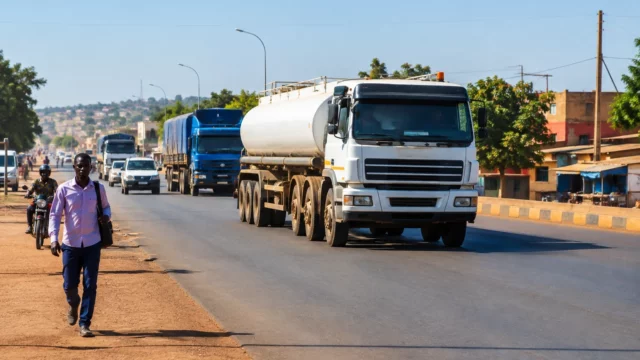
In northern Mali, every military convoy has become a test of endurance. The challenge is no longer simply to hold a road between two towns, but to retain the initiative in an area where several armed groups are seeking to set the pace, spread their propaganda and sometimes impose their own rules. The violence of 18 July in the Tabrichat area of the Gao region is part of this war of attrition, directly affecting Malian forces, nearby communities and the logistical routes between Anéfis and Gao.
Mali remains at the heart of a fragmented Sahelian theatre, where the army, jihadist groups and armed movements with community or political-military bases are vying for territory. The Gao region, like Kidal and Ménaka, has remained one of the most sensitive areas since the security crisis that unfolded in 2023-2026, with sustained pressure on forces in Bamako and on the partners they have deployed in the east of the country.
What corroborated sources establish about the attack
According to several sources corroborated by international and African media, a Malian military convoy was targeted on 18 July between Anéfis and Gao. The attack was claimed separately by JNIM, an Al-Qaeda affiliate, and the Azawad Liberation Front (FLA), a Tuareg coalition that says it is pursuing an independence agenda. The AP says the attackers spoke of “heavy human losses” and “serious material damage” on the Malian side, while the army confirmed it had carried out retaliatory strikes and said the convoy had been able to continue on its way.
The exact human toll remains disputed. A Malian security source cited 18 soldiers summarily executed after being captured, while the attack itself is said to have caused wider losses among Malian troops. The AP reports that footage released by the attackers shows soldiers who are visibly unarmed, and that fighters opened fire on men lying on the ground. The footage could not be independently verified, but it prompted strong reactions because of what it appears to show.
Malian sources and observers have also identified Hamza Ag Iyad among the fighters shown in the footage. This identification should be treated with caution, however, as it is based on visual material released by the groups themselves rather than on any public judicial or official confirmation. One legal point, by contrast, is unambiguous: a captured, disarmed or incapacitated fighter must be treated humanely. The International Committee of the Red Cross says prisoners of war and other people deprived of their liberty in a conflict must be protected in all circumstances.
In an armed conflict, the execution of prisoners constitutes a serious violation of international humanitarian law. The applicable law is clear: people who are no longer taking part in hostilities, including prisoners, must be respected, protected and treated humanely. Article 13 of the Third Geneva Convention states this principle directly.
FLA seeks distinction, JNIM applies pressure
For several months, the FLA has sought to present itself as an armed actor distinct from jihadists, including in its treatment of detainees. In accounts of exchanges following the attack, its leaders said they had themselves captured several Malian soldiers and had separated their prisoners from those held by JNIM. This stance is intended to foster an image of a “political” or “military” group that might one day engage in dialogue, while JNIM remains classified as a jihadist organisation and continues to pursue a strategy of intimidation and territorial entrenchment.
But the distinction it claims does not erase the reality on the ground. In 2026, several attacks have shown a degree of tactical convergence between the FLA and JNIM against Malian forces. The co-ordinated offensive of 25 April, followed by the attacks in early July, confirmed that enemies of different kinds can sometimes strike at the same time and place, with distinct aims but a shared effect: weakening the Malian state and scattering its resources. The African Union and the African Commission on Human and Peoples’ Rights have both condemned these co-ordinated attacks, a sign that the Malian crisis extends far beyond the national arena.
For the Malian army, the stakes are also political. Bamako must show that it controls the Gao-Anéfis route, as the transitional authorities have made a series of announcements about security successes and the growing strength of new military partners, including Africa Corps, the Russian structure that has replaced Wagner in several support roles. But the longer the fighting continues, the more visible its human and material cost becomes for both the military and the region’s residents, who already face supply disruptions, displacement and the intermittent closure of some routes.
A Malian case, but also a Sahelian and continental one
What happened at Tabrichat goes beyond a military tragedy. The killing of unarmed prisoners, if confirmed by an investigation, strikes at the heart of the laws of war and the credibility of all armed actors in the Sahel. It also puts the authorities in Bamako before a straightforward obligation: to document, classify and prosecute violations, whoever the perpetrators may be. In an area where all sides often accuse one another of abuses, there is a risk that illegality will become normalised as a method of warfare.
The regional implications are immediate. Mali lies at the crossroads of ECOWAS, from which it has become politically estranged, and a Sahel where people, weapons, fuel and wartime information move across borders. As long as eastern Mali remains under intense pressure, the effects will be felt well beyond Gao: in the security of trans-Saharan corridors, in the balance between the regular army and auxiliary groups, and in the ability of African institutions to address a crisis in which the boundaries between war, insurgency and territorial control are becoming increasingly porous.
In the coming days, the key questions will be whether the Malian army confirms a precise toll, whether the footage released by the attackers can be authenticated, and whether independent organisations will be given access to the detainees claimed by the FLA. In this war, the battle over evidence matters almost as much as the battle over the sand. It will determine whether Tabrichat remains just another episode in a fragmented war, or becomes a case with greater weight in Mali’s and the Sahel’s security debate.