Algeria
 Egypt
 Libya
 Morocco
 Sudan
 Tunisia
 Benin
 Burkina Faso
 Cabo Verde
 Côte d'Ivoire
 Guinea
 Guinea-Bissau
 Liberia
 Mali
 Mauritania
 Niger
 Nigeria
 Senegal
 Sierra Leone
 The Gambia
 Togo
 Cameroon
 Central African Republic
 Chad
 DR Congo
 Equatorial Guinea
 Gabon
 Republic of the Congo
 São Tomé and Príncipe
 Burundi
 Comoros
 Djibouti
 Eritrea
 Ethiopia
 Kenya
 Madagascar
 Malawi
 Mauritius
 Mozambique
 Rwanda
 Seychelles
 Somalia
 South Sudan
 Tanzania
 Uganda
 Angola
 Botswana
 Eswatini
 Lesotho
 Namibia
 South Africa
 Zambia
 Zimbabwe
A costly bill for an oil-producing country
When a country extracts crude but continues to buy almost all its finished fuels from abroad, the cost is not limited to foreign currency. It also weighs on pump prices, the public budget and transport stability. In Ghana, this structural contradiction remains at the heart of the energy debate. The authorities now want to reduce it by raising local fuel production to 70% of national consumption.
The ambition comes as Accra seeks to turn its oil sector into an industrial lever, rather than merely a source of crude revenue. The country joined the ranks of oil producers in 2010, but its dependence on fuel imports has long limited the tangible benefits for the Ghanaian economy. The current strategy is therefore rooted in energy sovereignty, with a practical focus: keeping more value added at home through infrastructure, jobs and logistics.
Accra banks on its refineries and domestic crude
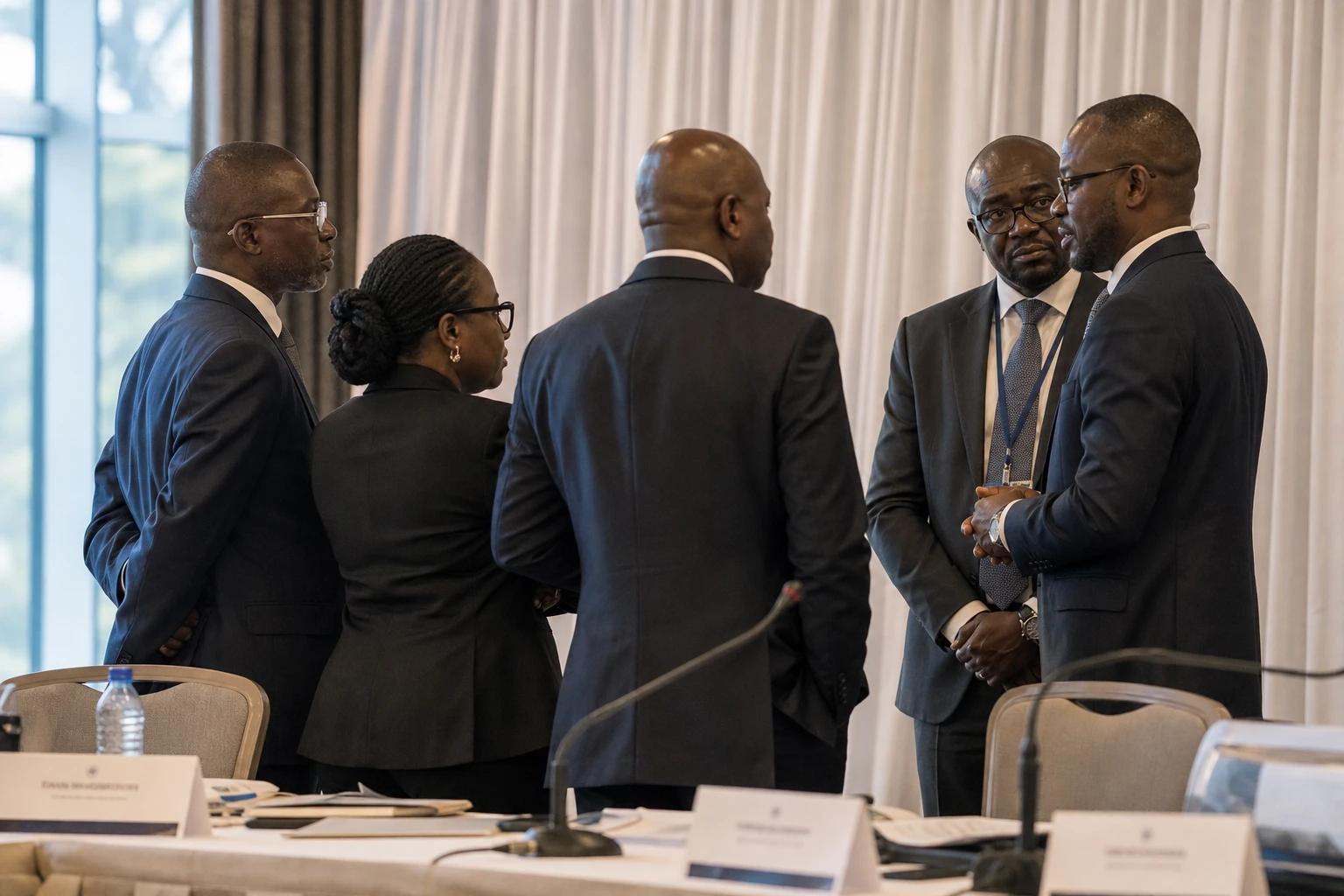
The target was highlighted in Accra at the Ghana International Petroleum Conference 2026, held on 16 and 17 July at the Palms Convention Center. The forum, organised by the National Petroleum Authority with downstream industry partners, has become an important venue for decisions on the country’s supply, refining and distribution.
Ghana’s Minister for Energy and Green Transition, John Abdulai Jinapor, said the expansion of two facilities should provide the foundation for the 70% target. The first is the Tema Oil Refinery, the historic state-owned refinery in Tema, near Accra. It resumed operations in December 2025 after several years out of service and is operating at around 28,000 barrels per day, against a nameplate capacity of 45,000 barrels per day.
The second is Sentuo Oil Refinery, Ghana’s first private refinery. Commissioned in January 2024, it can process up to 40,000 barrels per day. Its second phase is expected to increase capacity to 100,000 barrels per day, backed by $200 million in financing led by Ecobank Ghana. Sentuo’s expansion is therefore no longer an abstract project; it is already under way financially and politically.
The government also announced that one million barrels of crude from the Jubilee field had already been allocated to domestic refineries. According to the minister, the next allocation is to go directly to the Tema Oil Refinery. In other words, Ghana is seeking to bring its upstream production closer to its downstream market. This is a significant shift in a country where local crude often went for export while petrol stations relied on imported fuels.
What TOR’s restart means for Ghana’s economy
TOR’s return matters more than a technical restart. The state-owned refinery has long symbolised weaknesses in Ghana’s oil supply chain: breakdowns, maintenance work, underused capacity and external dependence. Its return to service in late 2025 revived a strategic asset that many considered to have been permanently weakened. Public oversight authorities have even reported, on the basis of audited accounts, a return to profit in 2025 after ten years of losses.
On the ground, the stakes are tangible. When the country imports refined products, it remains exposed to freight shocks, international prices and regional supply tensions. During price spikes, the state has had to cushion some of the impact for consumers. The government’s message is now clear: one-off subsidies cannot replace robust local capacity, strategic reserves and modern storage facilities.
But the benefits will not be felt equally by everyone. For operators, having more refining capacity on domestic soil reduces dependence on importers and can improve margins. For transporters, subcontractors, maintenance companies and engineering services, it opens up a larger market. For households, the impact will be visible only if local production genuinely leads to more stable prices and fewer supply disruptions. The promise of skilled jobs is therefore credible, but it will only become valuable if investment follows and the facilities operate at sustained levels.
Jinapor summed up this logic by describing a refinery as an ecosystem, not just a factory. The argument is as much economic as it is political. It speaks to a longstanding question in Ghana: how can oil revenues be turned into a durable industrial base, rather than being dissipated through imports and foreign-exchange costs?
A signal for West Africa and AfCFTA
The issue extends beyond Ghana. Across West Africa, several economies export crude while importing large quantities of fuel. This dependence limits fiscal room for manoeuvre and complicates regional energy security. Ghana, which also wants to position itself as a trade and services hub, is seeking to make its oil sector a competitive asset within ECOWAS, the Economic Community of West African States.
The issue also has continental significance. The African Continental Free Trade Area, or AfCFTA, rests on a simple idea: creating more value in Africa and trading more among Africans. Developing local refining fits this objective, as it limits foreign-exchange outflows and strengthens regional industrial chains. Ghana is thus sending a clear signal to its neighbours: producer countries can also seek to move up the value chain, provided they secure financing, maintenance and sound asset governance.
The question of pace remains. The 70% target will require major investment, swift execution and better coordination between upstream production, refining and distribution. It will also require TOR and Sentuo to achieve sustainable operating levels; otherwise, the goal will remain more political than industrial. The coming months will show whether Ghana is entering a phase of consolidation or remains caught in the familiar gap between promises of sovereignty and continued dependence on external markets.