Algeria
 Egypt
 Libya
 Morocco
 Sudan
 Tunisia
 Benin
 Burkina Faso
 Cabo Verde
 Côte d'Ivoire
 Ghana
 Guinea
 Guinea-Bissau
 Liberia
 Mali
 Mauritania
 Niger
 Nigeria
 Sierra Leone
 The Gambia
 Togo
 Cameroon
 Central African Republic
 Chad
 DR Congo
 Equatorial Guinea
 Gabon
 Republic of the Congo
 São Tomé and Príncipe
 Burundi
 Comoros
 Djibouti
 Eritrea
 Ethiopia
 Kenya
 Madagascar
 Malawi
 Mauritius
 Mozambique
 Rwanda
 Seychelles
 Somalia
 South Sudan
 Tanzania
 Uganda
 Angola
 Botswana
 Eswatini
 Lesotho
 Namibia
 South Africa
 Zambia
 Zimbabwe
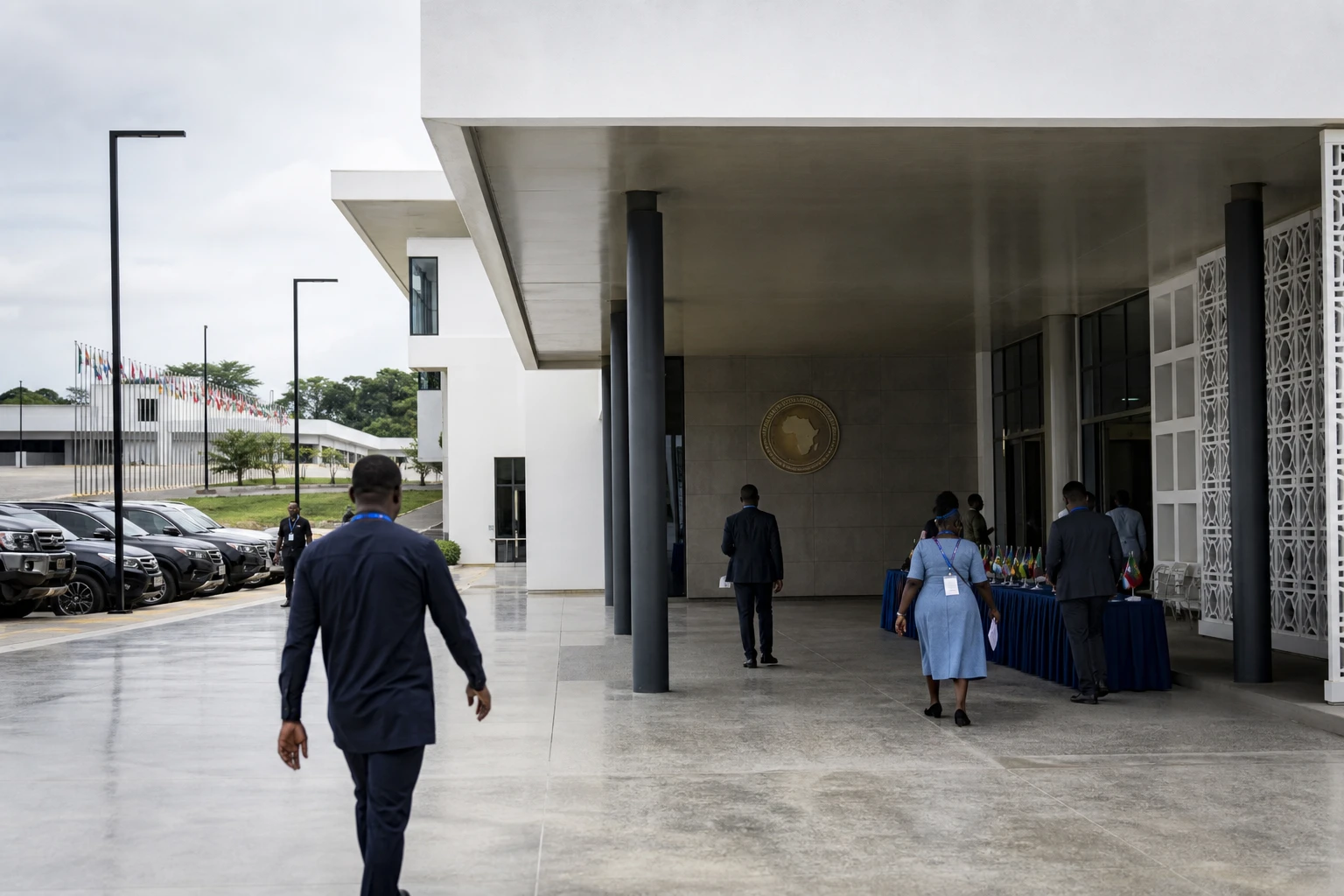
Freetown, a diplomatic showcase and political test
In Freetown, the occasion is more than a simple meeting of heads of state. For Sierra Leone, hosting West African leaders at Lungi, on the banks of the Sierra Leone River opposite the capital, puts its image, priorities and organisational capacity on display before the entire region. For ECOWAS, it is also a moment of truth: after months of political tensions, security crises and debates about its own relevance, the bloc must show that it can still produce clear decisions and follow them through.
This meeting comes amid an already packed regional agenda. ECOWAS is celebrating half a century of existence, but the organisation, founded in 1975 to promote West African economic integration, is now riven by deep divisions. The withdrawal of Mali, Burkina Faso and Niger, coups, challenges to some sanctions and the rise of cross-border threats have weakened its founding narrative. In this context, the Freetown summit carries more weight than an institutional ritual. It must show whether the Economic Community of West African States remains a useful political forum, or merely a meeting framework.
In Sierra Leone, this moment has a particular resonance. The country has long associated ECOWAS with Ecomog, the regional force deployed during civil wars in West Africa and, in Sierra Leone’s case, the gradual restoration of constitutional order. Freetown’s authorities regularly recall this past, which links regional security with domestic stability. This year’s summit is therefore being held in a country that expects ECOWAS to provide tangible protection, but also to support trade, border crossings and the movement of people—not just issue communiqués.
Expected decisions: security, governance and Commission leadership
Regional security is at the heart of discussions and is the leading item on the agenda. Heads of state are to consider strengthening military and police cooperation as armed groups and traffickers exploit porous borders. At previous sessions, ECOWAS has called for faster progress on the free movement of people and goods, while voicing concern about worsening security in several areas. The idea of a more responsive regional force is gaining traction, although putting it into operation would require resources, a clear chain of command and firm political agreement among member states.
Relations with the countries of the Alliance of Sahel States are also a sensitive issue. Mali, Burkina Faso and Niger broke with the West African bloc after a series of sanctions and confrontations over military-led transitions. In Freetown, leaders will have to strike a balance between institutional firmness and maintaining diplomatic channels. It is a delicate balancing act. Too much rigidity fuels the rupture. Too much flexibility may be seen as abandoning the democratic principles ECOWAS has championed for years.
Another moment to watch is the appointment of a new Commission president. Senegal has put forward General Birame Diop for the 2026-2030 term, a candidacy confirmed by Senegalese diplomats and reported by public media in Dakar. His name reflects Dakar’s strategic thinking: backing a military and diplomatic profile at a time when security dominates the agenda. The final decision, however, rests with the heads of state, and the vote will also reveal what balance they seek between experience, representation and institutional continuity.
This institutional process matters to Sierra Leone itself. The country, led by Julius Maada Bio, wants to show that it can help shape regional priorities, not merely host meetings. The stakes are as political as they are logistical. A prominent West African presidency raises Freetown’s standing, but it also exposes the government to concrete expectations on roads, the cost of living, jobs and security. For citizens, the value of the summit will therefore be measured less by the leaders’ family photograph than by its tangible effects on everyday life.
What Freetown says about West Africa
The Freetown summit goes beyond Sierra Leone. It raises the question of West Africa’s ability to remain an integrated region despite repeated political divisions. ECOWAS is not just a diplomatic machine. It is also a market, a framework for mobility, a tool for preventing crises and, at times, the last place where opposing sides are still willing to talk. In that sense, every decision on security, democratic governance or economic integration resonates far beyond conference rooms.
For coastal states such as Sierra Leone, Ghana, Liberia and Benin, rising risks from the Sahel have a direct impact: the movement of weapons, pressure on borders, increased trafficking and disruption to trade routes. For populations, this means tougher checks, higher transport costs and more vulnerable local economies. For governments, the question is broader: how can they defend sovereignty without dismantling the regional mechanisms that make that sovereignty stronger?
The Freetown summit will therefore serve as a test. If heads of state make progress on collective security, relations with the AES countries and renewal of the Commission, they could restore some credibility to the organisation. If they settle for a minimal compromise, ECOWAS will remain useful, but weakened. The continental implications are clear: in an African Union that encourages regional communities to play their part, West Africa knows it cannot exert influence alone if its main framework for integration becomes still more fragile.