Algeria
 Egypt
 Libya
 Sudan
 Tunisia
 Benin
 Burkina Faso
 Cabo Verde
 Côte d'Ivoire
 Ghana
 Guinea
 Guinea-Bissau
 Liberia
 Mali
 Mauritania
 Niger
 Nigeria
 Senegal
 Sierra Leone
 The Gambia
 Togo
 Cameroon
 Central African Republic
 Chad
 DR Congo
 Equatorial Guinea
 Gabon
 Republic of the Congo
 São Tomé and Príncipe
 Burundi
 Comoros
 Djibouti
 Eritrea
 Ethiopia
 Kenya
 Madagascar
 Malawi
 Mauritius
 Mozambique
 Rwanda
 Seychelles
 Somalia
 South Sudan
 Tanzania
 Uganda
 Angola
 Botswana
 Eswatini
 Lesotho
 Namibia
 South Africa
 Zambia
 Zimbabwe
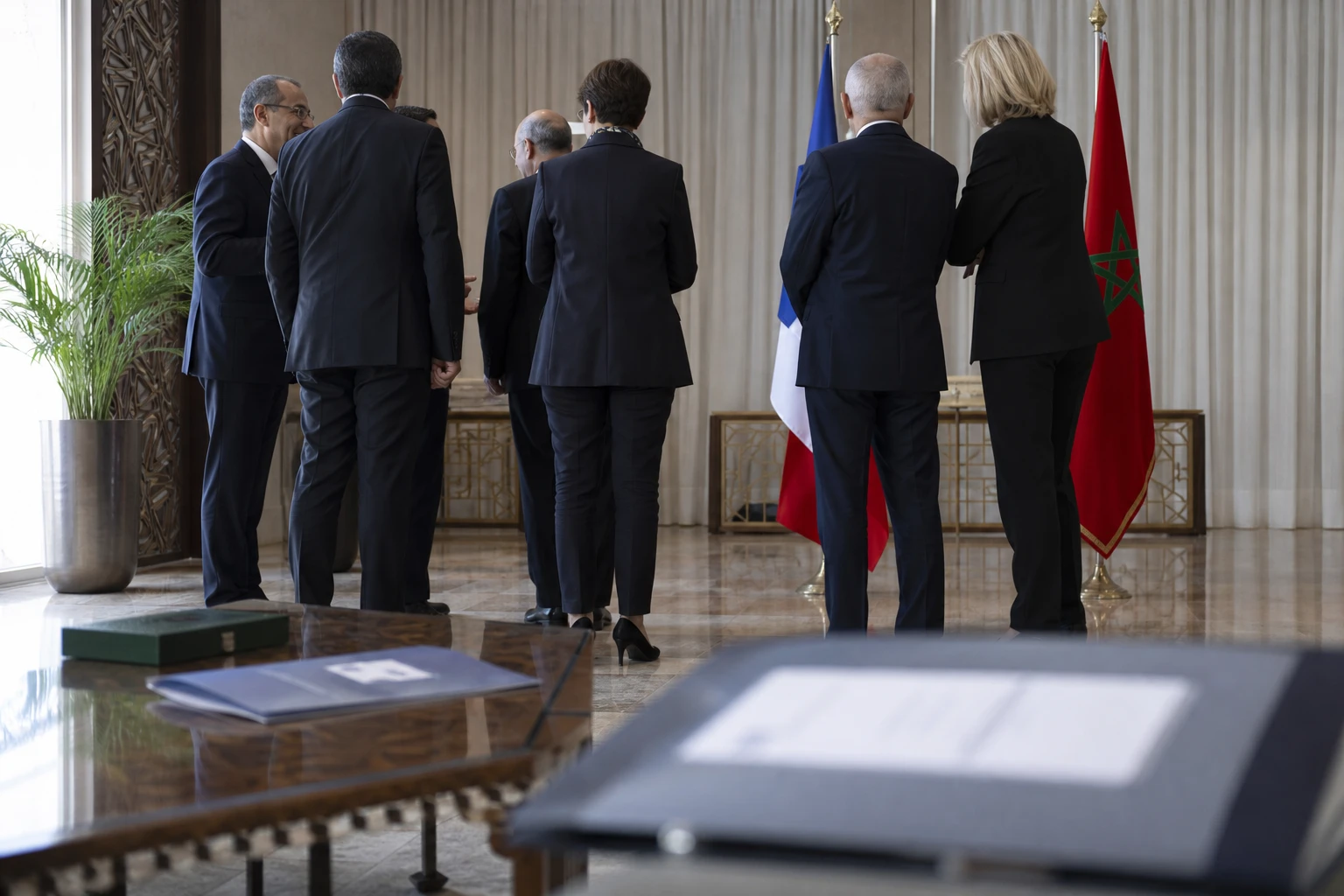
As Franco-Moroccan ties move from chill to concrete issues
In Rabat, diplomatic gestures are anything but incidental. When a relationship moves from tension to the signing of agreements, entire sectors change gear: transport, energy, security, culture, training and financing. Sébastien Lecornu’s visit on Thursday 16 July 2026 marks precisely this shift, with the idea of a partnership restored to centre stage and now treated as a project to work on, rather than a mere photo opportunity.
Morocco and France are not starting from scratch. Bilateral relations thawed markedly after Emmanuel Macron’s state visit to the Kingdom from 28 to 30 October 2024, during which Paris clearly stated that, for France, the future of Western Sahara lay within the framework of Moroccan sovereignty. Since then, the two capitals have revived political, economic and cultural channels, with a visible step-up in activity in Rabat.
What Rabat and Paris have actually agreed
On 16 July 2026, the 15th Morocco-France High-Level Meeting opened in Rabat, co-chaired by Aziz Akhannouch and Sébastien Lecornu. The French delegation included around ten members of the government, among them the ministers responsible for the interior, the economy, transport, culture, agriculture, foreign trade and digital affairs. Several key ministers were present on the Moroccan side, a sign that the agenda was not confined to general diplomacy but directly concerned public policy.
The meeting produced several agreements and cooperation instruments. Among the most significant, a protocol confirmed the implementation of financing for the high-speed rail line programme between Kénitra and Marrakech. Other texts covered feminist foreign policy, culture, agronomic and veterinary research, as well as broader areas of partnership. Morocco and France also highlighted a shared agenda in transport, energy and cutting-edge technologies.
The clearest political signal came from Sébastien Lecornu himself, who reaffirmed in Rabat that France’s position in favour of Morocco’s sovereignty over its Sahara was “unchanging”. This is not routine diplomatic language. It formalises a French position now being stated publicly, following Emmanuel Macron’s 2024 message, in which he had already said that the present and future of the Sahara lay within the framework of Moroccan sovereignty.
Why this matters in Morocco and beyond
For Rabat, the stakes are twofold. First, to consolidate diplomatic support on a strategic and sensitive issue. Second, to attract concrete economic commitments. The high-speed rail line between Kénitra and Marrakech has implications for domestic mobility, connecting up regions and the competitiveness of the Atlantic corridor. In a country where major public projects shape investment, this kind of cooperation has a direct impact on businesses, skilled employment and Moroccan subcontractors.
The significance is regional too. For several years, Morocco has presented itself as a point of connection between Africa, Europe and the Atlantic region. This positioning matters for logistics chains, processing industries, digital affairs and infrastructure. Across Africa, Franco-Moroccan relations are being watched closely, as they could influence how Europe approaches the Maghreb, as well as projects linking Morocco to sub-Saharan markets. Lecornu’s reference to a future treaty of friendship that would benefit Europe and the entire African continent reflects this geostrategic perspective.
Security cooperation is not a secondary issue. In Paris, Sébastien Lecornu has already praised the “excellent level” of police and judicial cooperation with Morocco. This is a reminder that the relationship is not limited to major contracts or diplomatic symbolism. It also involves tackling criminal networks, illicit flows and cross-border judicial cases—sensitive issues for both states and the western Mediterranean as a whole.
For the Moroccan public, the expected benefits cannot be measured in statements alone. They will be judged by delivery: the timetable for the agreements, clarity on financing, industrial benefits, the movement of expertise and the opening up of opportunities for young graduates, SMEs and cultural sectors. For the state, the challenge is different: to turn a diplomatic rapprochement into tangible results while retaining control over national priorities.
What to watch now
This phase is not over. It is entering an implementation stage in which political promises will have to translate into action. The coming months will show whether this leads to a friendship treaty described as “unprecedented”, a step-up in economic exchanges, or simply a thaw in relations that remains incomplete. Morocco and France have demonstrated a clear rapprochement in Rabat. It remains to be seen whether this new balance will produce lasting, visible and measurable cooperation in the strategic areas announced.