Algeria
 Egypt
 Libya
 Morocco
 Sudan
 Tunisia
 Benin
 Burkina Faso
 Cabo Verde
 Côte d'Ivoire
 Guinea
 Guinea-Bissau
 Liberia
 Mali
 Mauritania
 Niger
 Nigeria
 Senegal
 Sierra Leone
 The Gambia
 Togo
 Cameroon
 Central African Republic
 Chad
 DR Congo
 Equatorial Guinea
 Gabon
 Republic of the Congo
 São Tomé and Príncipe
 Burundi
 Comoros
 Djibouti
 Eritrea
 Ethiopia
 Kenya
 Madagascar
 Malawi
 Mauritius
 Mozambique
 Rwanda
 Seychelles
 Somalia
 South Sudan
 Tanzania
 Uganda
 Angola
 Botswana
 Eswatini
 Lesotho
 Namibia
 South Africa
 Zambia
 Zimbabwe
A viral video, then prison: Ghana’s latest test of online speech
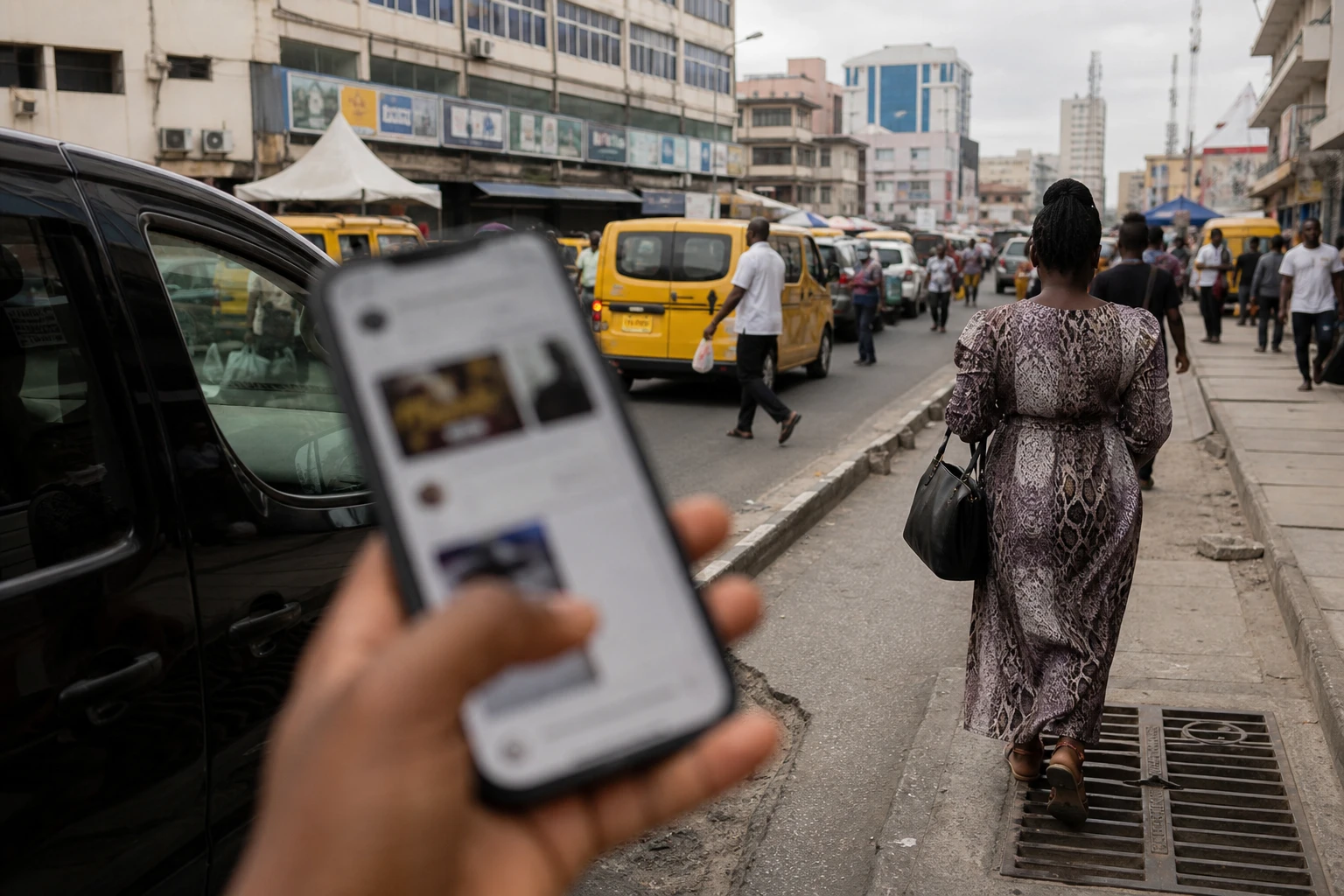
In Ghana, a clip posted on TikTok can now end up in an Accra courtroom and then behind bars. The case of Camilla Alhassan is about more than a simple online misstep: it highlights a very real point of tension over where to draw the line between expression, defamation and disinformation in a highly connected West African democracy.
The country of John Dramani Mahama, who returned to power after the presidential election of 7 December 2024, remains one of West Africa’s most closely watched political arenas. ECOWAS also highlighted the peaceful nature of the vote, while calling, as it often does, for greater information integrity during election periods.
The facts: a swift conviction amid false allegations against the head of state
On 16 July 2026, an Accra court sentenced 43-year-old Camilla Alhassan to one year in prison with hard labour after she pleaded guilty to offensive conduct and publishing false information. According to the proceedings as described by the local press, she had posted several videos claiming, without evidence, that Ghana’s president had sacrificed 32 cows in a ritual intended to secure his victory in the 2024 presidential election.
Ghanaian police searched for her after the videos circulated, before arresting her on 9 July 2026 with technical support from the National Signal Bureau, according to the account presented in court. The sentence was handed down by an Accra court with jurisdiction over ordinary criminal cases; Ghana’s lower courts hear most offences of this kind.
The case became even more sensitive after the deadly floods in Accra on 29 June. In her videos, the influencer had insinuated that the state’s distribution of sanitary pads was intended to cover up alleged sacrifices. Ghanaian authorities, however, were describing a very real crisis at the time: roads cut off, neighbourhoods flooded, emergency services mobilised and, according to several corroborated figures, at least 12 dead, 7 missing and 38,802 people affected in the Greater Accra Region alone.
What the case says about Ghana: freedom of expression, public-order laws and the political climate
Ghana’s Constitution guarantees freedom of expression, but it is not absolute. It protects speech, the press and other media, while allowing restrictions prescribed by law in a democratic society. Prosecutions related to the publication of false news or offensive conduct are based on this framework.
The Criminal Offences Act of 1960, which remains in force, contains provisions on “offensive conduct” and “publication of false news”, two charges often criticised for their broad wording. Digital rights organisations believe these offences could still be used against online speech, risking a blurring of the line between tackling disinformation and restricting political criticism. This view is not confined to outside observers: lawyers and press groups in Ghana itself are debating whether these laws are compatible with the spirit of the 1992 Constitution.
The political reaction to Camilla Alhassan’s conviction illustrates this tension. Some opposition figures have raised concerns about a possible chilling effect on freedom of expression. Others, by contrast, point out that a digital space saturated with rumours can quickly undermine trust in institutions, especially when it involves the presidency, elections or collective tragedies such as the June floods in Accra.
Continental implications: a Ghanaian case, but a West African debate
The Alhassan case extends beyond Ghana. In several ECOWAS countries, authorities, platforms and professional organisations are still searching for the right balance between tackling disinformation, protecting institutions and respecting fundamental rights. Ghana’s experience carries particular weight because it is unfolding in a country often cited as one of the sub-region’s most stable democracies, with a lively press and regular changes of government.
The case also serves as a reminder of a basic principle: social media accelerates the spread of accusations, but it abolishes neither the need for evidence nor accountability. In Ghana, as elsewhere in West Africa, authorities will now have to watch two risks at once. On the one hand, the normalisation of political lies online. On the other, the excessive use of criminal law to respond to disputed content. The next test will be less about TikTok itself than about the institutions’ ability to handle such disputes without undermining public trust.