Algeria
 Egypt
 Morocco
 Sudan
 Tunisia
 Benin
 Burkina Faso
 Cabo Verde
 Côte d'Ivoire
 Ghana
 Guinea
 Guinea-Bissau
 Liberia
 Mali
 Mauritania
 Niger
 Nigeria
 Senegal
 Sierra Leone
 The Gambia
 Togo
 Cameroon
 Central African Republic
 Chad
 DR Congo
 Equatorial Guinea
 Gabon
 Republic of the Congo
 São Tomé and Príncipe
 Burundi
 Comoros
 Djibouti
 Eritrea
 Ethiopia
 Kenya
 Madagascar
 Malawi
 Mauritius
 Mozambique
 Rwanda
 Seychelles
 Somalia
 South Sudan
 Tanzania
 Uganda
 Angola
 Botswana
 Eswatini
 Lesotho
 Namibia
 South Africa
 Zambia
 Zimbabwe
A trial that goes beyond one man
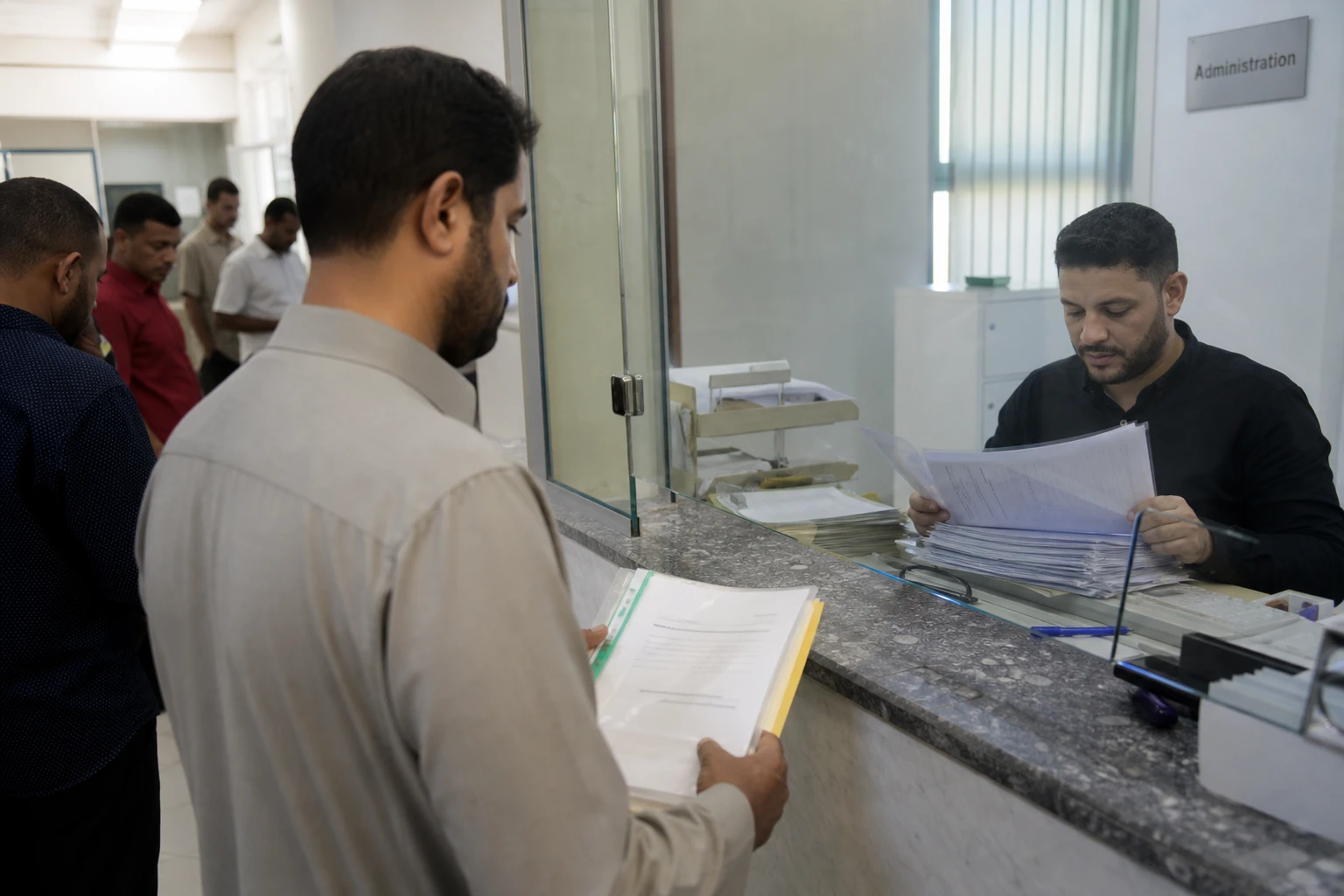
In Tripoli, Mitiga prison remains a powerful symbol. For many Libyans, it represents a decade of arbitrary detention, violence and impunity in a country still marked by the collapse of the state after 2011. The decision issued in The Hague on 16 July 2026 changes the picture: the International Criminal Court (ICC) has confirmed the charges against Khaled Mohamed Ali El Hishri, a former official at this detention centre in western Libya, paving the way for a trial.
This step is important beyond the individual case. Libya is not a member of the ICC, but the UN Security Council referred the situation there to the Court in 2011, following the uprising against Muammar Gaddafi. In 2025, the Libyan authorities also accepted the Court’s jurisdiction over crimes committed on their territory between 2011 and the end of 2027. In other words, the legal framework has expanded, even as national institutions remain fragile and divided between the east, west and south of the country.
The El Hishri case is rooted in this fractured political landscape. Mitiga, near Tripoli, is a detention site controlled by the Deterrence Force, also known as Rada. For years, international organisations and the ICC prosecutor’s office have described the site as a place where civilians were detained in inhumane conditions and subjected to abuse. The confirmation of the charges gives some of these allegations a concrete judicial path for the first time.
The facts established by the Court
According to the ICC, El Hishri is now being sent to trial on 17 counts of crimes against humanity and war crimes. The judges upheld allegations of persecution, enslavement, torture, rape, sexual violence and murder, relating to alleged acts at Mitiga between 2014 and 2020. Reuters and Human Rights Watch have confirmed the substance of this factual basis, as well as the fact that the judges rejected the defence challenge to the Court’s jurisdiction.
The confirmation of charges hearing took place in May 2026. It does not yet determine guilt. It assesses whether the evidence presented is sufficient for the case to go to trial. The judges found that it was. They also rejected the argument that the ICC lacked jurisdiction to hear the case. The proceedings may still be subject to appeals, but the case has now entered a more substantial contested phase.
El Hishri was arrested in Germany in July 2025 before being transferred to the Netherlands in December that year. This is a crucial point. Without the cooperation of a third country, the ICC would have had no practical means of securing a prominent Libyan suspect. The case therefore recalls an often overlooked reality: in international justice, arrests still depend largely on the political will of states.
El Hishri is not the only name in the Libya investigation. The ICC says it has issued public arrest warrants for 14 people linked to the situation, several of whom remain at large. Four have died or been killed. Others are still reportedly wanted or may be detained in Libya, with their status unclear. The case therefore points less to a one-off step than to a long-term judicial undertaking.
What this means for Libya and North Africa
For victims, the issue is simple: to bring prison violence out of the grey zone. In a country where detention centres have sometimes operated as autonomous centres of power, national justice has struggled to assert itself. The forthcoming trial could therefore become a test of the credibility of the very idea of criminal accountability in Libya, including when armed actors embedded in the security apparatus are involved.
For the Libyan authorities, the case is more difficult. Cooperating with the ICC could strengthen Tripoli’s international credibility. But it also requires close scrutiny of abuses committed in detention facilities under Libyan or quasi-state control. Tensions between the logic of sovereignty and the demand for prosecutions are not new in Libya. For years, they have shaped relations between the Court, national institutions and armed groups that still wield coercive power.
At the regional level, the case resonates far beyond Tripoli. North Africa remains one of the areas where institutional collapse has fuelled the movement of weapons and fighters, as well as the spread of parallel detention systems. In Libya, the outcome of this case could affect other proceedings still under way, notably those concerning the arrests of suspects wanted by the ICC and cooperation between the Court, the UN and local authorities. The decision of 16 July 2026 is also a reminder that, in Africa, the question of justice for serious crimes remains inseparable from control of territory and chains of command.
The continental significance is clear. Since the Security Council referred the situation in Libya in 2011, the ICC has been watching how African states cooperate with, resist or negotiate with international justice. The announced trial of El Hishri could set a precedent in a case originating on African soil, involving African victims, with potential effects on debates over impunity, judicial sovereignty and the protection of detainees in other crisis situations.