Algeria
 Egypt
 Libya
 Sudan
 Tunisia
 Benin
 Burkina Faso
 Cabo Verde
 Côte d'Ivoire
 Ghana
 Guinea
 Guinea-Bissau
 Liberia
 Mali
 Mauritania
 Niger
 Nigeria
 Senegal
 Sierra Leone
 The Gambia
 Togo
 Cameroon
 Central African Republic
 Chad
 DR Congo
 Equatorial Guinea
 Gabon
 Republic of the Congo
 São Tomé and Príncipe
 Burundi
 Comoros
 Djibouti
 Eritrea
 Ethiopia
 Kenya
 Madagascar
 Malawi
 Mauritius
 Mozambique
 Rwanda
 Seychelles
 Somalia
 South Sudan
 Tanzania
 Uganda
 Angola
 Botswana
 Eswatini
 Lesotho
 Namibia
 South Africa
 Zambia
 Zimbabwe
As a partnership deepens, doubts remain
In Rabat, diplomacy is moving fast. In Paris, so is the embarrassment. France has now openly backed Morocco’s position on Western Sahara, while a new investigation has revived suspicions that Moroccan services carried out digital surveillance targeting French officials. The two cases are distinct, but they intersect. And it is precisely this overlap that is troubling the French government.
Morocco, a North African country whose capital is Rabat, is a key partner for France on security, migration and economic matters. Since October 2024, the two countries have even upgraded their relationship to a “reinforced exceptional partnership”. At the same time, Paris has adopted a more pro-Rabat line on Western Sahara, a territory that EU law nevertheless continues to treat as separate from Morocco.
What the Pegasus investigation reveals
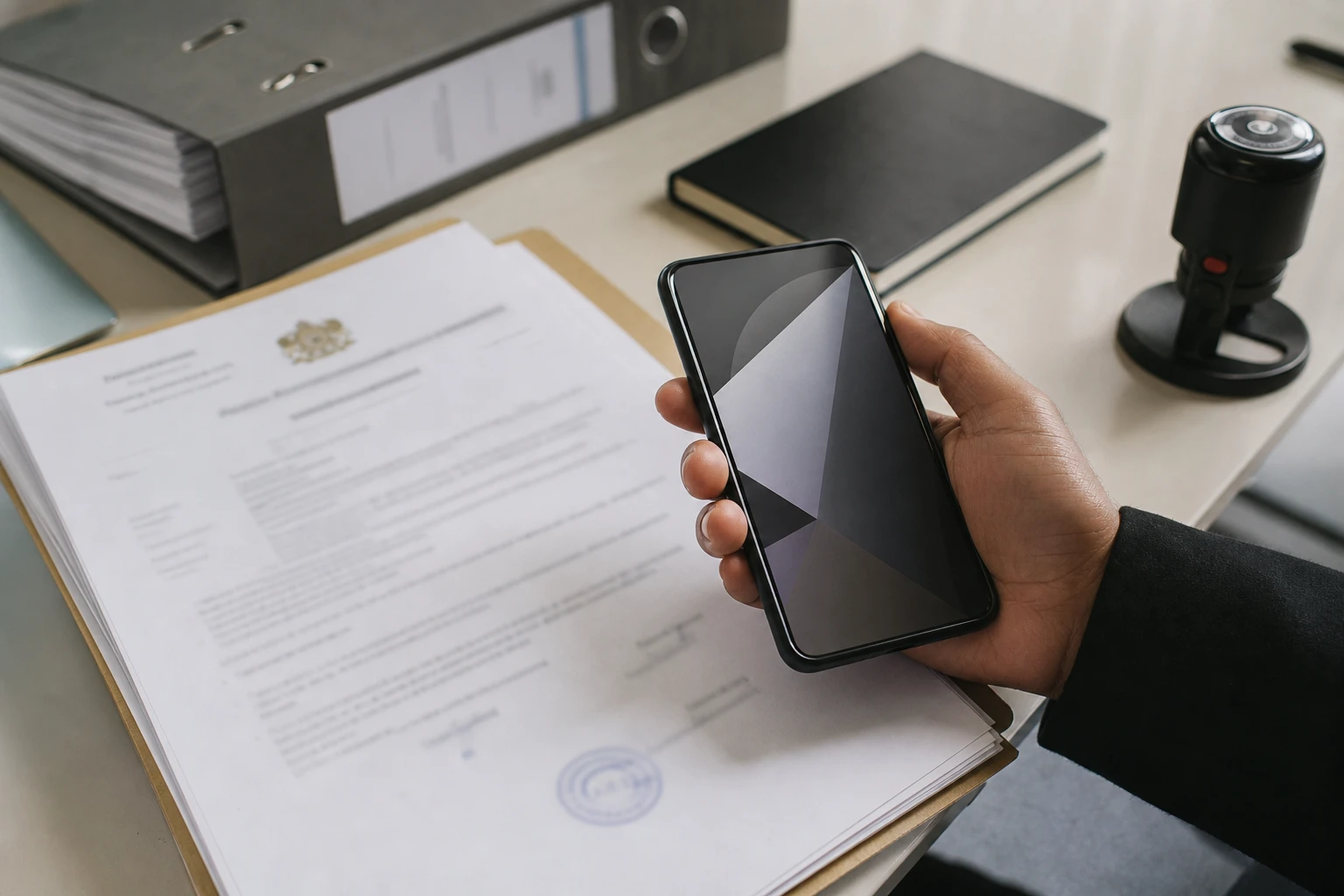
On 16 July 2026, a consortium co-ordinated by Forbidden Stories published new findings on Morocco’s use of Pegasus spyware. According to the revelations, a former agent of the DGST, Morocco’s domestic intelligence service, described a surveillance operation active since 2017 targeting journalists, opponents, human rights defenders and foreign officials. The investigation also draws on court documents, technical data and several corroborating testimonies.
The journalists who carried out the investigations say technical traces identified by ANSSI, the French agency responsible for information systems security, show that the phones of several French ministers or former ministers were compromised. Those named include Florence Parly, Jean-Michel Blanquer, François de Rugy and Sébastien Lecornu. The investigation also says Emmanuel Macron’s number was among the potential targets attributed to the Moroccan client of the software, though no public evidence has been presented that the president’s phone was actually compromised.
Rabat has denied acquiring or using Pegasus since 2021. But the new publication weakens that line of defence, combining an insider’s testimony, technical evidence and documents attributed to NSO Group, the Israeli software maker. At this point, the only political certainty is this: the case has not gone away. It has resurfaced just as Paris and Rabat seek to present their relationship as more harmonious and substantial.
Western Sahara: a diplomatic red line and a legal faultline
The issue becomes even more sensitive because it touches on Western Sahara. On 30 July 2024, in a letter to King Mohammed VI, Emmanuel Macron wrote that “the present and future of Western Sahara lie within the framework of Moroccan sovereignty”. A few months later, during his state visit to Morocco, the Élysée confirmed this position in a bilateral declaration on a “reinforced exceptional partnership”.
France’s position nevertheless remains at odds with European case law. The Court of Justice of the European Union maintains that Western Sahara is a separate and distinct territory from Morocco under EU law, and that applying agreements to the territory requires the consent of the people of Western Sahara. In other words, Paris has chosen a political interpretation favourable to Rabat, but that does not remove the constraints imposed by European law.
In this context, the question is not merely a moral one. It is institutional. A power that reaffirms its support for a partner suspected of targeting its head of state and several ministers risks damaging its credibility. For France, this undermines its message of strategic trust. For Morocco, it fuels a longstanding controversy over the methods used by its security services.
What this means for Rabat, Paris and the region
In Morocco, the impact is twofold. Domestically, the allegations fuel debate about surveillance practices and the role of the security apparatus in political life. Abroad, they carry a reputational cost for Rabat as the kingdom seeks to strengthen its European partnerships and defend its position on the Western Sahara issue. The official line remains denial, but that is no longer enough to quell the controversy.
In France, the stakes go beyond a simple diplomatic incident. If members of the government were indeed targeted, the issue concerns the security of the executive, the protection of state secrets and the government’s ability to treat a partner as an ally without downplaying the risks. According to the published findings, the commission rogatoire opened in Paris has run up against the Moroccan authorities’ refusal to co-operate. This deadlock fuels suspicion and prolongs the case.
At a regional level, the case also shows that African diplomatic battles are now fought as much in capitals as across digital networks. Western Sahara remains one of the Maghreb’s most sensitive flashpoints, involving Rabat, Algiers and UN mechanisms. In this landscape, every move by France is scrutinised. So is every Pegasus revelation. The wider significance lies here: a bilateral relationship is becoming a test of trust over sovereignty, cybersecurity and the consistency of European positions on African disputes.
The case will not be closed quickly. The next steps in the Paris proceedings, Rabat’s response to judicial requests and the evolution of France’s position on Western Sahara will all bear watching. These questions are now part of the same set of issues. And their impact extends far beyond a phone suspected of having been targeted.