Algeria
 Egypt
 Libya
 Morocco
 Sudan
 Tunisia
 Benin
 Burkina Faso
 Cabo Verde
 Côte d'Ivoire
 Ghana
 Guinea
 Guinea-Bissau
 Liberia
 Mali
 Mauritania
 Niger
 Nigeria
 Senegal
 Sierra Leone
 The Gambia
 Togo
 Cameroon
 Chad
 DR Congo
 Equatorial Guinea
 Gabon
 Republic of the Congo
 São Tomé and Príncipe
 Burundi
 Comoros
 Djibouti
 Eritrea
 Ethiopia
 Kenya
 Madagascar
 Malawi
 Mauritius
 Mozambique
 Rwanda
 Seychelles
 Somalia
 South Sudan
 Tanzania
 Uganda
 Angola
 Botswana
 Eswatini
 Lesotho
 Namibia
 South Africa
 Zambia
 Zimbabwe
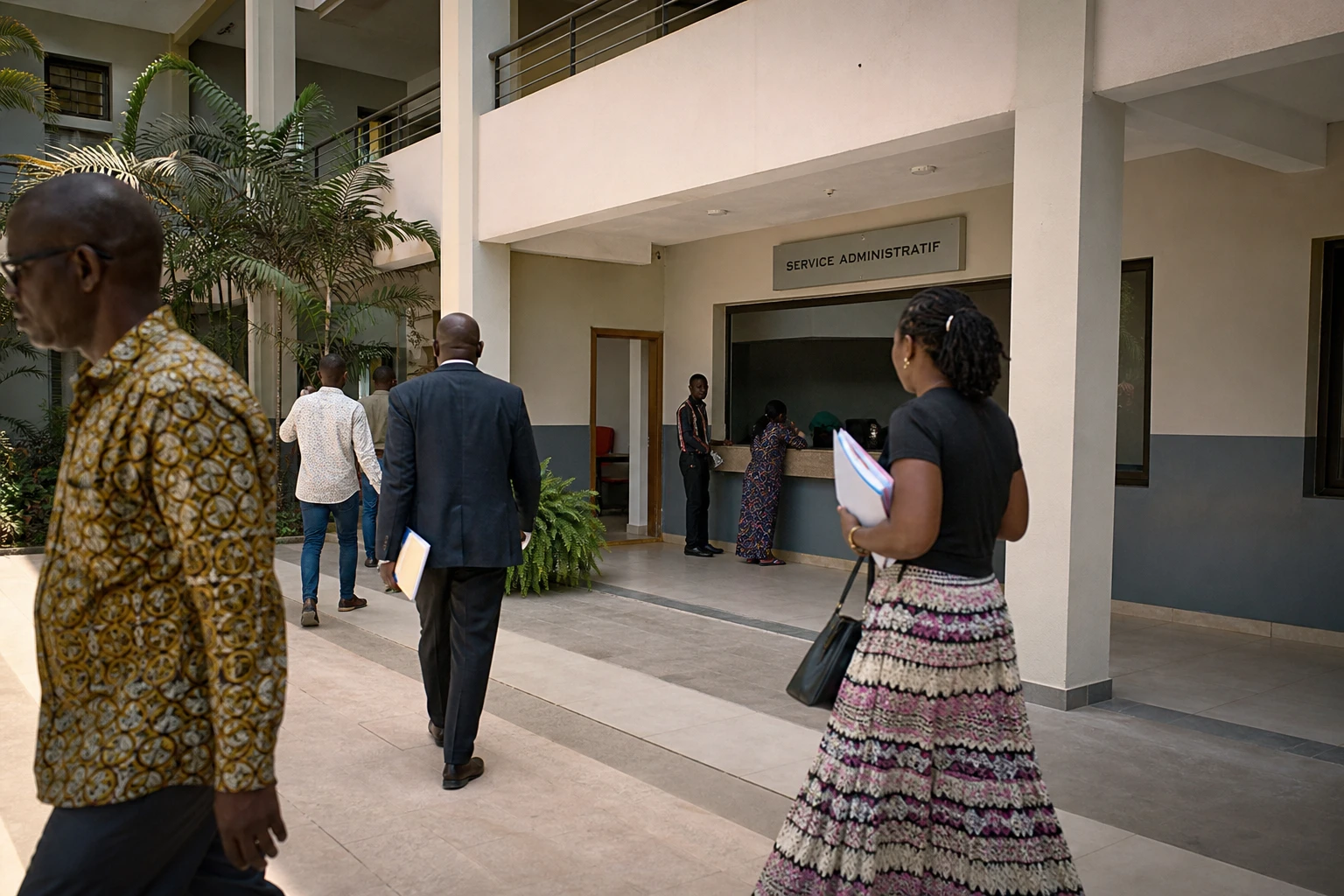
In Bangui, the state still relies too heavily on external support
When an administration struggles to pay, invest and maintain basic services at the same time, the issue is no longer merely budgetary. It becomes social, political and territorial. In the Central African Republic, the core problem remains the same: the state has few resources of its own, while routine costs absorb an overwhelming share of its budget. The World Bank estimates that domestic revenues remain below 10% of GDP, while the wage bill takes up as much as 73% of public resources.
This imbalance explains why health, education and other essential functions still depend heavily on external funding. Under this model, international aid does not just finance projects. It also helps keep the state running day to day, including through some salaries and priority spending. This is not exceptional in the region, but it remains fragile, leaving little room to manoeuvre if disbursements are delayed, grants fall or security pressures mount.
Reforms under way, but the tax base remains narrow
On 2 July 2026, the World Bank published a review of public finances in Bangui focused on transparency, sustainability and the efficiency of the public sector. The document does not describe a sudden crisis. Rather, it emphasises structural fragility. Despite a relative improvement in security and several recent reforms, the Central African state remains constrained in its ability to finance development sustainably. The World Bank also points to an urgent need to mobilise more domestic resources to create fiscal space.
The report notes progress: the 2022-2026 public financial management strategy, the digitalisation of core systems, and closer alignment with the financial directives of CEMAC, the Economic and Monetary Community of Central Africa. But these advances have not yet been enough to transform the budget system. Figures published by the World Bank and relayed on its country website also put the expected budget deficit at 4.9% of GDP in 2024 and public debt at 60.7% of GDP. This confirms a persistent financing constraint.
In this context, revenues remain concentrated in Bangui, where tax services, most banks and the bulk of formal economic activity are located. Rural areas, by contrast, rely more on informal activity, agriculture and family remittances. The weakness of the tax base is more pronounced there, sustaining a lasting gap between the administrative centre and the rest of the country. This divide complicates revenue collection, as well as public perceptions of taxation, especially when public services remain unreliable.
What this means for Central Africans and Central Africa
For a Central African, the issue is first felt in practical terms: a teacher paid late, a health centre with no room to operate, a school whose funds run out before the end of the year. The World Bank highlights that spending on human capital, health and education remains insufficient. Yet these are precisely the sectors that underpin social mobility, stability and trust in the state. When the wage bill takes up almost all the available room, public investment inevitably falls.
The issue is also regional. The Central African Republic is a member of CEMAC, where common budget rules and convergence targets require a minimum level of discipline. But an economy that is so small, landlocked and dependent on grants struggles to comply with these frameworks over the long term without broadening its revenue base. The African Development Bank also notes that Central African public finances remain exposed to weak domestic revenues and pressure on essential spending. In other words, budget reform is not a technical option. It is a condition for administrative sovereignty.
The government is not starting from scratch. The authorities have embarked on modernisation efforts, and financial partners continue to support the recovery. The problem is one of scale. To have a lasting impact, reforms must improve collection, reduce leakages, better target spending and protect social sectors. Without this, the Central African Republic will remain locked into a model in which foreign aid addresses urgent needs but cannot replace either a strong tax base or a larger national economy.
The implications extend beyond Bangui. As several Central African states seek to strengthen their fiscal resilience, the Central African Republic is a reminder of a simple regional reality: without administrations capable of collecting taxes, paying regularly and investing predictably, stability remains fragile. The next milestones to watch are therefore as much budgetary as political: implementation of the 2022-2026 reforms, the ability to increase revenues in 2026, and the continuation of partners’ support for funding public services.