Aljeria
 Libya
 Misri
 Sudan
 Tunisia
 Benin
 Burkina Faso
 Gambia
 Ghana
 Gine
 Ginebisau
 Kepuvede
 Kodivaa
 Liberia
 Mali
 Moritania
 Niger
 Nigeria
 Senegal
 Sierra Leone
 Togo
 Chadi
 Gaboni
 Guinea ya Ikweta
 Jamhuri ya Afrika ya Kati
 Jamhuri ya Kidemokrasia ya Kongo
 Kamerun
 Kongo
 Sao Tome na Principe
 Burundi
 Eritrea
 Ethiopia
 Jibuti
 Kenya
 Komoro
 Madagaska
 Malawi
 Morisi
 Msumbiji
 Rwanda
 Shelisheli
 Somalia
 Sudan Kusini
 Tanzania
 Uganda
 Afrika Kusini
 Angola
 Botswana
 Eswatini
 Lesoto
 Namibia
 Zambia
 Zimbabwe
Religious vigil, political message
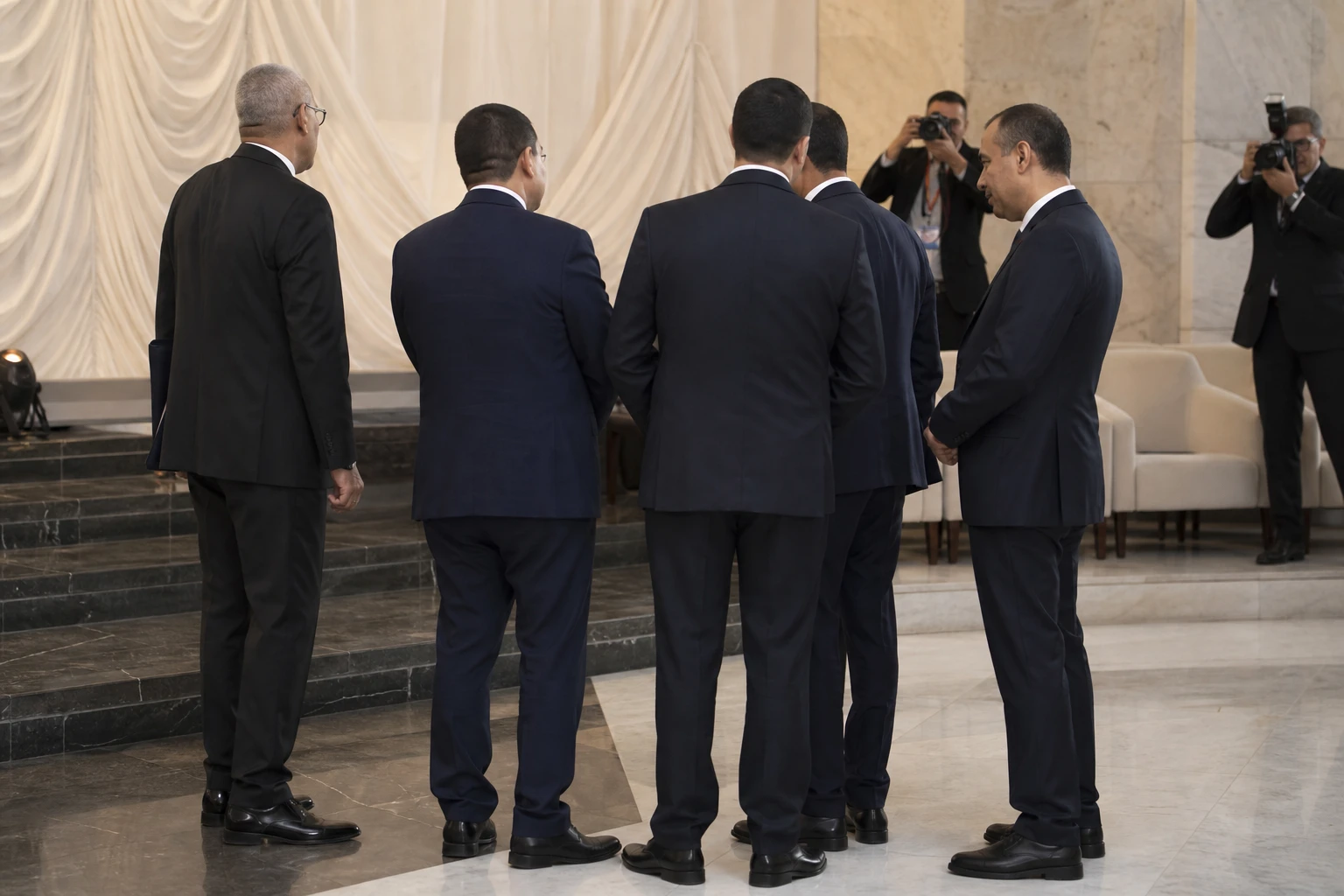
In Rabat, a Mawlid ceremony can say much more than what the religious calendar alone suggests. When the words chosen in the presence of King Mohammed VI refer to Sebta, the name Morocco uses instead of Ceuta, they remind us that a sovereignty issue continues to run through Moroccan-Spanish diplomacy.
This signal is not insignificant. In Morocco, the monarch also bears the title of Amir Al-Mouminine, Commander of the Faithful, and major religious celebrations often provide a setting for highly coded institutional messages. In this context, the reference to Sebta is part of a long national memory, but also reflects a very current power struggle with Madrid.
An old dispute reignited by the migration crisis
Ceuta and Melilla, two Spanish enclaves on the North African coast, remain at the heart of a dispute that Rabat does not consider settled. Morocco’s Ministry of Foreign Affairs regularly recalls that the Kingdom distinguishes the Spanish population from sensitive political issues, while rejecting actions perceived as contrary to good neighbourly relations.
In May 2021, tensions reached a new level with the mass arrival of migrants in Ceuta. Spanish authorities said about 8,000 people entered over two days, while Reuters dispatches reported even larger flows, depending on the sources and counting periods, amid tensions sparked by the diplomatic dispute between Rabat and Madrid.
Since then, the issue of the enclaves has returned to public debate in Morocco with particular intensity. Moroccan officials have repeatedly spoken of Sebta’s «return» to the homeland, while Spain’s official position remains firm: Ceuta and Melilla are Spanish territories, and Madrid treats any challenge to this sovereignty as a red line.
What the speech changes, and what it does not
The key point is this: the reference made during the Mawlid does not, on its own, constitute a formal diplomatic announcement. Rather, it acts as a political marker. It places the question of Ceuta within a Moroccan historical narrative, drawing on religious, scholarly and heritage references to remind people that the issue remains alive within the state apparatus and public opinion.
For Rabat, this kind of occasion also serves to address several audiences at once. Domestically, it consolidates a national consensus on the «occupied cities», a recurring phrase in some Moroccan speeches. Abroad, it reminds Spain that bilateral crises are not limited to migration, trade or border security. They also touch on colonial memory, symbolic borders and the status of North African territories that remain under Spanish sovereignty.
In practical terms, residents are the first to feel the effects of the ups and downs in this relationship. Border families, cross-border workers and traders in Tangier-Tetouan-Al Hoceima are directly affected by slower traffic when tensions rise. In the capitals, by contrast, the episode is read mainly through the signals sent, statements issued and displays of firmness.
A Moroccan issue, but also a North African one
The case of Sebta goes beyond the bilateral face-off. It speaks to the place of North Africa in the Mediterranean political order, where borders inherited from colonial history are sometimes more contested than settled. In this region, the Arab Maghreb Union, intended to advance regional integration, remains largely paralysed, leaving disputes to be managed case by case through bilateral summits and successive crises.
Morocco continues to present a dual perspective. On the one hand, it seeks practical agreements with Spain on migration, trade and security. On the other, it keeps alive a historical claim that reappears in public speeches, official texts and symbolic gestures. This coexistence explains why periods of calm are fragile: an issue can be managed technically without being politically laid to rest.
For the African Union and the region’s capitals, the significance of the issue is clear: relations between an African state and a European neighbour are about more than migration or security. They also involve an African reading of history, borders and the legacies of sovereignty. In the short term, the next diplomatic exchanges between Rabat and Madrid will show whether this episode remains symbolic or fuels a new phase of tension.