Algeria
 Egypt
 Libya
 Morocco
 Sudan
 Tunisia
 Benin
 Burkina Faso
 Cabo Verde
 Côte d'Ivoire
 Ghana
 Guinea
 Guinea-Bissau
 Liberia
 Mali
 Mauritania
 Niger
 Nigeria
 Senegal
 Sierra Leone
 The Gambia
 Togo
 Cameroon
 Central African Republic
 Chad
 DR Congo
 Equatorial Guinea
 Gabon
 Republic of the Congo
 São Tomé and Príncipe
 Burundi
 Comoros
 Djibouti
 Eritrea
 Ethiopia
 Kenya
 Madagascar
 Malawi
 Mauritius
 Mozambique
 Rwanda
 Seychelles
 Somalia
 South Sudan
 Tanzania
 Uganda
 Angola
 Botswana
 Eswatini
 Lesotho
 Namibia
 South Africa
 Zambia
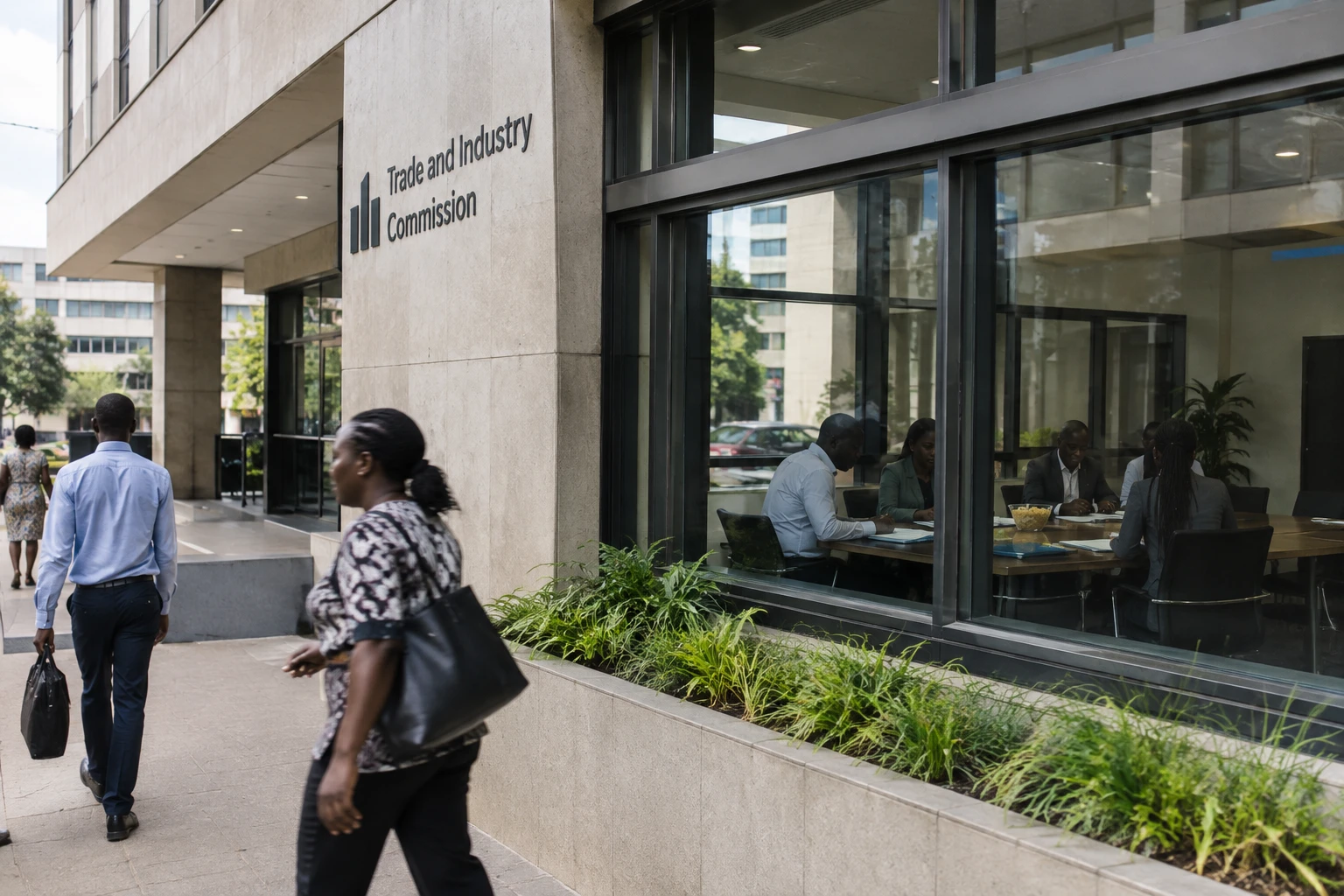
Zimbabwe is harvesting more wheat, but the increase is not enough to supply all the products households buy. In pasta, the gap remains stark between local manufacturing capacity, which is still new, and imports, which dominate shop shelves. Harare is now seeking to establish whether this competition threatens the nascent industry, without having decided to close the market.
From harvested wheat to processed products
The issue goes beyond a single factory. It concerns the local processing of raw materials, industrial employment and the price of a staple food. It arises as Zimbabwean wheat production has risen sharply. The Food and Agriculture Organization of the United Nations (FAO) estimated the 2025 harvest at about 640,000 tonnes, nearly double the average of the previous five years. This increase does not mean the country can manufacture all wheat products locally: flour, pasta and noodles require different equipment and supply chains. The FAO’s note on cereals in Zimbabwe places this growth within a broader agricultural recovery.
Against this backdrop, the Competition and Tariff Commission (CTC), Zimbabwe’s authority responsible, among other things, for trade investigations, opened a safeguard investigation into imported pasta on 18 September 2026. Zimbabwe notified the World Trade Organization (WTO) on 22 October. A safeguard is a temporary measure that can restrict imports if an investigation finds that they are causing, or threaten to cause, serious injury to a domestic industry. It is not a penalty against a particular country. The notification published by the WTO states that the proceedings are to last six months, with a possible two-month extension.
An investigation, not yet a restriction
The figures submitted to the WTO show a 17.4% increase in imports between 2024 and 2025, from 49,500 to 58,100 tonnes. Imported products accounted for 88% of the market in 2024 and 87% in 2025. According to the CTC’s preliminary findings, their volume was seven times local production in 2025. Imported pasta was also reportedly sold at prices up to 17.8% lower than the product made in Zimbabwe. These figures are being examined as part of the investigation: on their own, they do not prove that imports caused the local company’s financial difficulties. Zimbabwean media outlet CITE has also reported these figures and said the Commission will examine whether other factors played a role.
The proceedings cover several types of pasta and imports from all countries. Suppliers mentioned include Botswana, Egypt, Mozambique, Namibia and South Africa. The CTC will have to assess volumes, prices and changes in production against the domestic manufacturer’s economic situation. Importers, exporters and other interested parties can submit their views. So far, no surcharge or quantitative restriction has been announced. WTO rules allow a safeguard measure only after a finding of serious injury, and it must remain temporary.
National Foods Limited is the only industrial-scale local pasta producer identified by the Commission. The company previously made the products it sold in Zimbabwe from imported supplies. It began local production in February 2024 and officially opened its plant in 2025. The announced investment amounts to six million dollars and capacity stands at 1,200 tonnes a month. In October 2026, the group said the factory was operating at about 70 to 80% of capacity. It is also considering a spaghetti line and exports, with Zambia as a potential market. This ambition underscores what is at stake: trade protection could give local production time, but it does not guarantee lower costs or access to regional markets.
Consumers’ prices matter too
The balance is delicate. If imports squeeze prices or prevent the factory from reaching a profitable scale, jobs and investment in processing could suffer. But if a measure quickly reduces foreign supply, households could face higher prices or less choice. Any such effect would not be the same for everyone: urban consumers buy more packaged products from formal retailers, while small retailers and lower-income households are particularly sensitive to price changes. The assessment will therefore need to consider not only the producer’s interests, but also supply, competition between sellers and the final cost to families.
The debate also concerns trade chains in Southern Africa. SADC, the regional community that includes Zimbabwe, South Africa, Botswana, Namibia, Mozambique and Zambia, organises some of this trade. Regional tariff preferences can reduce customs duties on certain products. The CTC will therefore have to take account of the applicable rules and trade flows, without confusing a national proceeding with a decision by SADC as a whole. The regional organisation itself stresses the importance of maintaining predictable trade while supporting industrialisation.
The case puts to the test an ambition shared by several countries across the continent: to process more products locally while preserving accessible markets and functional regional trade. In Zimbabwe, the next milestone will be the conclusion of the investigation, expected within six months of its opening, unless it is extended. It must establish whether the increase in imports has genuinely caused serious injury and, if so, what measures would be justified. For manufacturers, consumers and regional suppliers, the difference between a well-supported temporary safeguard and a poorly calibrated restriction will come down to the evidence and its tangible effects on prices and production.