Algeria
 Egypt
 Libya
 Morocco
 Sudan
 Tunisia
 Benin
 Burkina Faso
 Cabo Verde
 Côte d'Ivoire
 Ghana
 Guinea
 Guinea-Bissau
 Liberia
 Mali
 Mauritania
 Niger
 Nigeria
 Senegal
 Sierra Leone
 The Gambia
 Togo
 Cameroon
 Central African Republic
 Chad
 DR Congo
 Equatorial Guinea
 Gabon
 Republic of the Congo
 São Tomé and Príncipe
 Burundi
 Comoros
 Djibouti
 Eritrea
 Ethiopia
 Kenya
 Madagascar
 Malawi
 Mauritius
 Mozambique
 Rwanda
 Seychelles
 Somalia
 South Sudan
 Tanzania
 Uganda
 Angola
 Botswana
 Eswatini
 Lesotho
 Namibia
 South Africa
 Zambia
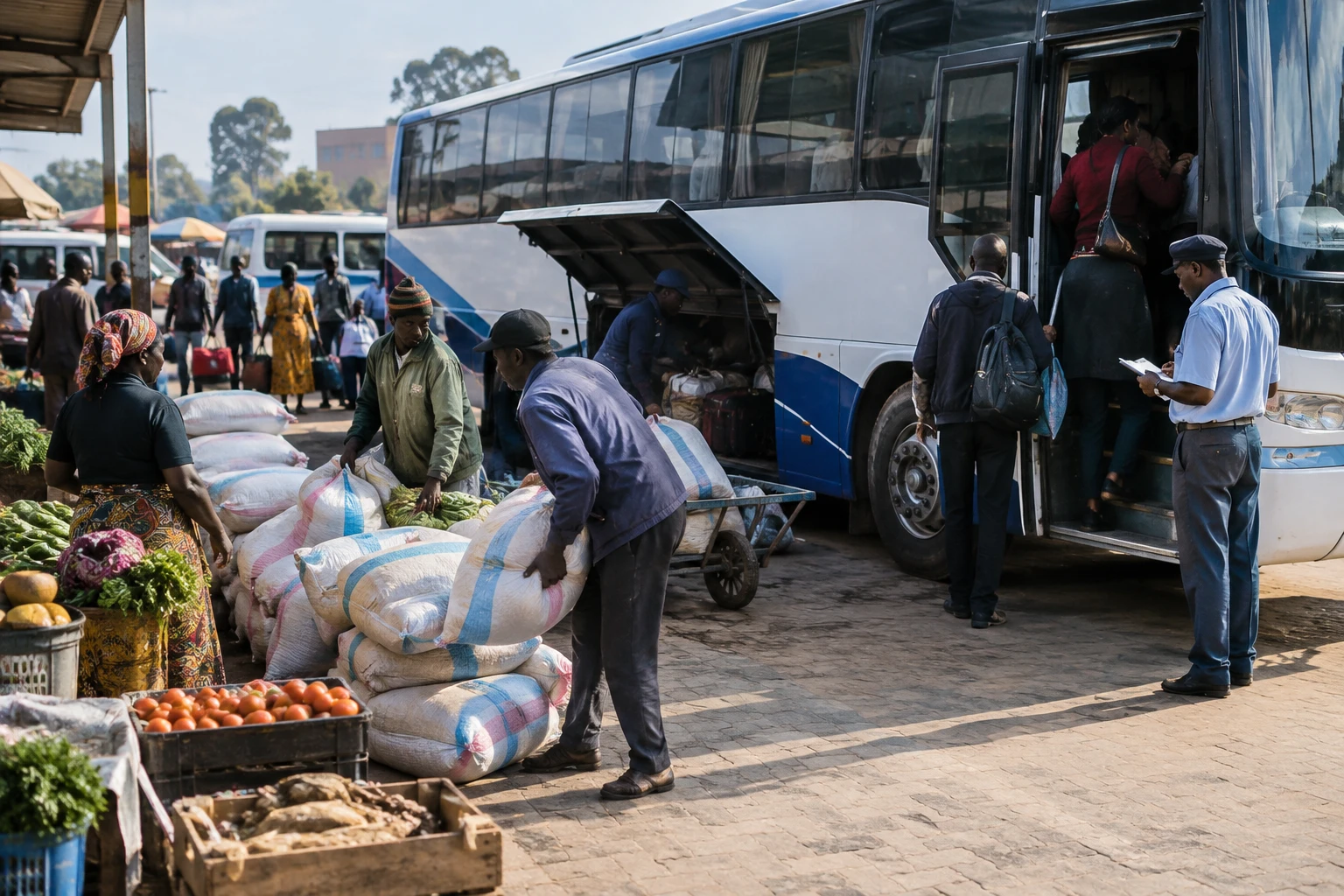
In Zimbabwe’s rural areas, an uncertain rainy season can affect far more than harvests. It also hits incomes, food supplies and demand for businesses. It is against this backdrop of an economy exposed to agricultural shocks that the government is revising its expectations for 2027.
Slower growth in an economy that remains vulnerable
Finance Minister Mthuli Ncube presented a projected macroeconomic framework forecasting 3.5% growth in 2027 in Bulawayo on 28 October 2026. The previous estimate was 5%. The authorities cite climate risks and global economic uncertainty. This figure remains a government forecast, not an assured outcome.
The expected slowdown follows a strong recovery: gross domestic product is estimated to have grown by 8.3% in 2025 and is expected to rise by 5% in 2026. These are estimates put forward by the government. The World Bank separately confirms 8.3% growth in 2025, driven in part by the agricultural rebound and mining prices, but stresses that the recovery remains fragile.
Harare forecasts nominal GDP of $66.4bn in 2026 and $69.1bn in 2027. Nominal GDP measures the value of output at current prices, so its increase does not in itself mean that households will see their purchasing power rise at the same rate.
The pre-budget seminar, held in Bulawayo from 28 to 31 October, is a forum to examine spending priorities ahead of the national budget presentation scheduled for 19 November. The government intends to align its choices with Vision 2030, which aims to make Zimbabwe an upper-middle-income country.
Climate is the first test for agriculture and food security
Agriculture illustrates the scale of the risk. The sector grew by 27.9% in 2025, and growth is estimated at 5% in 2026. But an exceptional harvest does not guarantee consistent production. The seasonal forecast by the Southern African Development Community (SADC), a regional economic co-operation organisation, points to an increased likelihood of below-normal rainfall in several countries, including Zimbabwe, during part of the 2026-27 season.
This outlook is a reminder of the El Niño-related drought in 2023-24, which affected several countries in southern Africa. The effects extend beyond farms: lower harvests can also drive up food prices, reduce rural incomes and increase import needs. Farming households and small traders are particularly exposed when stocks or financial reserves are limited.
The government has announced a risk-reduction strategy covering irrigation, climate-smart agriculture, producer financing, livestock protection and early-warning systems. It is targeting a strategic reserve of 600,000 tonnes of grain by October 2027. This is a stated objective, but its effectiveness will depend on the resources mobilised, water availability and the ability to transport grain to areas where it is needed.
Monetary stabilisation and diversification: progress to consolidate
The authorities are also highlighting a period of monetary calm. According to figures presented by the minister, annual inflation in ZiG, the national currency, stood at 3.7% in September 2026. The average from January to September was 4%. The gap between the official and parallel exchange rates was below 20%. The central bank had cut its policy rate from 35% in June to 30%, and then to 27.5% in September.
These indicators point to an easing, but are not enough to measure the day-to-day experience of all households. Prices in local currency, foreign-currency transactions and incomes do not necessarily follow the same trajectory. The World Bank also notes an improvement in price and exchange-rate stability, while warning that fiscal risks and debt remain vulnerabilities.
The government is also banking on mining, industry and exports. It reports that manufacturing output is 41.4% above its 2022 level and that industrial capacity utilisation is expected to exceed 63.5% in 2026. Gold production is said to have passed 55,500kg. Exports, estimated at $11bn in 2025, reached $9bn in the first eight months of 2026; the annual total is projected at $14.9bn.
The figures announced do not, however, show on their own what share of mining value is processed locally, or how many lasting jobs these activities create. The drive to increase mineral processing addresses this challenge: retaining more value in the country rather than relying mainly on sales of raw products. Tourism, which is said to have generated $537mn in revenue in the first half of 2026, complements this diversification strategy.
The 2027 budget: balancing discipline and practical needs
Harare is targeting a budget deficit below 3% of GDP in 2027. Fiscal discipline can help preserve stability, but it must contend with investment needs in agriculture, infrastructure, employment, digital services and social protection. Spending choices, their implementation and the allocation of funds between the capital and the provinces will matter as much as the announced target.
For the population, the challenge is to turn aggregate growth into more predictable incomes, jobs and services. For producers, access to water, finance and markets will determine their ability to withstand a difficult season. For businesses, monetary stability and electricity supply can support activity, but climate uncertainty weighs on costs and supply chains.
The issue extends beyond Zimbabwe’s borders. SADC has flagged the risk of low rainfall in several southern African countries and called for stronger regional resilience. Zimbabwe’s experience thus reflects a question shared by its neighbours: how can agriculture and food reserves be protected while industry and cross-border trade are developed? The budget’s publication, scheduled for 19 November, will set out the resources allocated to these priorities. The outcome will then depend on implementation and the rainy season.