Algeria
 Egypt
 Libya
 Morocco
 Sudan
 Tunisia
 Benin
 Burkina Faso
 Cabo Verde
 Côte d'Ivoire
 Ghana
 Guinea
 Guinea-Bissau
 Liberia
 Mali
 Mauritania
 Niger
 Nigeria
 Senegal
 Sierra Leone
 The Gambia
 Togo
 Cameroon
 Central African Republic
 Chad
 DR Congo
 Equatorial Guinea
 Gabon
 Republic of the Congo
 São Tomé and Príncipe
 Burundi
 Comoros
 Djibouti
 Eritrea
 Ethiopia
 Kenya
 Madagascar
 Malawi
 Mauritius
 Mozambique
 Rwanda
 Seychelles
 Somalia
 South Sudan
 Tanzania
 Uganda
 Angola
 Botswana
 Eswatini
 Lesotho
 Namibia
 South Africa
 Zimbabwe
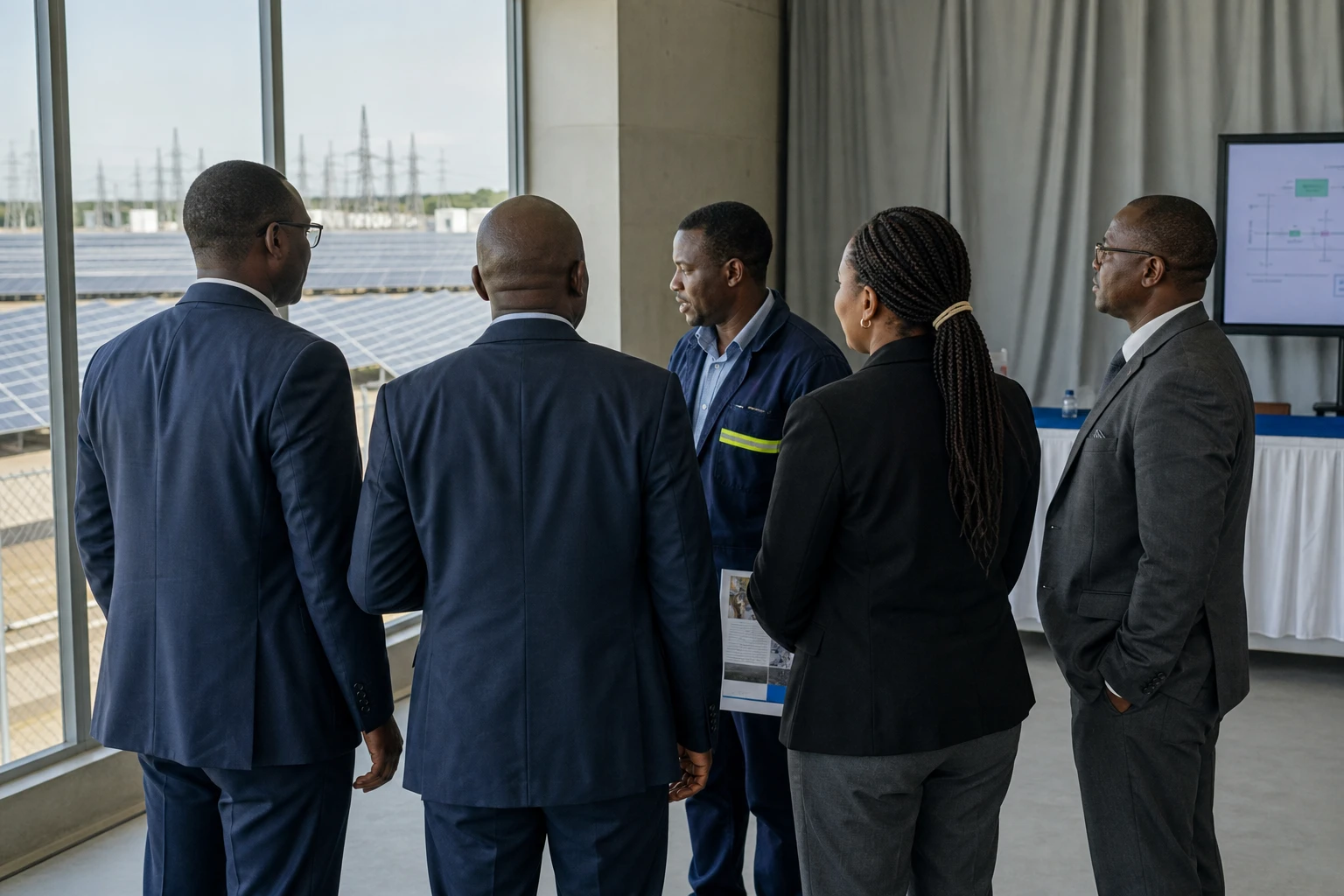
At Maamba, in Zambia’s Southern Province, a new solar power plant is beginning to feed electricity into the national grid. This initial 100 MW contribution comes as Lusaka seeks to reduce the vulnerability of a system still heavily dependent on dams.
A shift in energy policy accelerated by drought
Zambia has historically produced most of its electricity from hydropower. This specialisation has long supported the mining industry, urban activities and the country’s gradual electrification. However, it leaves the grid exposed to variations in rainfall and reservoir levels.
The 2023-2024 drought made this fragility tangible. The Zambian government had said that hydropower accounted for about 85% of installed capacity. By mid-May 2024, the water available for power generation at Kariba was no longer sufficient to mobilise more than a fraction of the theoretical capacity of the plant concerned.
The fall in output from dams led to prolonged power cuts. Households had to adjust their consumption, while small businesses, workshops and some industrial sites used generators or cut back on activity. The mining sector, vital to Zambia’s export revenues, was also exposed to these disruptions.
The crisis has strengthened interest in a more balanced energy mix. The integrated electricity development plan approved by the Zambian authorities provides for a combination of solar, wind, thermal power and hydropower. The aim is not to abandon dams, but to limit the risk created by excessive dependence on a single resource.
Maamba, a 100 MW plant entering commissioning
The Maamba solar project began feeding its first kilowatt-hours into the national grid on 24 September 2026. This marks the start of the commissioning phase, during which equipment is tested before full commercial operation.
The plant has a capacity of 100 MWac. It is located in Maamba, in Sinazongwe District, in southern Zambia, near thermal power activities already present at the site. The installation uses bifacial photovoltaic modules mounted on single-axis tracking structures. These systems orient the panels throughout the day to improve their output.
The project also includes a 330-kilovolt substation and the infrastructure needed to connect it to the national grid. The investment amounts to about $90 million. The electricity is to be sold to ZESCO, Zambia’s state-owned electricity supply company, under a 20-year power purchase agreement.
Maamba Solar Energy Limited is developing the project. The company is 65% owned by Nava Global, the international arm of India’s Nava Limited, and 35% by ZCCM Investments Holdings, the mining and industrial holding company controlled by the Zambian state. The structure therefore combines private capital with national participation in strategic infrastructure.
Commissioning does not yet mean that the plant is operating at its full commercial capacity. Teams must complete tests of the inverters, tracking systems, transformer substation, electrical protection and remote-control systems. They must also verify the stability of power fed into the grid.
Solar power expands rapidly
Maamba is part of a broader expansion of solar power in Zambia. According to the Energy Ministry, installed photovoltaic capacity rose from 88 MW in 2021 to about 841 MW in 2026. This growth brings the country closer to its national target of 1,000 MW of solar power.
The development of plants such as Itimpi and Chisamba has contributed to this increase. Solar still supplies a limited share of the electricity actually available at any given time, as its output varies with sunlight. However, it can generate more during daytime hours when demand rises, particularly for commercial and industrial activity.
The Zambian government is projecting about 2,733 MW of solar capacity by 2031. Hydropower would reach 4,279 MW, compared with about 2,555 MW of thermal capacity. Total capacity could rise to nearly 10,182 MW. These figures relate to projects already under way or being built. They may therefore change if new plants are added or some projects are delayed.
However, diversification brings several challenges. Solar power requires transmission lines capable of carrying electricity from generation areas. It also calls for better management of daily fluctuations in supply. In time, storage, regional interconnections and the flexibility of thermal power plants could help stabilise the grid.
A national and regional issue
For the authorities in Lusaka, the challenge goes beyond building new power plants. It is about securing access to electricity, supporting industrial growth and reducing the economic losses caused by outages. The effects vary by location: formal businesses can invest in backup solutions, while small urban and rural enterprises have less financial room to manoeuvre.
Zambia must also contend with constraints in the regional electricity market. It is a member of the Southern African Power Pool, a mechanism that allows countries in the Southern African Development Community (SADC) to trade electricity. Such exchanges can cushion a temporary shortfall, but they cannot replace an increase in national capacity when several countries face drought or high demand at the same time.
Zambia’s trajectory thus reflects an issue facing much of southern Africa: how to expand access to electricity rapidly without exposing grids to climate shocks, high fuel costs or infrastructure delays. The answer will probably involve more diversified energy portfolios, as well as stronger grids.
The next step will be the start of full commercial operation at Maamba. Its actual contribution to the grid will then need to be measured, progress on other projects monitored and the delivery of the capacities announced for 2031 assessed. For Zambia, the success of this transition will depend as much on building power plants as on modernising the grid and ensuring a reliable electricity supply.