Algeria
 Egypt
 Libya
 Morocco
 Sudan
 Tunisia
 Benin
 Burkina Faso
 Cabo Verde
 Côte d'Ivoire
 Ghana
 Guinea
 Guinea-Bissau
 Liberia
 Mali
 Mauritania
 Niger
 Nigeria
 Senegal
 Sierra Leone
 The Gambia
 Togo
 Central African Republic
 Chad
 DR Congo
 Equatorial Guinea
 Gabon
 Republic of the Congo
 São Tomé and Príncipe
 Burundi
 Comoros
 Djibouti
 Eritrea
 Ethiopia
 Kenya
 Madagascar
 Malawi
 Mauritius
 Mozambique
 Rwanda
 Seychelles
 Somalia
 South Sudan
 Tanzania
 Uganda
 Angola
 Botswana
 Eswatini
 Lesotho
 Namibia
 South Africa
 Zambia
 Zimbabwe
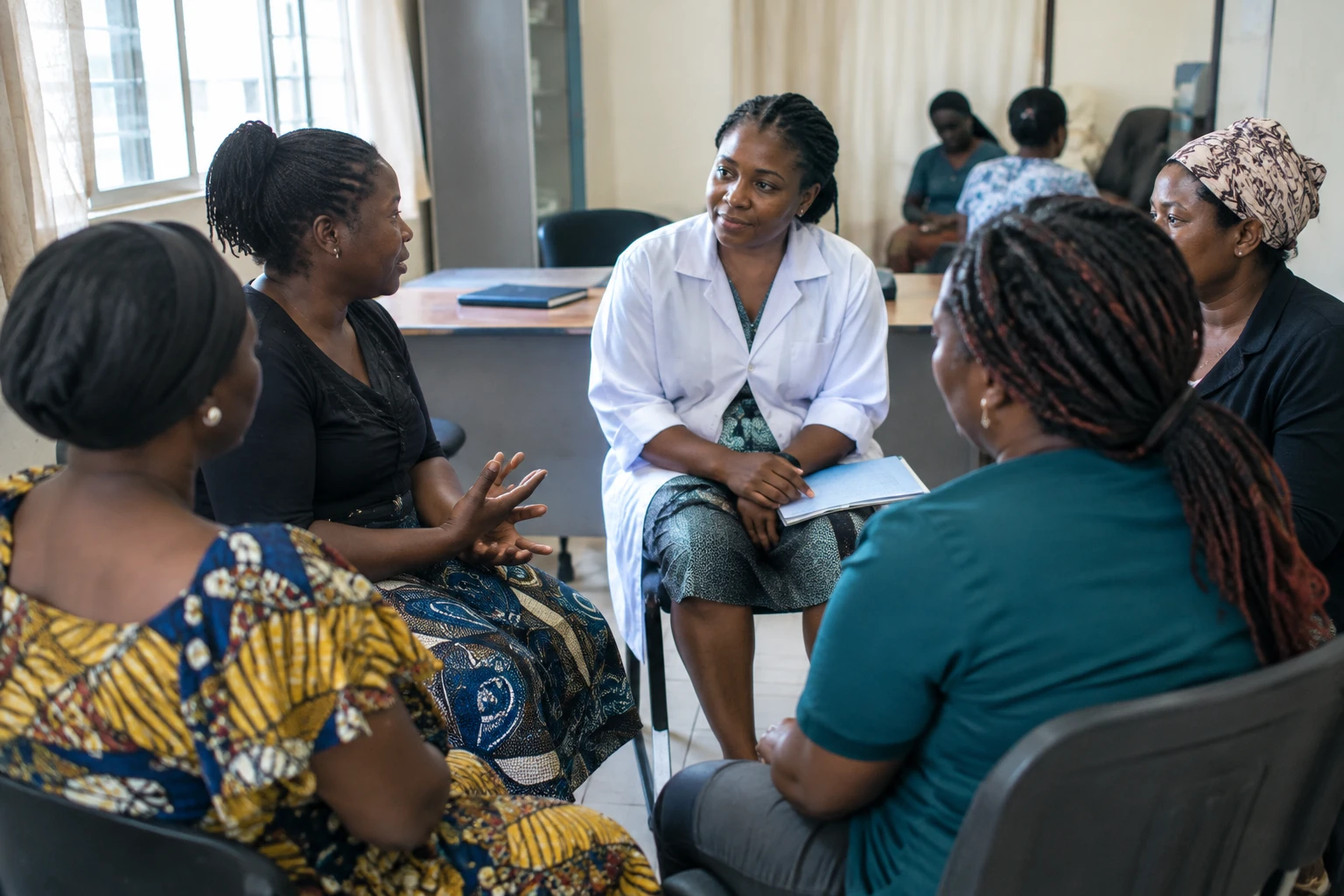
For a woman experiencing violence, asking for help can be as difficult as it is necessary. In Yaoundé, a scheme at Jamot hospital aims to remove an immediate obstacle: the cost of an initial consultation and, when necessary, admission for mental health care.
At Jamot, free support to start talking
Jamot hospital is a public institution specialising in mental health. A listening and consultation service there primarily supports people facing violence, particularly women and young people. The consultations and related hospital stays are covered by the Françoise Puene Foundation for Freedom, according to information provided by the service team.
The follow-up register was opened on 8 July 2025. Psychiatrist Kamga Olen Jean-Pierre said at the time that 13 people had been registered. This figure does not measure the frequency of violence in Cameroon: it counts only people seen through this scheme since it opened. Fear of reprisals, stigma or economic dependence can prevent some survivors from seeking help.
The service offers a listening ear and psychological support. It can also refer people for more extensive care. However, this medical point of entry is no substitute for protection from the perpetrator, emergency accommodation or legal support. These responses need to work together to ensure that survivors are not left alone after taking their first step.
Violence that is hard to see, unequal access to help
The scheme comes amid warnings from Cameroonian organisations over several years about domestic violence and femicides. Available figures do not always cover the same periods or use the same definitions, so they should be read with caution. A report published by the United Nations system in Cameroon records 77 women killed in femicides in 2024. This figure highlights the scale of the problem, but alone does not capture the psychological, physical or sexual violence that does not lead to death.
Obstacles are not the same for everyone. In Yaoundé, the proximity of a specialist hospital can make a consultation easier, but transport costs and fear of being recognised may still pose barriers. Outside the capital, the distance to an appropriate service can make follow-up more difficult. For women who depend financially on their partner or family, leaving, filing a complaint or continuing treatment can also threaten the household’s income.
The consequences extend beyond individual health. Repeated violence can affect a person’s ability to work, study and care for their children. Psychological support therefore matters, but its effectiveness also depends on practical assistance: physical care, protection, social support and access to justice. The free service announced at Jamot removes one specific barrier. On its own, it does not guarantee continuity across all these forms of support.
Listening, protection and accessible support
At a meeting organised around femicides, a young woman named Marguerite recounted how her husband had isolated her and how she feared he would strangle her. She said she hoped the discussions would offer support as she recovered from her psychological injuries. Her account illustrates the importance of a service where people can speak and be heard without judgement. On its own, it does not allow conclusions to be drawn about how often such situations occur.
Women martial arts practitioners also took part in raising awareness. Their message linked learning self-defence techniques with seeking help, rather than confrontation. This distinction is essential: perpetrators are responsible for violence. Prevention and protection cannot rest solely on survivors, nor can self-defence substitute for the institutions responsible for protecting them.
The NGO’s founder, Senator Françoise Puene, urged women to report violence and not to fear stigma. This appeal rests on a decisive condition: trust depends on the response that follows a report. Survivors must be able to access referrals without unnecessary exposure, receive care and obtain appropriate protection. Without concrete guarantees, speaking up can seem risky.
A support network that still needs strengthening
The Maison de l’espoir project announced in Yaoundé aims to provide temporary accommodation and vocational training for women who have experienced violence. It could complement medical support if its arrangements, capacity and access requirements are clarified. Help towards economic independence can enable some women to regain the ability to make choices. However, it must not distract from the obligation to prevent violence and respond to offences committed.
Since then, another initiative has expanded services around Jamot hospital: in November 2025, UNFPA announced the opening in Yaoundé of a centre providing holistic care for gender-based violence, developed with the AFIRI Centre and the hospital. The facility, described as a one-stop service bringing together several services, is separate from the scheme backed by the Puene Foundation. Both initiatives show the value of bringing care and support closer together, but how they will work together and whether they can meet needs outside Yaoundé remain issues to watch.
The regional framework also matters. Cameroon belongs to the Central African Economic and Monetary Community (CEMAC), which brings together six countries in economic and monetary cooperation. Tackling violence against women is primarily a matter for national policies, but regional exchanges on health services, protection and data collection can help improve responses. For women in Cameroon, the immediate need remains more concrete: access to confidential, affordable and ongoing help, in the capital and across the regions.
UNFPA information on the care centre in Yaoundé and the United Nations report in Cameroon document recent developments and available data.