Algeria
 Egypt
 Libya
 Morocco
 Sudan
 Tunisia
 Benin
 Burkina Faso
 Cabo Verde
 Côte d'Ivoire
 Ghana
 Guinea
 Guinea-Bissau
 Liberia
 Mali
 Mauritania
 Niger
 Nigeria
 Senegal
 Sierra Leone
 The Gambia
 Togo
 Central African Republic
 Chad
 DR Congo
 Equatorial Guinea
 Gabon
 Republic of the Congo
 São Tomé and Príncipe
 Burundi
 Comoros
 Djibouti
 Eritrea
 Ethiopia
 Kenya
 Madagascar
 Malawi
 Mauritius
 Mozambique
 Rwanda
 Seychelles
 Somalia
 South Sudan
 Tanzania
 Uganda
 Angola
 Botswana
 Eswatini
 Lesotho
 Namibia
 South Africa
 Zambia
 Zimbabwe
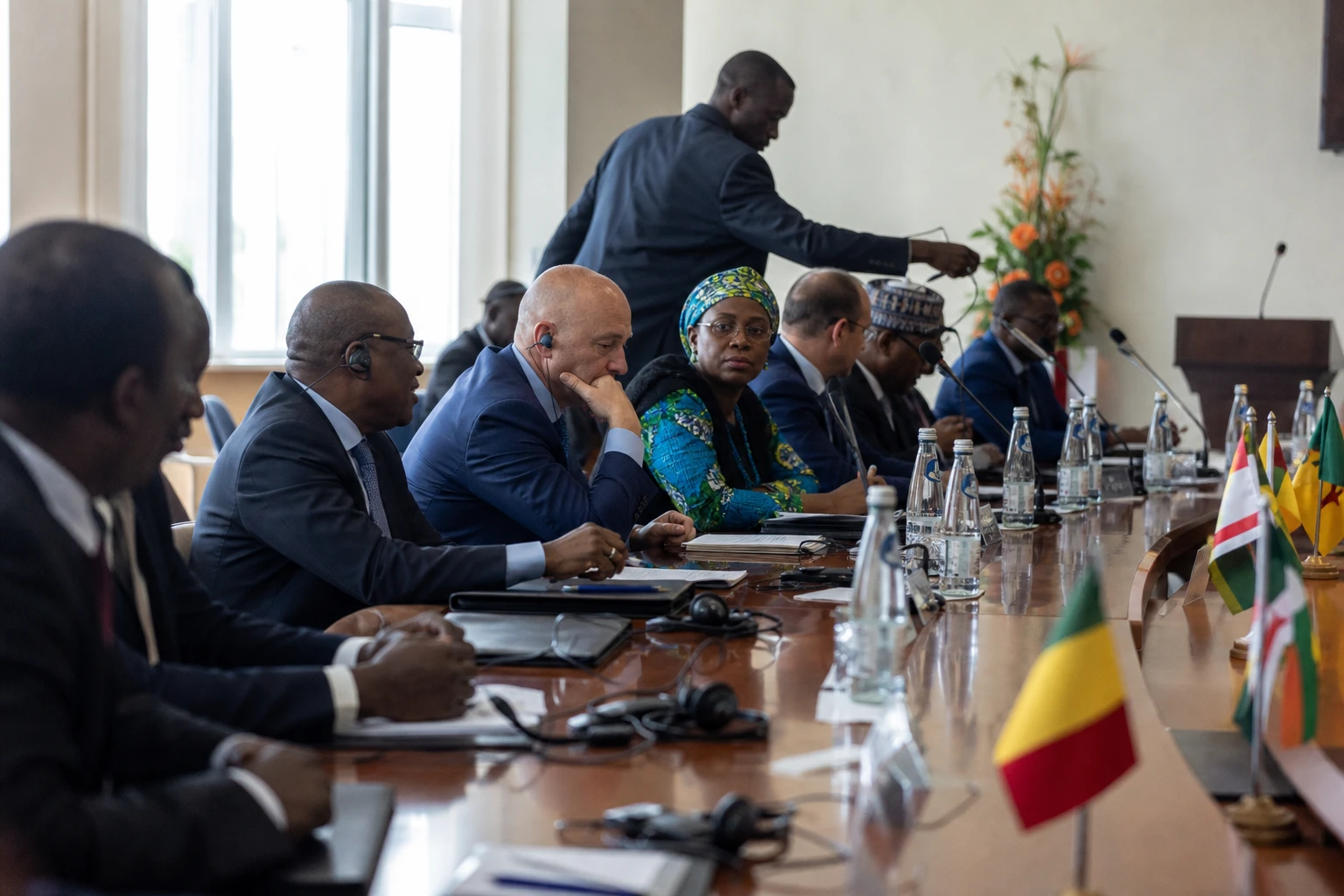
In Yaoundé, parliamentary Francophonie moved beyond formulaic statements
In the rooms of Yaoundé, the question was not simply how Francophone parliamentarians should talk to one another. Above all, it was what their words could achieve in practical terms for countries facing very different, but often interconnected, urgent challenges. The 51st session of the Parliamentary Assembly of the Francophonie was held in the Cameroonian capital from 7 to 12 July 2026, with a plenary session scheduled for 10 and 11 July and preparatory work beginning on 7 July.
Cameroon hosted more than 300 parliamentarians from 42 sections of the Francophone world. The event was organised by the Cameroonian section of the PAFF, at the Parliament in Yaoundé, with the participation of partner institutions and the 11th edition of the Francophone Youth Parliament. The format says much about the moment: parliamentary Francophonie now wants to be useful, visible and connected to local realities, rather than merely ceremonial.
Cameroon, a Francophone crossroads and a showcase for Central Africa
The choice of Yaoundé was no coincidence. The Cameroonian capital had already hosted the 30th Africa Regional Assembly of the PAFF in May 2024, followed by several major international meetings, confirming its role as a diplomatic platform in Central Africa. The country is also one of the six member states of CEMAC, the Central African Economic and Monetary Community, alongside the Republic of the Congo, Gabon, Equatorial Guinea, the Central African Republic and Chad.
This regional context matters. In Central Africa, debates on economic integration, the movement of people, political stability and local public policy are constantly intertwined. A Francophone parliamentary forum based in Yaoundé therefore speaks both to Cameroon’s national sphere and to the rest of the sub-region. It also operates in a context in which CEMAC regularly publishes reports on inflation, economic governance, and health and environmental pressures, showing that the priorities are as much technical as political.
Resolutions and very practical priorities
In Yaoundé, Francophone parliamentarians worked on highly practical issues: democratic governance, parliamentary ethics, the protection of whistleblowers, climate-resilient agriculture, the business climate and women’s economic empowerment. These topics featured in the PAFF’s preparatory documents and in the work of its standing committees.
The session also produced resolutions on political situations that the PAFF has monitored for a long time, notably in Cambodia and Lebanon. The parliamentary organisation reaffirmed its commitment to territorial integrity, sovereignty and the peaceful settlement of disputes. In the case of Lebanon, it also reiterated its readiness to support a return to free, transparent and inclusive elections when conditions allow.
On climate, the issue is no longer theoretical. The PAFF included climate-resilient agriculture in its work, signalling that it now links institutional debate to food security, rural incomes and social stability. In a country such as Cameroon, where agriculture still underpins a large part of the real economy, this focus speaks as much to farmers as to local authorities and urban markets.
What “territorial diplomacy” changes
One of the most interesting contributions of this session lies in its approach to cooperation. Parliamentary Francophonie is no longer limited to exchanges between executives or declarations of principle. It is also seeking to connect cities, regions, universities and local administrations. This logic of “territorial diplomacy” is consistent with how public policy is made today: in municipalities, provinces, parliamentary chambers, technical departments and training networks.
For ordinary Cameroonians, the benefits are not abstract. Closer cooperation between territories can have an impact on training, agronomy, local governance, the ecological transition and economic innovation. For the authorities, it offers a path that complements traditional diplomacy. For local elected representatives, it can provide opportunities to exchange methods and tools. For rural areas, it can support solutions tailored to realities on the ground, far from grand announcements that are not followed through.
This approach resonates particularly in the CEMAC area, where the challenges of mobility, taxation, infrastructure development and institutional trust extend well beyond national borders. By connecting parliamentary, local and regional levels, the Yaoundé session showed that Francophone solidarity can become a practical tool, not just a means of making a show of unity.
An impact extending beyond the July meeting
The significance of this session can also be measured by what it signals for the future. The PAFF has clearly set out its next priorities: democratic governance, ethics, professional conduct and the protection of whistleblowers, as well as cooperation between committees and networks. These issues extend beyond the Francophone world; they are part of wider debates also pursued within the Inter-Parliamentary Union and African regional organisations.
In Yaoundé, Cameroon therefore played a useful role: that of a host country turning a parliamentary meeting into a platform for discussions on democracy, climate, local development and the security of institutions. In a Central Africa often reduced to its tensions, this meeting served as a reminder of something else: political progress also depends on quiet mechanisms, useful cooperation and networks capable of delivering tangible results. This is how parliamentary Francophonie will now be judged: by what it actually helps to achieve, not just by what it promises.