
 Algeria
 Egypt
 Libya
 Morocco
 Sudan
 Tunisia
 Benin
 Cabo Verde
 Côte d'Ivoire
 Ghana
 Guinea
 Guinea-Bissau
 Liberia
 Mali
 Mauritania
 Niger
 Nigeria
 Senegal
 Sierra Leone
 The Gambia
 Togo
 Cameroon
 Central African Republic
 Chad
 DR Congo
 Equatorial Guinea
 Gabon
 Republic of the Congo
 São Tomé and Príncipe
 Burundi
 Comoros
 Djibouti
 Eritrea
 Ethiopia
 Kenya
 Madagascar
 Malawi
 Mauritius
 Mozambique
 Rwanda
 Seychelles
 Somalia
 South Sudan
 Tanzania
 Uganda
 Angola
 Botswana
 Eswatini
 Lesotho
 Namibia
 South Africa
 Zambia
 Zimbabwe
A river does not recognise political borders. It keeps flowing when governments suspend dialogue, close a border or leave a regional organisation. In West Africa, this geographical reality is now testing the continuity of cooperation between ECOWAS and the countries of the Alliance of Sahel States.
A region organised around shared basins
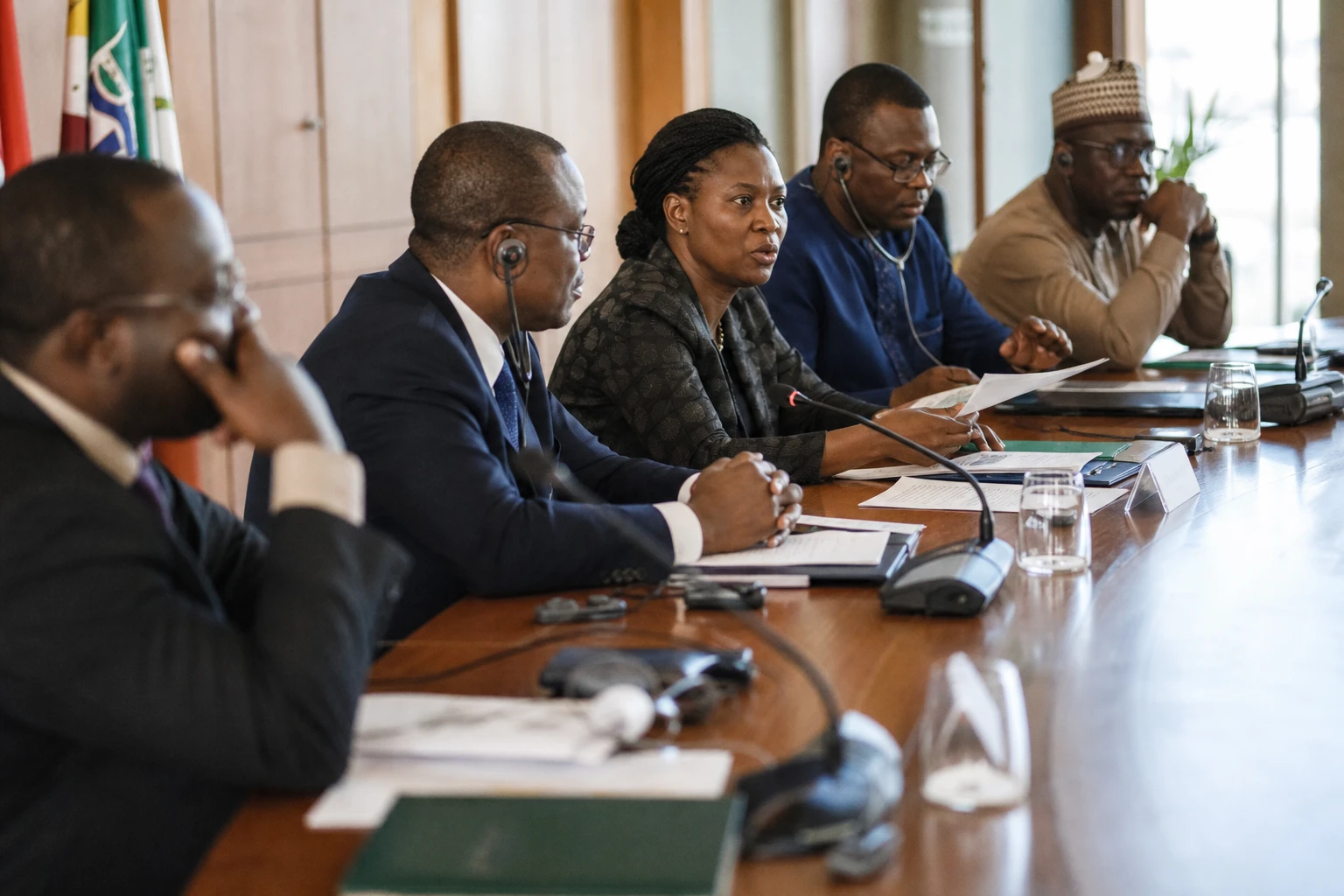
The first West Africa Regional Water Forum is being held on 24 and 25 September 2026 in Abidjan, Côte d’Ivoire. The meeting is organised by ECOWAS, UEMOA, CILSS and the Ivorian authorities. Its aim is to put water at the heart of agricultural, energy, environmental and development policies.
The choice of subject reflects a very practical constraint. West Africa has 28 transboundary river basins, covering nearly 71% of the region. With the exception of Cape Verde, every country shares at least one waterway with a neighbour. These basins therefore shape daily life far beyond the capitals.
The Niger River connects Guinea, Mali, Niger, Benin and Nigeria, while Burkina Faso, Côte d’Ivoire, Cameroon and Chad are also involved in managing the basin. The Senegal, Volta and Lake Chad basins follow the same logic. Decisions taken upstream can affect irrigation, fishing, electricity generation or flood exposure downstream.
Water management is therefore about more than access to drinking water. It also concerns harvests, pastureland, dams, wetlands and population movements. In a region where much of agriculture still depends on rainfall, managing water resources is becoming a food security issue.
AES withdrawal complicates political channels
The forum comes amid a regional realignment. Burkina Faso, Mali and Niger, which make up the Alliance of Sahel States, officially left ECOWAS on 29 January 2025. The Economic Community of West African States, which coordinates economic policies and the free movement of people in the sub-region, has nevertheless maintained several practical arrangements to prevent a sudden disruption to people’s lives.
The three Sahelian states have challenged ECOWAS’s political direction for several years. Their authorities have criticised, in particular, the sanctions imposed after changes of power in Bamako, Ouagadougou and Niamey. ECOWAS, for its part, has defended its measures as necessary to restore constitutional order and uphold its shared rules.
This political rift does not, however, eliminate other frameworks for cooperation. Burkina Faso, Mali and Niger remain members of UEMOA, the West African Economic and Monetary Union, which shares the CFA franc with several countries in the region. They also remain part of specialised river-basin management organisations.
The Niger Basin Authority illustrates this continuity. Established in an initial form in 1964 and reorganised in 1980, it brings together nine countries: Benin, Burkina Faso, Cameroon, Côte d’Ivoire, Guinea, Mali, Niger, Nigeria and Chad. Its remit therefore extends beyond ECOWAS. A state’s withdrawal from the latter does not automatically mean it leaves the Niger Basin Authority.
This institutional distinction is crucial. It makes it possible to maintain technical exchanges on water levels, reservoirs, flood forecasts and agricultural uses. It also provides a forum for discussion for countries that no longer share the same regional political framework.
The real test will be in the technical work
The Abidjan forum will not be judged solely on its final declarations. The central question will be whether Burkinabè, Malian and Nigerien delegations take part in sessions on shared basins. The presence of AES representatives would show whether technical institutions can continue to function despite the political rupture.
The organisers aim in particular to promote an integrated approach to water, energy, food and the environment. This principle may sound institutional, but it addresses very concrete situations. A dam changes the volumes available for irrigation. Poor coordination can heighten tensions between farmers and herders. A flood that is not anticipated in time can hit villages hundreds of kilometres from its source.
The effects vary across the region. Capitals have administrative services able to follow negotiations. Rural areas depend more on information from hydrological services and local organisations. Commercial farms can negotiate access to irrigation. Small-scale producers, by contrast, remain more exposed to delays, breakdowns and seasonal fluctuations.
The energy dimension adds another layer of complexity. In several countries, hydroelectricity supports urban grids and industrial activity. A fall in water inflows can affect electricity generation, while giving priority to energy can reduce the volumes available for agriculture. Coordination then becomes a matter of economic development, not simply an administrative issue.
Institutions to preserve amid realignments
The West African case shows that regional integration does not rest on a single organisation. ECOWAS remains a major political and economic framework. But river-basin authorities, UEMOA, CILSS and national mechanisms also play an essential role. Their existence makes it possible to sustain sectoral cooperation when diplomatic relations deteriorate.
This architecture alone cannot guarantee swift results. Basin institutions need regular funding, shared data and local partners. They must also involve local authorities, farmers, herders, fishers and energy operators more closely. Without this practical grounding, regional agreements risk remaining disconnected from people’s needs.
What happens next will therefore depend less on political symbolism than on the ability to preserve operational exchanges. The Niger Basin Authority’s forthcoming meetings, decisions on infrastructure funding and AES countries’ participation in regional mechanisms will be closely watched.
In Abidjan, water is a reminder of a simple rule: organisations can part ways, but basins remain shared. In a West Africa criss-crossed by new political lines, this physical continuity could become one of the few spaces where regional dialogue remains essential.



