Algeria
 Egypt
 Libya
 Morocco
 Tunisia
 Benin
 Burkina Faso
 Cabo Verde
 Côte d'Ivoire
 Ghana
 Guinea
 Guinea-Bissau
 Liberia
 Mali
 Mauritania
 Niger
 Nigeria
 Senegal
 Sierra Leone
 The Gambia
 Togo
 Cameroon
 Central African Republic
 Chad
 DR Congo
 Equatorial Guinea
 Gabon
 Republic of the Congo
 São Tomé and Príncipe
 Burundi
 Comoros
 Djibouti
 Eritrea
 Ethiopia
 Kenya
 Madagascar
 Malawi
 Mauritius
 Mozambique
 Rwanda
 Seychelles
 Somalia
 South Sudan
 Tanzania
 Uganda
 Angola
 Botswana
 Eswatini
 Lesotho
 Namibia
 South Africa
 Zambia
 Zimbabwe
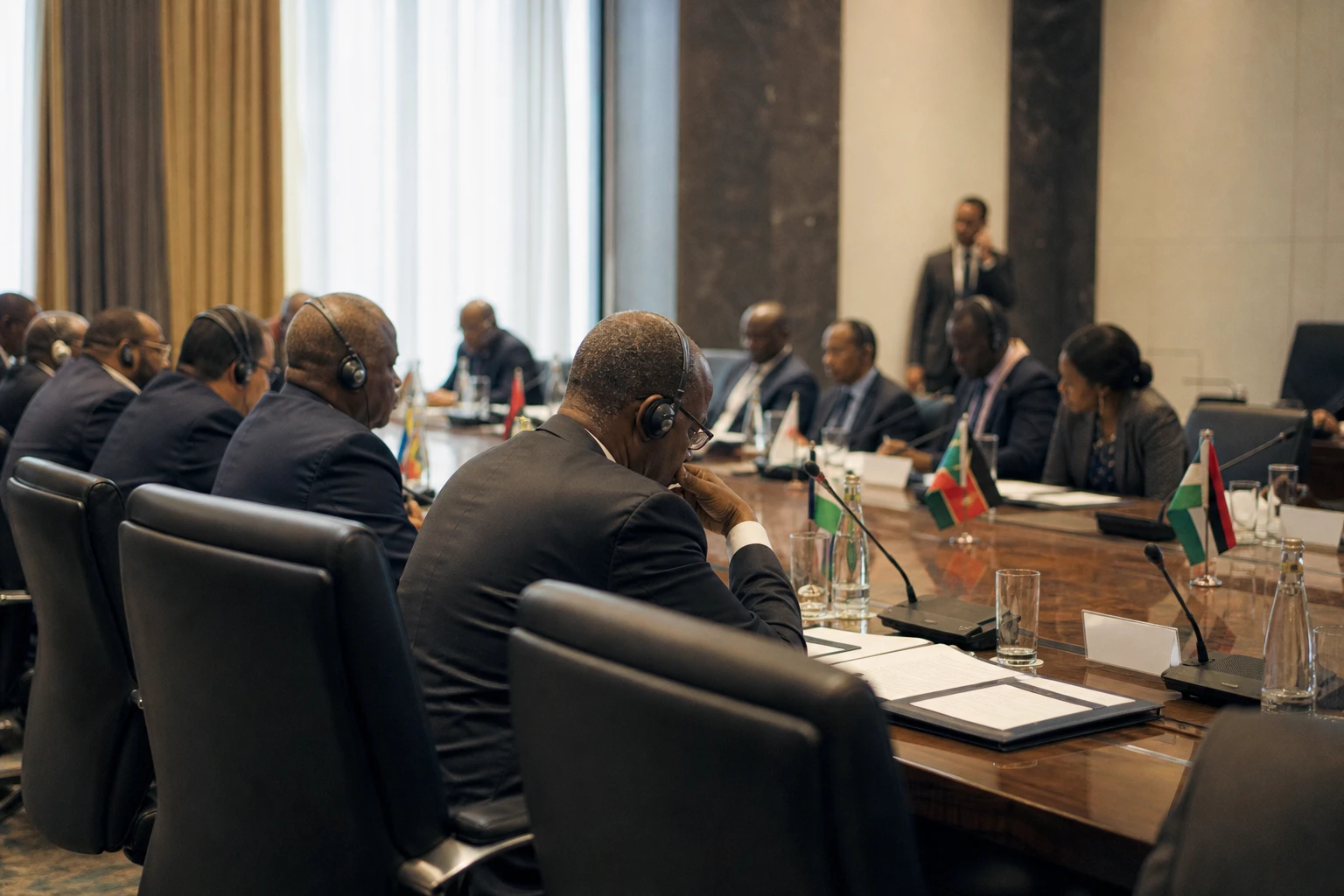
A war already spilling beyond its front lines
In Sudan, the war is no longer being fought only on military fronts. It is also playing out in the diplomatic corridors of New York, where every debate on arms makes one thing clear: as long as external flows continue, so will the war. The US proposal to extend the arms embargo to all of Sudan stems from this assessment. It aims to cut off supplies to the conflict, while the UN regime currently covers only Darfur, in the west of the country.
The debate directly affects Khartoum, but also neighbouring states. In the Horn of Africa and the north-east of the continent, porous borders, trafficking networks and ad hoc alliances have turned the Sudanese war into a regional crisis. The African Union and IGAD, the Intergovernmental Authority on Development in East Africa, are closely following the issue, as any escalation will increase pressure on Chad, South Sudan, Egypt and the Red Sea.
What Washington is proposing
On 24 August 2026, the United States submitted a draft resolution to the Security Council to extend the existing embargo to all of Sudan. According to available reports, the text would also explicitly cover drones and related technologies, a point that has become central in a conflict where the use of unmanned aerial systems has become commonplace. The US initiative also calls for a strengthened panel of experts tasked with monitoring the sanctions regime.
Washington is making a political as well as a security argument: the Sudanese conflict, now in its fourth year, risks spreading unless external support is curbed. Massad Boulos, the US president’s senior adviser for Arab and African affairs, told the Council that financial, military and political support provided to both sides was fuelling the escalation. International agencies and African media have also noted that the Sudanese army and the Rapid Support Forces, or RSF, continue to receive supplies through cross-border networks.
The legal framework is already partly in place. The UN imposed an arms embargo on Darfur in 2004, then extended sanctions related to Sudan, including an arms embargo, asset freezes and travel bans, until September 2025. The 1591 Committee monitors this regime, but its scope remains limited. It is precisely this restriction that the US administration wants to overcome.
Why the embargo is no longer limited to Darfur
The problem is simple: the 2023 war has not respected the old boundaries of the Sudanese conflict. Fighting has spread to Kordofan, Blue Nile, central Sudan and the outskirts of Khartoum. By keeping the embargo confined to Darfur, the UN leaves out of view some of the supply routes fuelling the rest of the theatre of war. This is where the US proposal makes sense, even as it faces resistance in the Security Council, notably from China and Russia.
The extension would have uneven effects. For civilians, it could make it harder for weapons to arrive and limit some means of warfare. For the warring parties, it threatens supply chains and foreign support. But its effectiveness will depend on enforcement. Sudan is vast. Desert roads, regional airfields and smuggling routes can easily circumvent the rules when oversight is weak. Human rights organisations have already documented the movement of weapons and recent equipment in violation of the existing embargo.
The debate also touches on relations between African capitals. Cairo is seen as close to the Sudanese army. Abu Dhabi has been accused by experts and NGOs of supplying the RSF, a charge the United Arab Emirates denies. In this context, a broader resolution would be more than a legal act. It would send a signal about external parties’ responsibility for the war in Sudan.
Khartoum, North Africa and the question of precedent
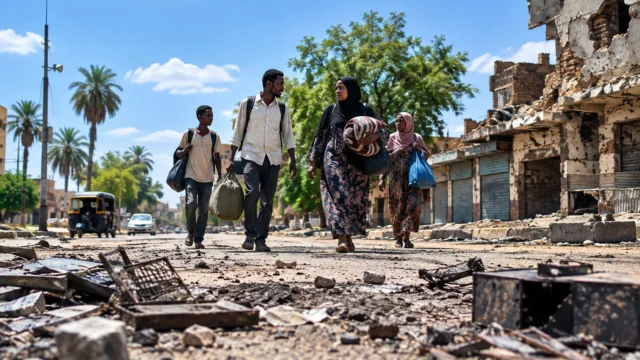
For Sudan, the implications go beyond diplomacy. The country is enduring a major humanitarian crisis. Estimates cited by the Associated Press put the death toll at at least 59,000, with about 13 million people displaced and areas affected by famine. Although these figures remain difficult to verify on a case-by-case basis, they convey the scale of a collapse weighing on markets, public services and solidarity networks across the country.
Regionally, an expanded embargo would also set a precedent. It would show that the Security Council no longer treats the Sudanese conflict as a crisis confined to the west of the country, but as a national war with cross-border effects. This framing reflects the position of the African Union and IGAD, which stress the need for a political solution, a lasting ceasefire and a return to a civilian-led process. But as long as weapons continue to circulate, negotiations remain fragile.
The next steps will therefore play out in New York, but also on the ground: in ports, airports, border areas and transit networks. For Sudanese people, the real test is not merely whether a resolution is adopted. It is whether it can reduce the means of warfare without further worsening already severely restricted humanitarian access. That is what will distinguish a symbolic sanction from a tool for de-escalation.