Algeria
 Egypt
 Libya
 Morocco
 Sudan
 Tunisia
 Benin
 Burkina Faso
 Cabo Verde
 Côte d'Ivoire
 Ghana
 Guinea
 Guinea-Bissau
 Liberia
 Mali
 Mauritania
 Niger
 Nigeria
 Senegal
 Sierra Leone
 The Gambia
 Togo
 Cameroon
 Central African Republic
 Chad
 Equatorial Guinea
 Gabon
 Republic of the Congo
 São Tomé and Príncipe
 Burundi
 Comoros
 Djibouti
 Eritrea
 Ethiopia
 Kenya
 Madagascar
 Malawi
 Mauritius
 Mozambique
 Rwanda
 Seychelles
 Somalia
 South Sudan
 Tanzania
 Uganda
 Angola
 Botswana
 Eswatini
 Lesotho
 Namibia
 South Africa
 Zambia
 Zimbabwe
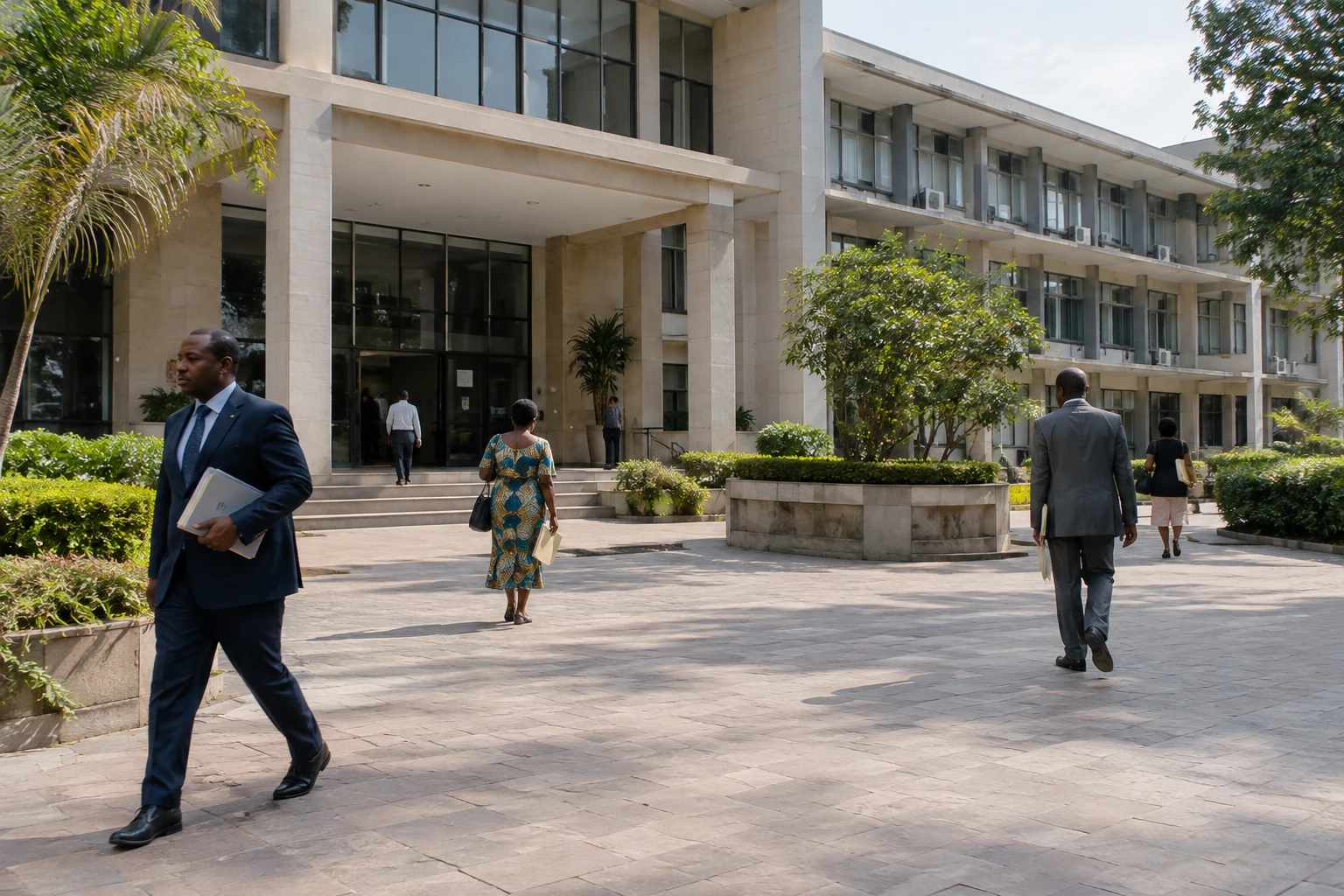
In eastern Democratic Republic of the Congo, peace agreements come and go without silencing the guns. The latest US sanctions target two Rwandan entities that Washington accuses of supporting the M23: the Ministry of Defence and a financial institution.
New pressure on Kigali
Announced on 28 October 2026, Washington’s decision targets Rwanda’s Ministry of Defence and the Zigama Credit and Savings Society. The US Treasury says the financial institution facilitated payments linked to Rwandan forces and the M23, as well as the transfer of gold extracted in Congolese areas controlled by the movement. These are allegations made by US authorities. The US Treasury’s statement on the sanctions sets out the reasons given.
The Treasury also accuses the ministry of deploying thousands of troops to the provinces of North Kivu and South Kivu alongside the M23, and of providing it with weapons, equipment, logistical support and training. Kigali denies supporting the movement and says it wants to implement the Washington Accords, provided the DRC also honours its commitments. This disagreement remains at the heart of the diplomatic conflict between the two countries.
The US measures freeze the assets concerned that fall under US jurisdiction and restrict transactions with the designated entities. Their reach therefore depends, in particular, on those entities’ financial or commercial links with US actors. They do not directly bring military operations on the ground to an end.
Agreements signed, fighting continues
The decision follows the signing on 4 December 2025 of the Washington Accords for Peace and Prosperity by Presidents Félix Tshisekedi and Paul Kagame, under US mediation. The text provides, among other things, for de-escalation and regional economic cooperation. Yet clashes continue in eastern Congo, where the M23 took control of Goma and Bukavu in 2025.
The crisis extends beyond the face-off between Kinshasa and Kigali. Rwanda cites the threat posed by the Democratic Forces for the Liberation of Rwanda (FDLR), an armed group linked to some perpetrators of the 1994 genocide, to justify its security concerns. The DRC disputes the presence of Rwandan troops on its territory and demands their withdrawal. These reciprocal security grievances complicate the implementation of commitments and fuel mistrust.
Allegations of Rwandan support for the M23 are not based solely on US statements. United Nations experts have also reported the presence of Rwandan forces and their role alongside the movement. Rwanda, for its part, denies supporting Congolese armed groups. The Congolese Press Agency has relayed the reasons for the sanctions and the evidence cited by Washington.
Minerals, funding and local consequences
Control of mining areas in North Kivu and South Kivu adds an economic dimension to the war. Washington says gold and other minerals from territories controlled by the M23 are entering Rwandan supply chains. The sanctions therefore target presumed financial and commercial networks, not just military officials.
For people in the areas concerned, however, the immediate priorities remain safety and the ability to live and work without armed coercion. At mining sites, control of roads and extraction activities can also affect workers, traders and local revenues. A financial sanction imposed abroad cannot, on its own, guarantee a change in territorial control or a rapid improvement in living conditions.
The latest developments also show the limits of diplomacy based on agreements reached between leaders. Their credibility depends on verification mechanisms and concrete measures on the ground. Washington says it wants the commitments to be honoured; Kigali argues that both sides must implement their obligations. Without progress on the withdrawal of forces and security issues, the agreements risk remaining far removed from the daily lives of people in eastern Congo.
A regional issue to watch
The crisis affects the entire Great Lakes region, where borders, population movements and armed groups directly link security concerns in the Congo and Rwanda. The Southern African Development Community (SADC), a regional organisation of which the DRC is a member, and the African Union are involved in diplomatic efforts. Their ability to coordinate initiatives with Washington and other mediators will shape what happens next.
The 28 October sanctions add to those imposed in March 2026 on the Rwandan army and four senior military officials, according to the US Treasury. They broaden the pressure to include defence and financial institutions. But their effectiveness will be measured less by their announcement than by their impact on presumed support for the M23, implementation of the agreements and the course of the fighting.
For the Congolese population, the test remains tangible: a lasting reduction in clashes, a verifiable withdrawal of foreign forces and safer access to local economic activities. In Kinshasa and the eastern provinces alike, the next diplomatic steps will have to show whether commitments can finally change the situation on the ground.