Algeria
 Egypt
 Libya
 Morocco
 Tunisia
 Benin
 Burkina Faso
 Cabo Verde
 Côte d'Ivoire
 Ghana
 Guinea
 Guinea-Bissau
 Liberia
 Mali
 Mauritania
 Niger
 Nigeria
 Senegal
 Sierra Leone
 The Gambia
 Togo
 Cameroon
 Central African Republic
 Chad
 DR Congo
 Equatorial Guinea
 Gabon
 Republic of the Congo
 São Tomé and Príncipe
 Burundi
 Comoros
 Djibouti
 Eritrea
 Ethiopia
 Kenya
 Madagascar
 Malawi
 Mauritius
 Mozambique
 Rwanda
 Seychelles
 Somalia
 South Sudan
 Tanzania
 Uganda
 Angola
 Botswana
 Eswatini
 Lesotho
 Namibia
 South Africa
 Zambia
 Zimbabwe
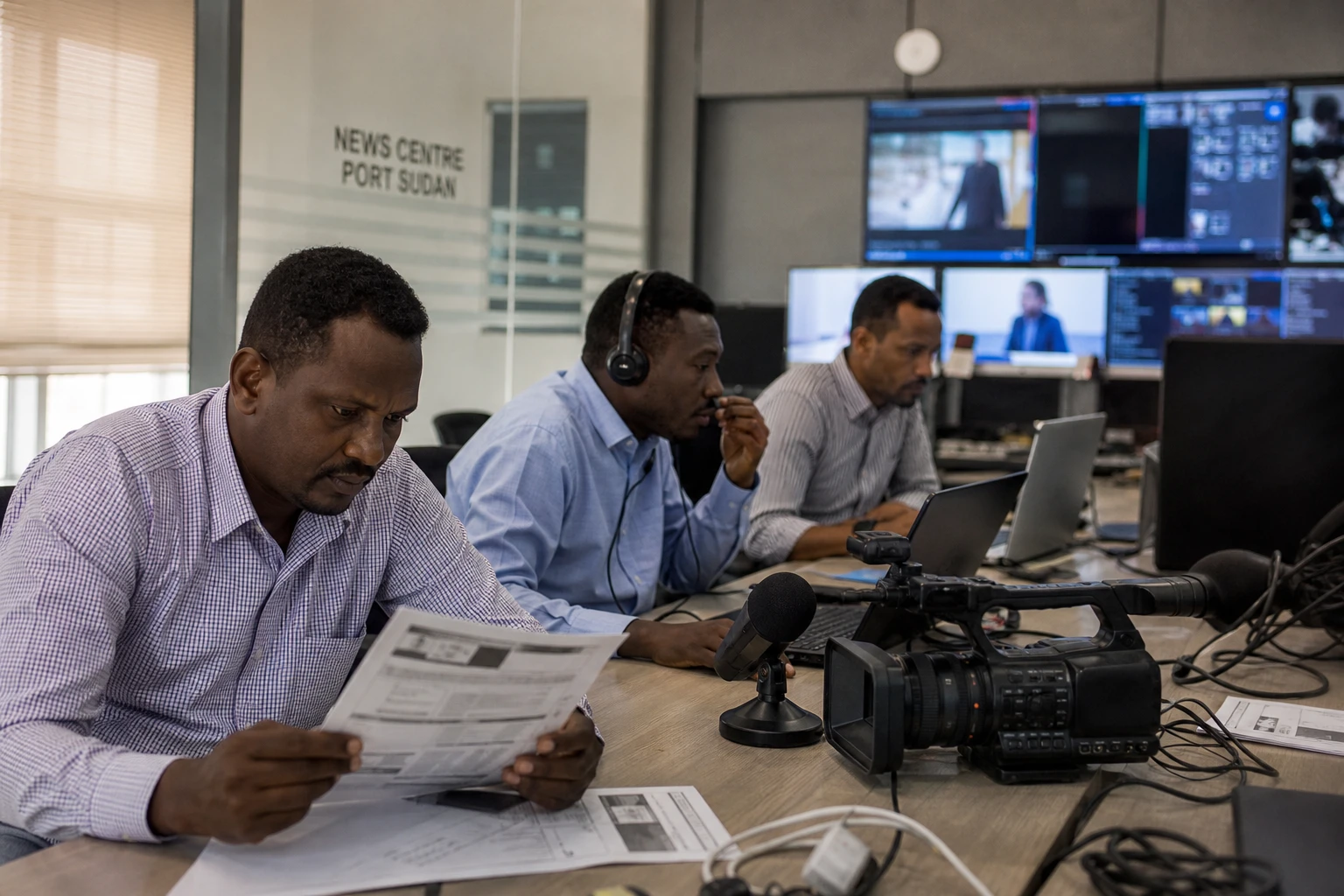
In Khartoum, another sanction in a war that is closing doors
When a country’s economy is already on its knees, every new restriction weighs far beyond government ministries. In Sudan, the US sanctions announced on 20 July add to a war that began in April 2023 and to a humanitarian and financial crisis already affecting urban populations and rural areas alike. Exports, credit lines and banking channels then become political levers, but also very tangible obstacles to imports, payments and aid.
This is not Sudan’s first period under sanctions. Washington has long maintained a specific regime targeting Sudan, distinct from measures relating to Darfur, and added a framework in 2023 targeting actors undermining the democratic transition. In parallel, the European Union strengthened its own regime on 13 July 2026 against what it describes as Sudan’s war economy, targeting gold and certain inputs linked to its extraction.
What Washington decided, and why
On 20 July 2026, new US restrictions against the Sudanese authorities took effect after Washington determined on 24 April 2025 that they had violated the 1991 US law on chemical and biological weapons. According to the State Department, the Sudanese government used chemical weapons in 2024, without publicly specifying the exact type of agent or the locations targeted in this final determination.
The measures strengthen provisions already announced in spring 2025. They include the United States opposing any financial or technical assistance to Sudanese institutions through multilateral banks, as well as restrictions on US exports. Basic foodstuffs and emergency humanitarian aid remain exempt. Sudanese carriers are also barred from US airspace.
Washington’s position is based on a specific text: the Chemical Weapons Convention, which Sudan joined on 24 May 1999. For the United States, the issue is therefore not only military. It also concerns Khartoum’s international non-proliferation obligations.
Sudan’s rejection is unequivocal. The foreign ministry called the sanctions illegal and political, denied any use of chemical weapons and demanded that any evidence be presented through a recognised legal framework. Khartoum also says it remains in compliance with the Convention and continues to submit its periodic declarations to the Organisation for the Prohibition of Chemical Weapons (OPCW).
Limited impact on trade, but a heavy toll on finance
On paper, the direct impact on trade appears limited. The value of US exports to Sudan is modest for a country at war: Washington put them at $56 million in 2024. But in an economy where the currency has collapsed and inflation remains high, the issue is not just volume. It is the ability to find correspondent banks, secure financing and pay for imports of essential goods.
The sanctions also come in an increasingly restrictive regional environment. The European Union is now targeting Sudanese gold, while the United Kingdom took measures on 16 July against gold and finance networks linked to the war. The message is clear: Western capitals are targeting less the ordinary trade than the channels that fuel the continuation of the conflict.
For the Sudanese population, the effects may be indirect but real. Formal businesses pay more for insurance, transport and transfers. Importers face longer delays. Hospitals, NGOs and humanitarian operators, meanwhile, have to navigate exemptions and administrative constraints. In a country divided between areas held by the army, contested spaces and more isolated territories, the geography of sanctions matters as much as their content.
This issue goes beyond the stand-off between Washington and Khartoum
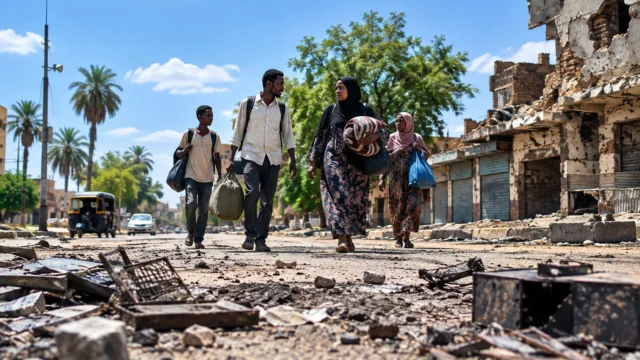
The heart of the matter remains the war. Since April 2023, the fighting between the Sudanese Armed Forces and the Rapid Support Forces has turned Khartoum, and then other regions, into political and economic wastelands. Death tolls vary by source, but the United Nations, Reuters and the Associated Press refer to tens of thousands of deaths and millions of displaced people. This scale helps explain why every international measure is read in Sudan as an instrument of pressure on the warring parties as much as on the state.
The diplomatic battle also extends to international organisations. The United States invokes the Chemical Weapons Convention and the OPCW, while Sudan demands that any allegation be handled through specialist mechanisms. In the background, the African Union, neighbouring countries and regional partners are chiefly seeking to prevent the entrenchment of a war that is already spilling over into the balance of power in the Nile Basin, the Red Sea and the Horn of Africa. Sudan is not an isolated case; it is a test of the continent’s ability to address a crisis of sovereignty, security and governance without leaving the framing of the issue entirely to foreign capitals.
A central question remains for the coming weeks: will these sanctions, added to those of the European Union and the United Kingdom, push the parties towards concessions, or will they instead consolidate the economic networks that prolong the conflict? For now, Washington is betting on targeted strangulation. Khartoum, meanwhile, calls it political blackmail. Between the two, the war continues to dictate Sudan’s agenda.