Algeria
 Egypt
 Libya
 Morocco
 Sudan
 Tunisia
 Benin
 Burkina Faso
 Cabo Verde
 Côte d'Ivoire
 Ghana
 Guinea
 Guinea-Bissau
 Liberia
 Mali
 Mauritania
 Niger
 Nigeria
 Senegal
 Sierra Leone
 The Gambia
 Togo
 Central African Republic
 Chad
 DR Congo
 Equatorial Guinea
 Gabon
 Republic of the Congo
 São Tomé and Príncipe
 Burundi
 Comoros
 Djibouti
 Eritrea
 Ethiopia
 Kenya
 Madagascar
 Malawi
 Mauritius
 Mozambique
 Rwanda
 Seychelles
 Somalia
 South Sudan
 Tanzania
 Uganda
 Angola
 Botswana
 Eswatini
 Lesotho
 Namibia
 South Africa
 Zambia
 Zimbabwe
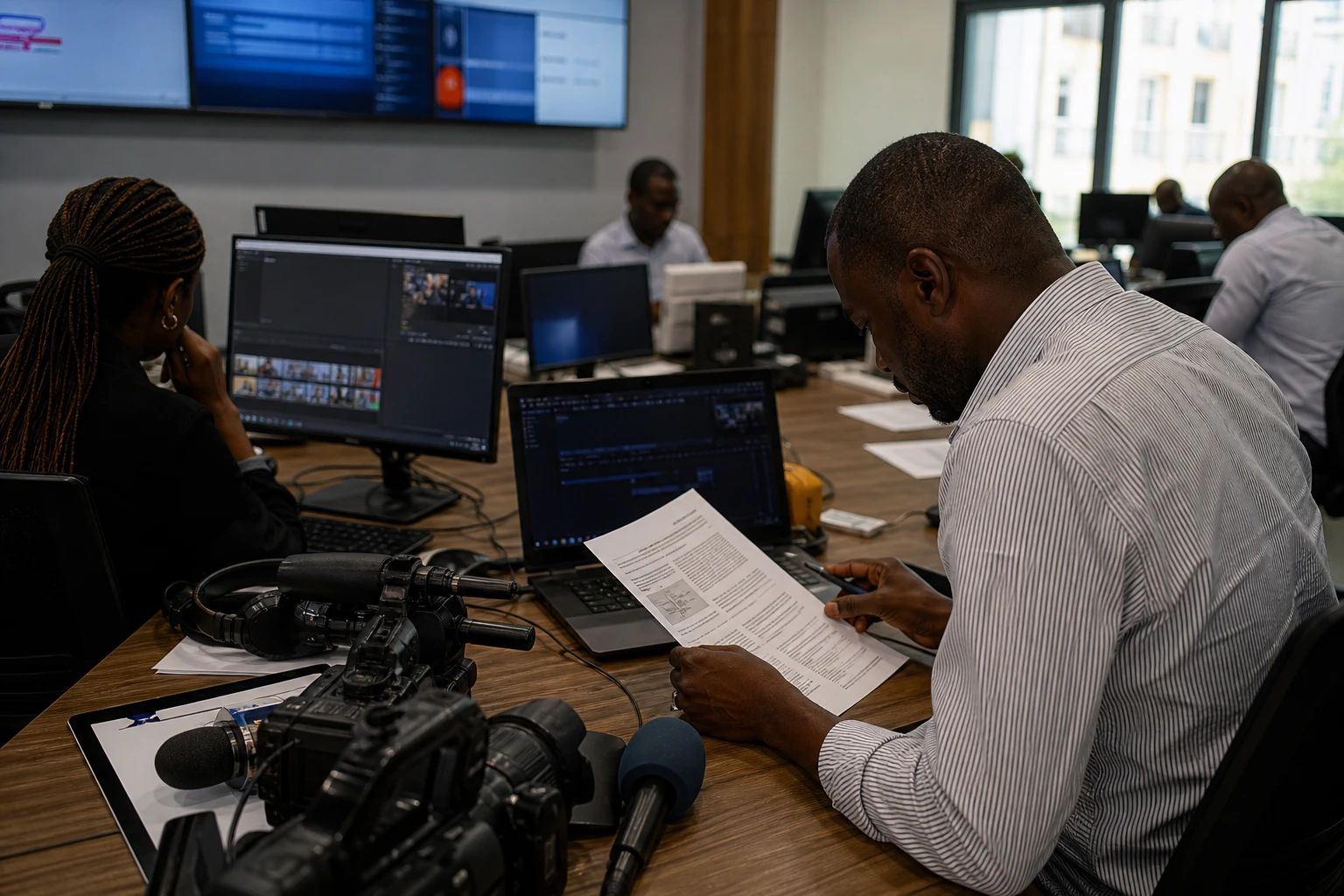
In Cameroon’s anglophone conflict, fighting is not confined to the front lines. Part of the battle is also being fought far from Yaoundé, in foreign courts, diaspora networks and funding channels that fuel violence. Three US citizens of Cameroonian origin have just been handed lengthy sentences in the United States.
A Cameroonian crisis that crosses borders
Cameroon has been mired since 2016 in a protracted crisis in its North-West and South-West regions, two anglophone areas in a predominantly French-speaking country. Tensions began with demands from magistrates and teachers, before escalating and fuelling an armed insurgency, mass displacement and the weakening of public services. The United Nations recently described a situation in which security, education and access to healthcare remain disrupted in these regions.
The crisis also has a regional dimension. Cameroon lies at the heart of Central Africa and is a member of CEMAC, the Economic and Monetary Community of Central Africa. Its borders with Nigeria, Chad, the Central African Republic, Gabon, Equatorial Guinea and Congo make it a constant transit area for people, weapons and capital. When violence persists in the North-West and South-West, it spills over into markets, trade routes and cross-border communities.
The US verdict and the facts considered by the court
On 26 August 2026, a federal court in Missouri, in Kansas City, sentenced Francis Chenyi, 52, and Lah Nestor Langmi, 49, to 180 months in prison each. Claude Ngenevu Chi, 43, was sentenced to 63 months. The three men were also given three years of supervised release after their prison terms.
According to the charges upheld, they took part in a conspiracy to provide material support and resources intended to kill, kidnap and maim people, as well as to use weapons of mass destruction in a foreign country. US authorities said this support was for separatist fighters active in Cameroon’s North-West, notably to manufacture and use improvised explosive devices.
The case is not new. An initial proceeding was launched in the United States in 2022, following a federal investigation. Court documents examined in the case refer to fundraising, money transfers, equipment purchases and links to kidnappings for ransom. They also mention attempts to organise training in the use of explosive devices.
The role of diaspora networks is often cited in cases of this kind. The US justice system considered messages, exchanges and financial transactions attributed to the defendants. In this case, one episode mentioned involved a kidnapping linked to a demand to capture a traditional leader, illustrating how violence in the Cameroonian conflict has also taken the form of extortion and targeted pressure on local communities.
What this case says about the conflict and its grey areas
The significance of this verdict goes beyond the criminal liability of three men. First, it is a reminder that Cameroon’s anglophone conflict has become internationalised. Funds can be raised abroad, instructions can circulate from the diaspora, and the effects are felt in very concrete ways in villages in the North-West and South-West. For civilians, this means greater insecurity, kidnappings, school closures and pressure on the local economy. For the authorities, it reinforces the case for pursuing logistical networks outside the national territory.
But the case also highlights a reality that judges alone cannot resolve: the political causes of the conflict remain. The initial demands concerned the place of English in administration, the justice system and schools, as well as the representation of anglophone populations. The violence of armed groups does not make these grievances disappear. Instead, it drowns them out in a spiral in which civilians pay the heaviest price.
It is in this context that the voices of Cameroonian civil society remain influential. Félix Agbor Balla, a prominent figure in the anglophone movement, has previously stressed that no cause justifies attacks on civilians, while also calling for the political grievances at the root of the conflict not to be erased. This position matters. It avoids two pitfalls: normalising abuses by armed groups or claiming that a trial abroad is enough to resolve a political crisis rooted in the long term.
The Kansas City verdict also comes at a time when Cameroon continues to face multiple security challenges. Alongside this, the country is contending with the Lake Chad Basin crisis in the Far North, the situation of Central African refugees in the East and persistent social vulnerabilities. This is a reminder that the authorities in Yaoundé face priorities that are not solely military. They are institutional, social and territorial too.
A significance for Africa beyond the Cameroonian case
The case sends a signal that resonates beyond Cameroon. First, it shows that African conflicts are no longer confined to national borders. They extend across diasporas, financial centres and digital networks. It also confirms that foreign courts are increasingly prosecuting logistical support for violence committed on the continent, including when defendants live thousands of kilometres from the scene.
For Central Africa, the stakes are clear. When a conflict persists in a pivotal state such as Cameroon, its effects spread across the sub-region: human mobility, border tensions, the circulation of weapons, pressure on trade and political mistrust. From the perspective of CEMAC and, more broadly, the African Union, the central question remains the same: how can criminal justice and the suppression of war financing be addressed alongside the political causes that fuel these crises?
The Kansas City case brings nothing to a close. It establishes individual responsibility. It does not resolve the question of domestic dialogue, the protection of civilians or the place of the anglophone regions in Cameroon’s national balance. That is precisely why it matters: it is a reminder that an African crisis can play out in villages, capitals and before judges abroad at the same time, without any one of these arenas erasing the others.