
 Algeria
 Egypt
 Libya
 Morocco
 Sudan
 Tunisia
 Benin
 Burkina Faso
 Cabo Verde
 Côte d'Ivoire
 Ghana
 Guinea
 Guinea-Bissau
 Liberia
 Mali
 Mauritania
 Niger
 Nigeria
 Senegal
 Sierra Leone
 The Gambia
 Togo
 Cameroon
 Central African Republic
 Chad
 DR Congo
 Equatorial Guinea
 Gabon
 Republic of the Congo
 São Tomé and Príncipe
 Burundi
 Comoros
 Djibouti
 Eritrea
 Ethiopia
 Kenya
 Madagascar
 Malawi
 Mauritius
 Mozambique
 Rwanda
 Seychelles
 Somalia
 South Sudan
 Tanzania
 Uganda
 Angola
 Botswana
 Eswatini
 Lesotho
 Namibia
 Zambia
 Zimbabwe
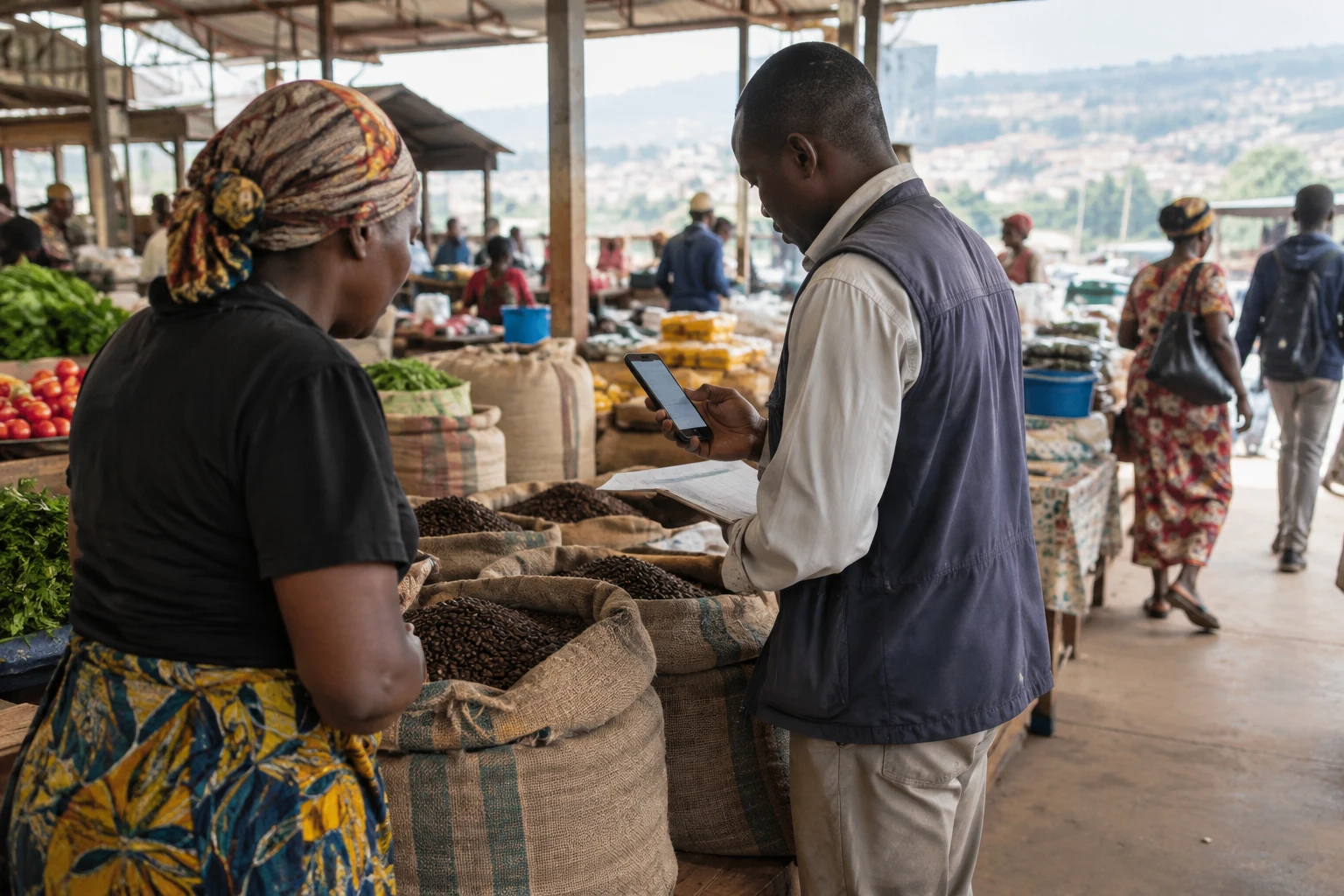
A tariff advantage can have consequences far beyond the price of a product. For South African and Rwandan exporters, its disappearance risks reducing margins, complicating access to US buyers and putting some jobs at risk. But the two countries are not exposed in the same way.
A continental programme, national decisions
The African Growth and Opportunity Act (AGOA) is a US programme established in 2000. It allows eligible sub-Saharan African countries to export certain products to the United States duty-free, subject to political, economic and trade criteria. It does not remove duties on all goods.
The US Congress has extended the programme until 31 December 2028. This extension does not, however, guarantee that every beneficiary country will retain its status: Washington reviews their eligibility, and the president can decide to exclude a country. The announcement concerning South Africa and Rwanda therefore comes within a mechanism that continues for the other participants.
On 2 November 2026, US Trade Representative Jamieson Greer said that Donald Trump had notified Congress and the South African and Rwandan governments of his intention to end their participation from 1 January 2027. The date and announced decision have been confirmed by several independent reports. Washington cites practices it considers incompatible with AGOA criteria.
For Pretoria, the US administration cites barriers to US trade and investment, concerns related to corruption and practices that, in its view, threaten its security and foreign policy interests. For Kigali, it also raises concerns about the rule of law, political pluralism, workers’ rights and human rights. These are the reasons given by Washington; stating them does not, in itself, constitute an independent finding on each allegation.
In South Africa, a targeted shock rather than a halt to trade
South Africa, whose administrative capital is Pretoria, is among AGOA’s main users. According to figures released by the South African government, exports benefiting from the programme reached nearly $1.7bn in 2025, compared with $4bn in 2024. They accounted for about 10% of South African exports to the United States and nearly 1% of the country’s global exports.
The loss of preferences does not mean that South African products will be banned from the US market. The goods concerned could instead become subject to the ordinary customs duties applicable to their category. Higher import costs could reduce companies’ margins, prompt some buyers to switch suppliers or make contracts less competitive. Exposed sectors include automotive, agriculture and some manufacturing activities.
The impact would therefore be concentrated on companies and workers linked to export industries, rather than the economy as a whole. Rural regions that supply agricultural products and industrial centres could feel the decision differently. By contrast, AGOA’s limited share of South Africa’s global exports puts the risk of a generalised macroeconomic shock into perspective.
South African Trade Minister Parks Tau said the government would support affected sectors and seek to continue dialogue with Washington. Pretoria is thus presenting the issue as a trade dispute to be resolved, without abandoning its national choices. The predictability of the rules is also at stake: companies investing to serve an overseas market need to know whether their terms of access can change quickly.
For Kigali, AGOA adds to regional tensions
For Rwanda, a landlocked East African country whose capital is Kigali, the announcement comes amid an already deteriorating diplomatic climate. On 28 October, Washington imposed sanctions on Rwanda’s Ministry of Defence and Zigama Credit and Savings Society, a financial institution linked to the security services. US authorities accuse them of supporting M23 in the east of the Democratic Republic of the Congo (DRC), around Goma and in the provinces of North Kivu and South Kivu. Kigali disputes the accusations of support for the armed group.
The link to the conflict in eastern Congo is therefore central to relations between Washington and Kigali, but the grounds for sanctions should not be confused with the trade criteria officially cited for AGOA. The announced exclusion concerns all the programme’s benefits, whereas the measure taken against Rwanda in 2018 was limited to clothing. The country currently retains eligibility for other products, according to the US trade administration’s fact sheet.
Coffee, tea and some minerals are among the Rwandan exports to the United States that could be affected. However, the available data do not make it possible to establish the total value of Rwandan exports benefiting from AGOA with the same precision as for South Africa. It would therefore be premature to quantify losses or their effects on employment. Small-scale producers and exporters could be more vulnerable to higher costs, while groups with several markets would have more scope to redirect sales.
A deadline for African partners to watch
The announced decision does not close the US market, but it reduces an advantage that both governments consider important to their trade relations. It also highlights AGOA’s political reach: preferential access depends on criteria set by the United States and reassessed each year. Washington says it is working with its partners to help them meet these criteria; the terms of any possible reinstatement therefore remain to be clarified.
For African Union member states, the issue extends beyond these two cases. AGOA has supported trade and production chains between African and US companies, but a preference granted unilaterally is no substitute for a diversification strategy. Regional markets, including those of the East African Community for Rwanda and the Southern African Development Community for South Africa, as well as the African Continental Free Trade Area, can help broaden options — without automatically absorbing lost sales.
The next step is the implementation of the US notice before 1 January 2027, alongside continued diplomatic and trade discussions. For exporters, the decisive issue will be the customs treatment actually applied to each product. For other beneficiary countries, the case is a reminder that extending AGOA until 2028 ensures the programme’s continuity, but not that of every country within it.



