Algeria
 Egypt
 Libya
 Morocco
 Sudan
 Tunisia
 Benin
 Burkina Faso
 Cabo Verde
 Côte d'Ivoire
 Ghana
 Guinea
 Guinea-Bissau
 Liberia
 Mali
 Mauritania
 Niger
 Nigeria
 Senegal
 Sierra Leone
 The Gambia
 Togo
 Cameroon
 Central African Republic
 Chad
 DR Congo
 Equatorial Guinea
 Gabon
 Republic of the Congo
 São Tomé and Príncipe
 Burundi
 Comoros
 Djibouti
 Eritrea
 Ethiopia
 Kenya
 Madagascar
 Malawi
 Mauritius
 Mozambique
 Rwanda
 Seychelles
 Somalia
 South Sudan
 Tanzania
 Angola
 Botswana
 Eswatini
 Lesotho
 Namibia
 South Africa
 Zambia
 Zimbabwe
At six months, Irene Nalukwago’s daughter began falling ill frequently. One blood transfusion followed another. Her haemoglobin fell to 3.1 grams per decilitre, according to her mother. The sickle cell disease diagnosis came only after several months of suffering.
Her story illustrates a central problem in Uganda: the disease is common, but it is sometimes detected too late. Since 9 February 2026, the authorities have launched mandatory newborn screening nationwide. The goal is simple: identify children at birth and refer them for care promptly.
An inherited disease that weighs on children’s health
Sickle cell disease is a genetic blood disorder. It deforms red blood cells and can block blood flow in small vessels. Patients can then suffer painful crises, severe anaemia, infections or neurological complications.
About 20,000 babies are born with the disease in Uganda each year, according to estimates cited by the Ugandan Ministry of Health. A study published in The Lancet Global Health put the national prevalence of the disease at about 1.3%. It also estimated that 13.3% of people carry the sickle cell trait, without having the disease itself.
These figures do not, however, describe a uniform situation across all regions. Surveillance work in 112 districts found significant differences between areas. Screening therefore also helps to measure the national picture more accurately and allocate resources according to need.
The first signs often appear several months after birth. An infant may seem healthy before experiencing their first crises. In families living far from specialist centres, this delay can lead to repeated consultations for anaemia, fever or pain without a definitive diagnosis.
Early screening changes the care pathway
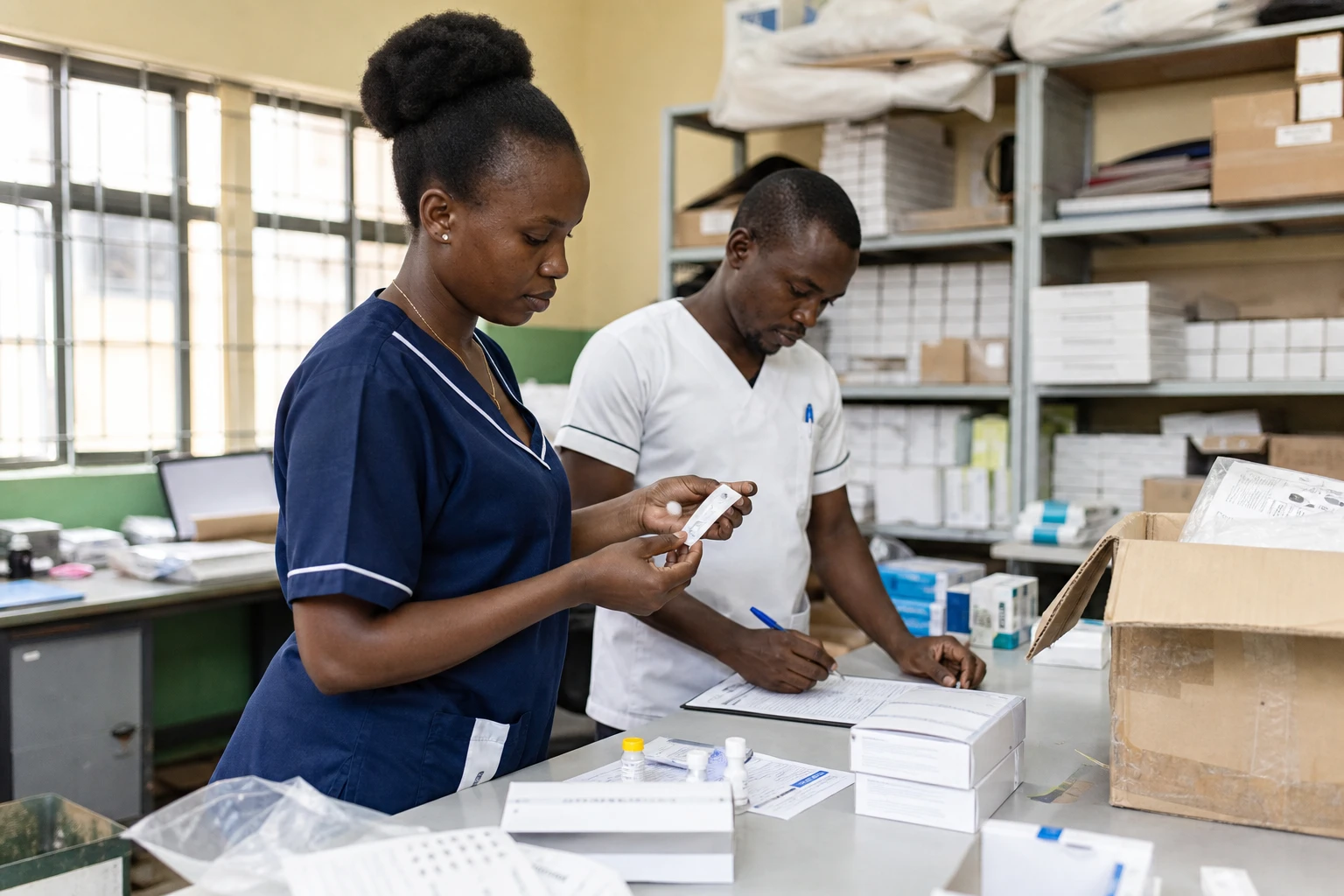
The programme launched in Kampala provides for newborn screening in public facilities and health facilities integrated into the national system. Rapid tests are intended to identify affected children and connect them with appropriate medical follow-up.
The measure builds on several years of surveillance and pilot projects carried out notably in Kayunga and Lira. It marks a significant shift in Ugandan health policy. Until now, many children were diagnosed only after complications had developed.
Screening alone, however, is not enough. A positive result must be confirmed or incorporated into a reliable care pathway. Families need clear information. Medicines must be available. Appointments must be followed up. Finally, children born in private facilities or not tested at birth must not be lost to follow-up.
An analysis published in 2026 highlights these operational limitations. The national launch does not yet fully cover births in the private sector, children missed at birth or catch-up screening for older children. The programme’s success will therefore depend on how well it is integrated with vaccinations, paediatric consultations and community health services.
Treatments are accessible, but availability remains uneven
Care relies on several tools. These include infection prevention, vaccinations, monitoring for anaemia, blood transfusions when necessary and hydroxyurea. This medicine can reduce the frequency of crises in some patients, under medical supervision and with regular tests.
The Ugandan Ministry of Health has said that hydroxyurea is now on the national essential medicines list. The decision is intended to facilitate its supply. In practice, access still depends on stocks, the cost of consultations and the distance between families and specialist centres.
For parents, the burden goes beyond medical expenses. Repeated crises can disrupt schooling. They sometimes force an adult to take time away from work. Blood transfusions also require a regular and safe blood supply system. The difficulties are therefore greater for rural households and those who rely heavily on the informal economy.
Irene Nalukwago’s daughter is now 12. The crises have left serious complications, including paralysis on her left side, her mother says. Her experience is a reminder that a late diagnosis does not merely delay treatment. It can also cause lasting damage.
Gene therapy remains a distant prospect
Gene therapy has raised great hopes in the medical community. It aims to modify the cells responsible for blood production in order to reduce, or even eliminate, severe symptoms of the disease in some patients.
For now, this approach remains beyond the reach of most Ugandan families. It requires highly specialised infrastructure, trained teams and substantial funding. The immediate priorities therefore remain screening, hydroxyurea, infection prevention and continuity of care.
More advanced capabilities are nevertheless beginning to develop. The ministry has reported access to automated red blood cell exchanges at some centres, as well as research into future treatment options. These advances do not replace basic care. Rather, they show that Uganda’s response is being built in stages.
A national and regional issue in East Africa
Uganda is a member of the East African Community, which brings together several countries facing shared public health challenges. Movement between Uganda, Kenya, Tanzania, Rwanda, Burundi, the Democratic Republic of the Congo, South Sudan and Somalia makes better continuity of care useful for mobile patients.
The movement of families and workers can interrupt treatment or make it harder to access medical records. Common protocols, regional referral systems and more regular availability of medicines could reduce these disruptions. The issue therefore extends beyond Uganda’s borders.
The next step will be to check that screening is truly reaching newborns in rural areas, children born in the private sector and those missed at birth. For Kampala, the challenge is no longer simply to announce a national policy. It is to make it sustainable, equitable and measurable in every district.