Algeria
 Egypt
 Libya
 Morocco
 Sudan
 Tunisia
 Benin
 Burkina Faso
 Cabo Verde
 Côte d'Ivoire
 Ghana
 Guinea
 Guinea-Bissau
 Liberia
 Mali
 Mauritania
 Niger
 Nigeria
 Senegal
 Sierra Leone
 The Gambia
 Togo
 Cameroon
 Central African Republic
 Chad
 DR Congo
 Equatorial Guinea
 Gabon
 Republic of the Congo
 São Tomé and Príncipe
 Burundi
 Comoros
 Djibouti
 Eritrea
 Ethiopia
 Kenya
 Madagascar
 Malawi
 Mauritius
 Mozambique
 Rwanda
 Seychelles
 Somalia
 South Sudan
 Tanzania
 Angola
 Botswana
 Eswatini
 Lesotho
 Namibia
 South Africa
 Zambia
 Zimbabwe
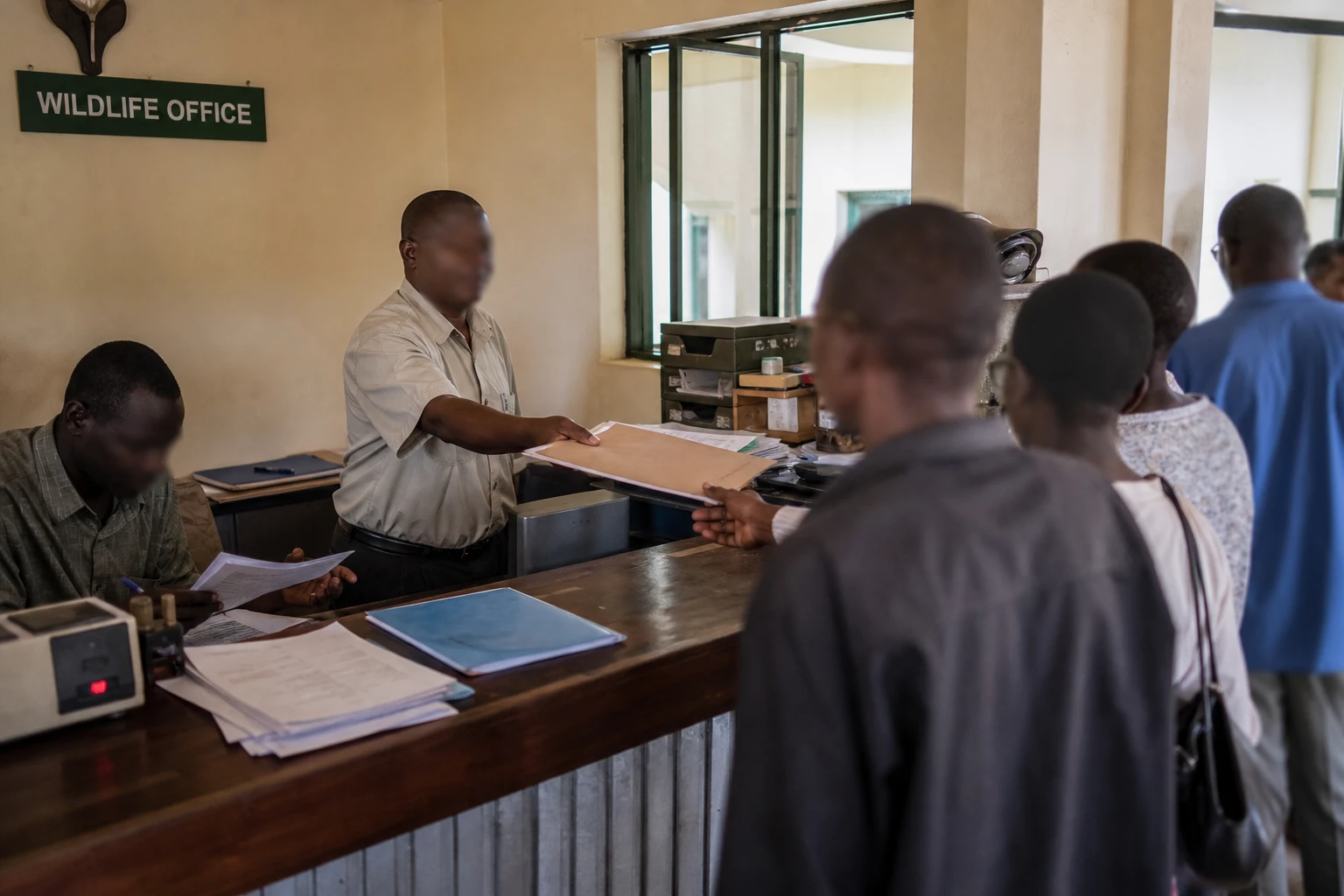
A conservation move in a park under pressure
In north-western Uganda, wildlife protection is not decided only in offices in Kampala. It is also decided on dusty tracks, among transport trucks, veterinarians and savannah corridors where space is shrinking.
It is in this context that conservation teams have begun moving 12 Nubian giraffes to Ajai Wildlife Reserve, about 106 kilometres from their point of departure. The goal is easy to state but complex to achieve: protect a threatened species, boost local biodiversity and breathe new life into a protected site that has long lost part of its wildlife.
The move carries more weight than a simple transfer of animals. It is taking place in a landscape where oil development, pressure on land and human activities compete with conservation areas, particularly around the country’s largest national park, Murchison Falls. The issue is therefore not just zoological. It is also economic, territorial and political.
Ajai, a former refuge being rebuilt
Ajai Wildlife Reserve, in the West Nile region, was established in 1937. It lost much of its wildlife in the early 1980s amid insecurity and poaching. Since then, the Uganda Wildlife Authority has carried out gradual restoration work there, including the reintroduction of southern white rhinos, buffaloes, zebras and hundreds of Uganda kob.
The strategy is clear: do not concentrate all ecological pressure in a single protected area. By multiplying sites that can host wildlife, the authorities aim to secure animal populations, reduce risks linked to local disturbances and broaden tourism prospects. The same logic can be seen in other Ugandan reintroduction projects, including those at the Ajai Wildlife Reserve and in other protected areas across the country.
This approach is part of a broader policy of active conservation. In Uganda, wildlife protection is not conceived as putting nature under glass, but as managing the land. The country is relying on its parks, reserves and emblematic species to maintain its ecosystems and support part of its tourism industry.
The facts: a transfer under veterinary supervision
The giraffes being moved are Nubian giraffes, one of the continent’s most threatened subspecies. They are sedated with a dart, then placed in specially adapted trailers. The protocol is demanding, but essential to limit stress and injury during the journey.
The transfer involves 12 animals and is taking place from Murchison Falls National Park to Ajai. In this area, threats are piling up. Oil activities linked to the Tilenga project have begun to take shape on the ground, and heavy machinery is already moving through the park. French group TotalEnergies has said that the Tilenga project involves drilling hundreds of wells in the Lake Albert basin, while the Ugandan government sees it as a strategic resource for public finances and future production.
Environmental advocates, meanwhile, point out that this activity puts pressure on habitats. Wildlife is less able to withstand roads, platforms, noise, transport corridors and habitat fragmentation. This is prompting the authorities to act in advance by moving some animal populations to safer areas. The same reasoning has already guided other translocations in Uganda, particularly those involving rhinos.
The Nubian giraffe is not a local curiosity. It is an essential component of the region’s ecological balance. The Giraffe Conservation Foundation and the Uganda Wildlife Authority estimate that the national population has rebounded significantly in recent years, after falling to a critical level in the early 2010s. Uganda is now home to one of the largest populations of this subspecies within its natural range.
What this move says about Uganda today
This transfer tells the story of a country seeking to reconcile two promises. On one side is the promise of oil revenues, presented as a driver of growth. On the other is the promise of natural capital, which supports tourism, local jobs and the country’s international image. These two paths do not always align. At times, they clash.
For the Ugandan state, the challenge is to show that it can pursue a development agenda without abandoning conservation. For communities living nearby, the questions are more tangible: access to land, protection from poaching, a share of tourism revenues and coexistence with wildlife. For tourism operators, meanwhile, extending the presence of wildlife to new sites could open up new routes and diversify the offer beyond the well-known major parks.
The regional context also matters. Uganda is a member of the East African Community, where ecological corridors, exchanges of expertise and cross-border tourism strategies are becoming increasingly important. Conservation does not stop at administrative borders. Species, for their part, move according to habitat availability, human pressure and the risk of poaching.
In this context, Ajai is becoming more than a reserve. It is a laboratory for ecological restoration. If the site can provide a lasting home for the giraffes, it will strengthen wildlife resilience in the West Nile region and serve as a model for other protected areas facing the same challenge: protecting without isolating, restoring without freezing ecosystems in place, and giving nature economic value without exhausting it.
A significance that extends beyond Uganda
Across Africa, the operation is a reminder of a reality that is often underestimated: wildlife conservation now involves very concrete trade-offs between energy, agriculture, tourism and land security. East Africa, home to several of the continent’s largest natural sanctuaries, is also seeing its ecosystems subjected to infrastructure projects and demographic pressure.
The Ugandan case is therefore of interest beyond its borders. It shows how a state can seek to protect an emblematic species while pursuing an extractive strategy. It also shows that solutions are not simply a matter of prohibition or permission. They are often hybrid, imperfect and open to revision. This is precisely where the future of African reserves will be decided: in their ability to remain living, useful and protected spaces at the same time.
The next point to watch will be whether the transfer is completed successfully, followed by Ajai’s ability to provide a lasting home for the animals in sufficiently safe conditions. Monitoring of the other reintroductions planned at the site will show whether this operation remains a one-off gesture or forms part of a long-term ecological restoration effort.