Algeria
 Egypt
 Libya
 Morocco
 Sudan
 Tunisia
 Benin
 Burkina Faso
 Cabo Verde
 Côte d'Ivoire
 Ghana
 Guinea
 Guinea-Bissau
 Liberia
 Mali
 Mauritania
 Niger
 Nigeria
 Senegal
 Sierra Leone
 The Gambia
 Togo
 Cameroon
 Central African Republic
 Chad
 DR Congo
 Equatorial Guinea
 Gabon
 Republic of the Congo
 São Tomé and Príncipe
 Burundi
 Comoros
 Djibouti
 Eritrea
 Ethiopia
 Kenya
 Madagascar
 Malawi
 Mauritius
 Mozambique
 Rwanda
 Seychelles
 Somalia
 South Sudan
 Tanzania
 Angola
 Botswana
 Eswatini
 Lesotho
 Namibia
 South Africa
 Zambia
 Zimbabwe
A public health calculation that also says something about borders
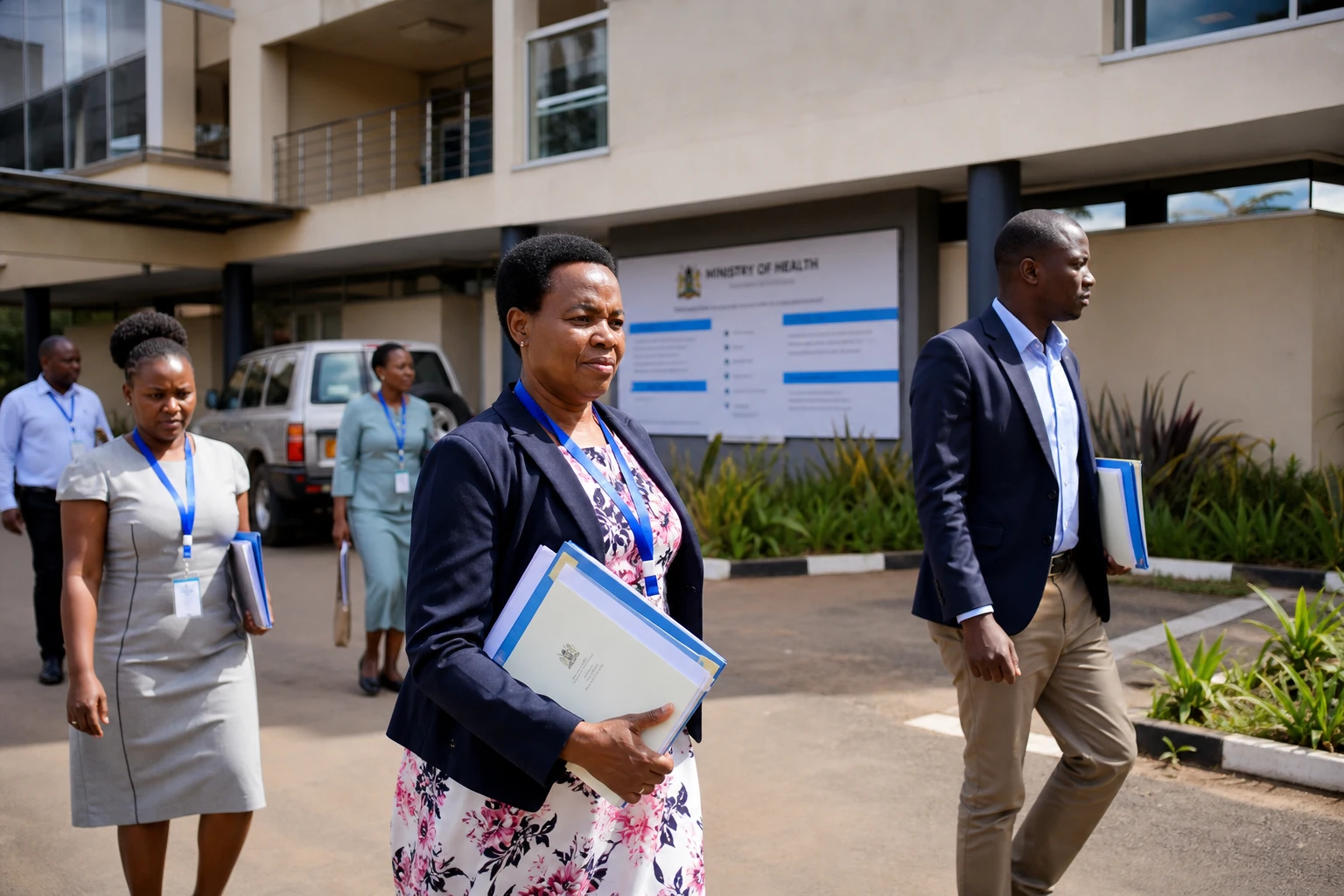
In Kampala, victory over Ebola is measured not only in beds freed up or isolation wards emptied. It is also reflected in how the cases are counted. And in an outbreak that came from the east of the Democratic Republic of the Congo, this methodological detail says a great deal about the pressure on Uganda, a country of transit, healthcare and constant surveillance.
On 28 July 2026, Ugandan authorities announced the end of the Ebola outbreak in their territory. The Ministry of Health said it had chosen 16 June 2026 as the starting point for its count, the date on which the last locally transmitted patient left hospital. The WHO, by contrast, ties the countdown to the discharge of the last confirmed case, which its Uganda office said occurred on 16 July 2026.
Kampala, the East African Community and the risk of a porous border
Uganda did not face this episode alone. The country is part of a shared health space with the DRC within the East African Community, where movement for trade, family and work is constant. WHO Africa stressed the cross-border nature of the episode, while Africa CDC classified it as a continental public health emergency because of population movements, insecurity and its proximity to other countries in the region.
This geography carries significant weight. In border districts, movement does not stop for markets, families or healthcare. In Kampala, the capital, where early warning signs are often detected more quickly, the response relies on laboratories, contact-tracing teams and treatment centres. The 2026 episode involved 836 contacts under follow-up, 36 high-risk districts and 38 points of entry, according to the WHO, demonstrating how a local outbreak can quickly become a regional issue.
The facts: imported cases, followed by secondary transmission
As of 16 July 2026, the WHO reported 20 confirmed cases and two deaths in Uganda. Fifteen cases were linked to imports from the Democratic Republic of the Congo, and five to local infections. On 28 July, Kampala announced that it had completed the 42 days of surveillance set by its authorities, counting from 16 June for the last local case.
The point of disagreement is not a trivial one. WHO recommendations state that an outbreak is over after two full incubation periods, or 42 days, without a new confirmed case. The organisation also says that in a cross-border outbreak, the reappearance of an imported case can reset the clock. Uganda’s health ministry, for its part, distinguished between “imported” cases and cases acquired locally, allowing the countdown to begin earlier.
This approach does not diminish the public health work that has been done. Rather, it highlights a political and technical trade-off: should the end of an outbreak be judged by domestic transmission, or by the overall risk a country continues to face because of its eastern border? Uganda chose the first interpretation. The WHO maintains a more cautious view, focused on actual exposure to the risk of a resurgence.
What the announcement changes — and what it does not resolve
For the Ugandan government, the announcement matters on three fronts. First, it validates a rapid response after the outbreak was declared on 15 May 2026. Second, it helps reassure a local economy highly sensitive to travel restrictions, the movement of goods and temporary border closures. Finally, it protects the image of a country that has invested heavily in preparedness for health emergencies.
For residents, the picture is more nuanced. Surveillance remains in place in the capital and border towns. Health teams must maintain alerts, especially in areas where exchanges with the DRC remain frequent. In rural areas, where access to healthcare is more irregular, vigilance depends more heavily on community networks and points of entry. This is where information campaigns, trust and early detection make a difference.
The World Health Organization praised the coordination between the Ugandan authorities, technical partners and communities. It also stressed that the end of the emergency does not mean the end of surveillance. This clarification matters because the outbreak in the DRC remains active. The risk of re-importation therefore persists, justifying the caution of regional bodies.
A regional public health lesson for Africa
This episode says something broader than Uganda alone. It shows that health emergencies in East Africa are now playing out across border corridors, transport networks and neighbouring health systems. It also underlines that a country can contain an outbreak without being able to consider it entirely over while a neighbouring area remains affected.
Finally, it illustrates the growing role of African response mechanisms. Africa CDC, the African Union’s health agency, monitored the episode as a continental threat, working with national authorities. This coordination between national and regional levels, alongside international technical support, is becoming a defining feature of outbreak management on the continent. The challenge now will be to see whether cross-border surveillance can be sustained, as the DRC continues to report cases and movement between the two countries remains intense.