Algeria
 Egypt
 Libya
 Morocco
 Sudan
 Tunisia
 Benin
 Burkina Faso
 Cabo Verde
 Côte d'Ivoire
 Ghana
 Guinea
 Guinea-Bissau
 Liberia
 Mali
 Mauritania
 Niger
 Nigeria
 Senegal
 Sierra Leone
 The Gambia
 Togo
 Cameroon
 Central African Republic
 Chad
 DR Congo
 Equatorial Guinea
 Gabon
 Republic of the Congo
 São Tomé and Príncipe
 Burundi
 Comoros
 Djibouti
 Eritrea
 Ethiopia
 Kenya
 Madagascar
 Malawi
 Mauritius
 Mozambique
 Rwanda
 Seychelles
 Somalia
 South Sudan
 Tanzania
 Angola
 Botswana
 Eswatini
 Lesotho
 Namibia
 South Africa
 Zambia
 Zimbabwe

In Kampala, the issue is about more than a patient being discharged from hospital. Above all, it is a question of whether Uganda has really managed to break the chain of transmission of a virus that pays no heed to borders. In a country where movement with the Democratic Republic of the Congo remains constant, every day without a new case counts.
An important public health milestone for Uganda
On 16 July 2026, Ugandan health authorities announced the discharge of the last patient still receiving care for this Ebola outbreak at Mulago, Kampala’s national referral hospital. This marks the start of a 42-day period of enhanced surveillance, corresponding to two maximum incubation periods for the Bundibugyo virus, before any official declaration that the outbreak is over.
The Ministry of Health and the World Health Organization say the outbreak was declared on 15 May 2026. As of 16 July, Uganda had recorded 20 confirmed cases and two deaths. Fifteen infections were imported from the Democratic Republic of the Congo and five were local transmissions.
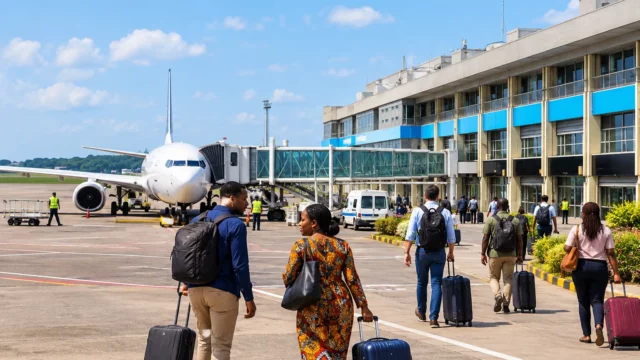
The strain involved is rare: it is the Bundibugyo virus, first identified in Uganda in 2007. During this outbreak, health teams also monitored 836 contacts, strengthened surveillance in 36 at-risk districts and checked 38 points of entry. These figures show a highly localised response, in which border posts, hospitals and nearby communities mattered as much as laboratories.
Kampala’s authorities say they put in place a conventional but demanding strategy: rapid testing, contact tracing, infection prevention, clinical care, community engagement and cross-border coordination with Kinshasa and neighbouring areas. This response framework explains why one patient’s recovery does not yet mean a definitive victory.
A local victory, but a regional issue
The regional context remains decisive. On 17 May 2026, the WHO assessed the Bundibugyo virus outbreak in the Democratic Republic of the Congo and Uganda as a public health emergency of international concern, or PHEIC, the highest alert level under the International Health Regulations. This decision shows that the episode in Uganda cannot be viewed as a purely national event.
Geography carries significant weight. Uganda shares trade, family and health links with the west of the Democratic Republic of the Congo. The WHO notes that the risk of importation remains as long as transmission continues across the border. If a new imported case were to appear during the 42-day countdown, the period would restart.
This also sheds light on the Ugandan authorities’ decision to remain vigilant even as the news seems to have moved on from the peak of the alert. The end of an Ebola outbreak is often achieved quietly, through surveillance teams, frontline health workers and district facilities. For the public, this mainly means checks at points of entry, faster alerts and particular attention to symptoms.
The Ministry of Health presented this milestone as proof that Ebola can be contained if measures are followed. That is true, but on one condition: systems must remain on alert. Uganda’s experience is a reminder that public health success depends as much on communities’ trust as on hospital capacity. Without the rapid reporting of suspected cases, the response loses its head start.
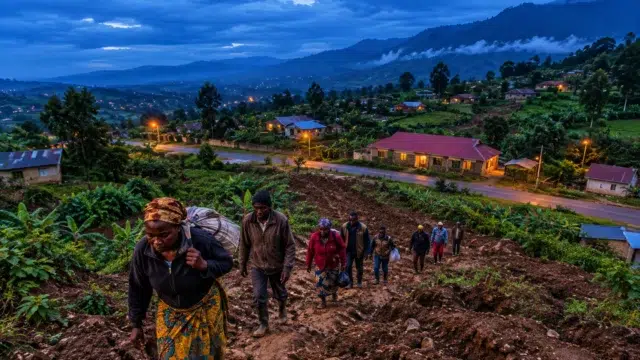
For urban centres such as Kampala, the main risk stems from the density of movement. In border areas, it is more closely tied to the daily movement of people and goods. For families, it remains tangible: a death, a quarantine, monitoring at home, and care sometimes delayed by fear. The crisis has therefore affected people very differently depending on where they live and their access to healthcare.
What this phase says about East Africa
Regionally, the episode in Uganda confirms an often underestimated truth: an epidemic spreads faster than administrations can respond, but it can also be fought through cooperation. Data-sharing, joint surveillance and early warning become tools of health sovereignty, not secondary technical measures. East Africa, where borders are porous and markets highly connected, offers a clear example.
The World Health Organization said Uganda had launched a six-month plan to maintain and strengthen existing measures. This decision matters beyond the country. It shows that the end of an emergency does not remove the need to invest in laboratories, district teams, medical logistics and preparedness at points of entry.
The continental significance is the same: every Ebola outbreak brought under control is a reminder that a rapid, coordinated and properly resourced African response can contain a public health crisis without waiting for the belated deployment of external support. The decisive test now will be whether the 42 days pass without a new confirmed case. If they do, Kampala will be able to turn the page. If a case reappears, vigilance will have to start again from zero.