Algeria
 Egypt
 Libya
 Morocco
 Sudan
 Tunisia
 Burkina Faso
 Cabo Verde
 Côte d'Ivoire
 Ghana
 Guinea
 Guinea-Bissau
 Liberia
 Mali
 Mauritania
 Niger
 Nigeria
 Senegal
 Sierra Leone
 The Gambia
 Togo
 Cameroon
 Central African Republic
 Chad
 DR Congo
 Equatorial Guinea
 Gabon
 Republic of the Congo
 São Tomé and Príncipe
 Burundi
 Comoros
 Djibouti
 Eritrea
 Ethiopia
 Kenya
 Madagascar
 Malawi
 Mauritius
 Mozambique
 Rwanda
 Seychelles
 Somalia
 South Sudan
 Tanzania
 Uganda
 Angola
 Botswana
 Eswatini
 Lesotho
 Namibia
 South Africa
 Zambia
 Zimbabwe
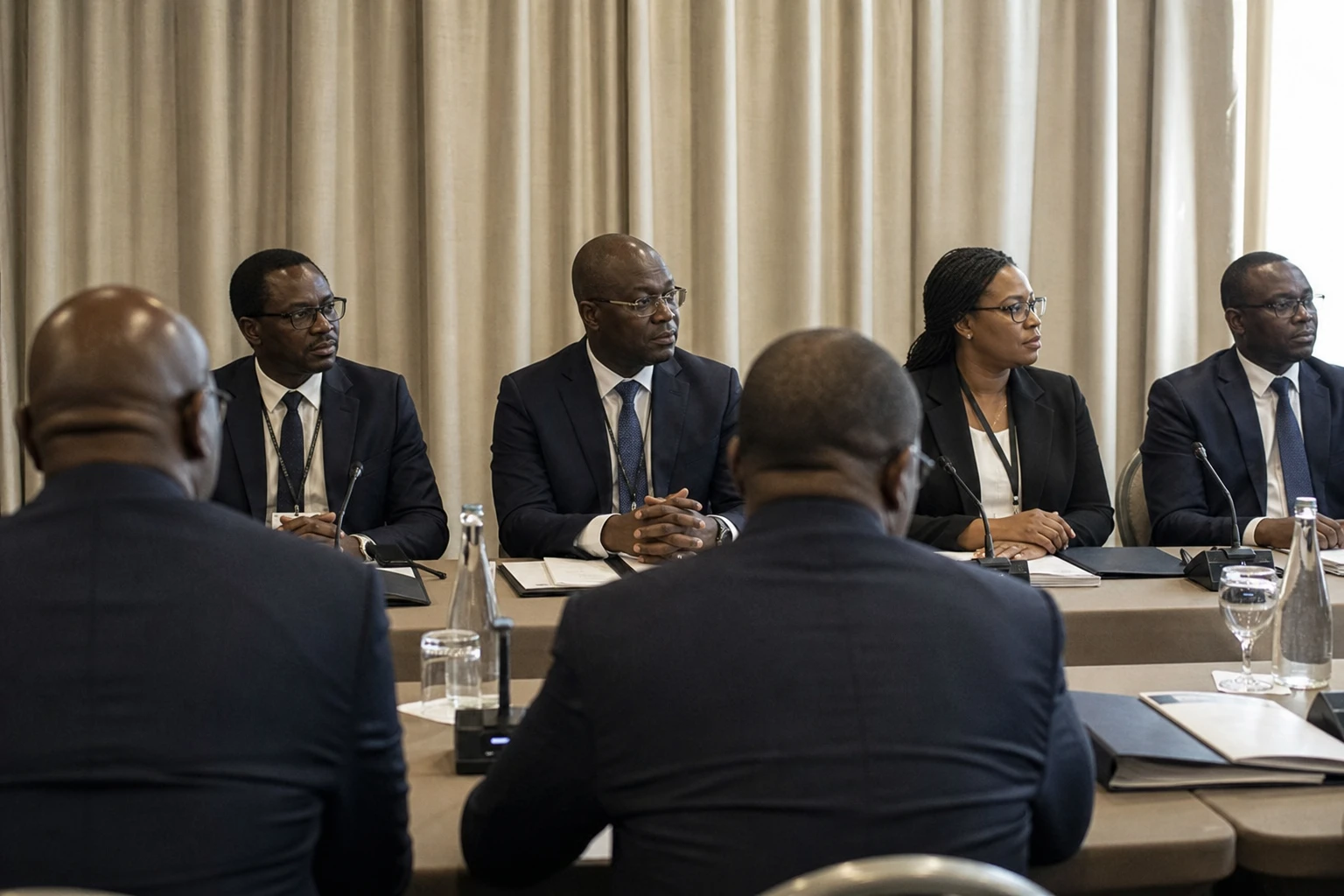
In Cotonou, digital asset regulation moves from promises to public policy choices
In the UEMOA, digital assets are no longer a subject reserved for tech enthusiasts. They already affect payments, corporate cash management, financing and the circulation of value. That is why Cotonou is set to become, on 25 November 2026, a meeting point for central banks, regulators, fintechs and compliance experts. Benin, whose capital is Porto-Novo, is thus establishing itself as a useful venue for a discussion that goes well beyond the crypto-asset sector alone.
The regional framework matters. The UEMOA brings together eight states, including Benin, around a common currency and an integrated economic area. The BCEAO, which oversees monetary stability in the Union, has already placed crypto-assets and digital innovation at the heart of its work in 2026, calling for a coordinated approach among central banks. At the same time, ECOWAS is continuing its discussions on the legal framework for the digital economy and the future single currency, the ECO, announced as a 2027 goal. In other words, West Africa’s ecosystem is advancing on several fronts at once.
What Cotonou must put on the table
The conference planned in Cotonou aims above all to clarify a simple question: how should uses that are spreading faster than the rules be regulated? Stablecoins, blockchain networks and tokenisation are already being used to transfer value, settle transactions and mobilise capital. In a monetary zone such as the UEMOA, these uses also raise issues of sovereignty, user protection, financial integrity and dependence on infrastructure located outside the continent.
The meeting is therefore expected to bring together participants who do not always sit around the same table: public authorities, financial intelligence units, banks, payment infrastructures, technology companies, investors and researchers. The aim is not merely to comment on a market that is still in flux. It is to prepare decisions, allocate responsibilities, build capacity and produce outcomes that will endure beyond the day of the conference. This focus on delivery aligns with work already under way at the BCEAO, which has launched preparatory work on fintech in the Union.
The first challenge is legal and tax-related. Electronic money is already regulated in the UEMOA: its issuance requires authorisation from the BCEAO for entities other than licensed institutions. Digital assets, by contrast, are harder to classify because they can serve as a speculative savings instrument, a payment tool, a means of financing or a digital representation of real-world assets. The Cotonou discussions will therefore have to distinguish between useful innovation, regulated financial activity and straightforward risk to savers.
The second challenge concerns efforts to combat money laundering and the financing of terrorism. West African authorities know that blockchain does not erase traces: it shifts them and requires other methods of analysis. This makes it important for supervisors and financial intelligence units to share tracing tools, map flows and better identify intermediaries. In West Africa, the ECOWAS Parliament has already said there is a strong need to regulate the use of cryptocurrencies across the community. Cotonou builds on this, but with a more technical than declarative approach.
The third challenge is operational. Asset custody, key management, smart contract security and incident response have become financial security issues in their own right. A crypto-asset platform can be attacked, defrauded or blocked. A human error can be enough to cause an irreversible loss. For banks and fintechs alike, this changes the order of priorities: cybersecurity is no longer a communications add-on, but a condition of survival.
A Beninese issue, but also a test for all of West Africa
The choice of Cotonou is no coincidence. Benin occupies a distinctive position in the UEMOA: as a coastal country and a trading hub, with an economy closely connected to regional flows, it has an interest in making cross-border payments smoother and less costly. The country’s political capital is Porto-Novo, but Cotonou accounts for a major share of economic and logistical activity. In this context, hosting a conference of this level links digital asset regulation to the everyday realities of trade, transfers and financial services.
The regional implications are immediate. If UEMOA authorities can establish a common language on crypto-assets, they will be able to reduce differences in interpretation between member countries, avoid regulatory arbitrage and better protect users. They will also be able to connect the issue of digital assets with existing work on the interoperability of digital financial services, a subject the BCEAO has championed since 2019. This link between infrastructure, supervision and innovation will determine whether or not the Cotonou discussions carry weight.
At continental level, the debate extends beyond the UEMOA alone. Africa is still seeking the right balance between openness to innovation, saver protection and control over flows. The proliferation of private digital currencies, the growth of cross-border payments and the rise of economic integration projects are forcing states to make decisions more quickly. Cotonou could therefore serve as a useful laboratory: not to proclaim a definitive truth about digital assets, but to show how an African monetary union can build its own doctrine, with its own institutions, constraints and priorities.
The meeting on 25 November will therefore be watched by more than just industry participants. What matters will not only be the panels or technical demonstrations, but the ability to set a common direction for regulation, supervision and controlled experimentation. In a zone where the common currency is central to integration, the question is no longer whether digital assets will matter. It is what rules they will follow, and under whose public responsibility.